The developers of the Mall of America are back, this time with plans for the American Dream Miami project.


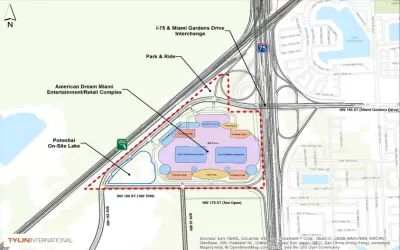
"The largest mall in America moved closer to winning a key approval in Miami-Dade on Monday, as a county planning board gave a thumbs up to a $4 billion retail theme park that expects 30 million visitors a year," reports Douglas Hanks.
The American Dream Miami project would cover 6 million square feet on 175 acres of wetlands and employ an estimated 14,000 people if it opens. The project is also expected to generate roughly 100,000 vehicle trips a day.
Project developer Triple Five, the Canada-based developer of Minnesota's Mall of America, is pitching the retail theme park as an alternative to Disney World.
The advisory board cleared the way for a final vote by the County Commission on May 17. The commission has already granted preliminary approval to the project. The final vote adds a development agreement to the equation. According to Hanks, the agreement includes "a string of terms committing developers to addressing various impacts from a project, including managing storm water runoff so it doesn't flood nearby areas and paying the county to boost transit services around the mall."
Planetizen last shared news of the proposed development in March 2017, when the price tag was estimated at a more modest $3 billion.
Read the full story: The largest mall in America is getting closer to approval in Northwest Miami-Dade
$3 Billion Mall Proposal Still Facing Traffic Concerns in Florida
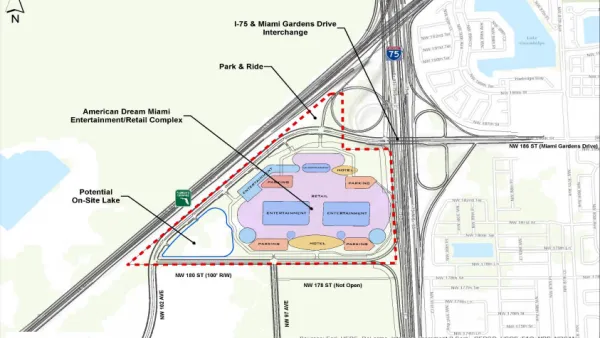
A massive mall, proposed for a 174-acre stretch of land that abuts the border between Miami-Dade and Broward counties, has so far breezed through approvals. "American Dream Miami" will still require political victories.
More money, less service: Miami-Dade slashes bus routes after hiking fare
The department is facing a multi-million dollar funding gap.

Miami Considers Airport-to-Port Train to Ease Cruise Ship Traffic
Miami’s port is one of the world’s busiest cruise ship terminals.

Planetizen Federal Action Tracker
A weekly monitor of how Trump’s orders and actions are impacting planners and planning in America.

California plans to bury El Niño’s downpour
If the state plays its cards right, it may be able to store a billion acre-feet of El Niño’s water in aquifers.

Desperate measures: Advocates weigh draining Lake Powell to fill Colorado River
Draining the reservoir could reduce evaporation losses by a couple hundred thousand acre-feet.

Los Angeles just elected an urban planner as its mayor
Transportation analysts are optimistic that Raman will be more aggressive in addressing transit issues than Bass.

Mamdani’s pied-à-terre tax survives legal challenge
A panel of judges found that the plaintiffs failed to demonstrate injury as a result of New York City's implementation of the tax.

Eastern Nebraska is running out of electricity
Data centers and electrification are straining eastern Nebraska’s grid, throttling economic development.

FREE Course: Walkable City 1: Why Walkability?
After describing his path towards focusing on walkability as the essence of good planning, Jeff Speck marches through his five principal reasons for making more walkable places.
Reinventing Malls: Planning Alchemy—Turning Gray Fields Into Gold
The course focuses on the opportunities and imperatives that shape reinvention of mall sites.

City of Rosemead
Rutgers University, Edward J. Bloustein School of Planning and Public Policy
One Hundred Miles
University of Michigan School for Environment and Sustainability (SEAS)
Hunter College, City University of New York (CUNY)
The Architects Foundation
City of Cambridge
Montrose County
The Pocatello Development Authority