Coach houses could provide affordable housing and revenue for home owners if they were more widely permitted in the city.


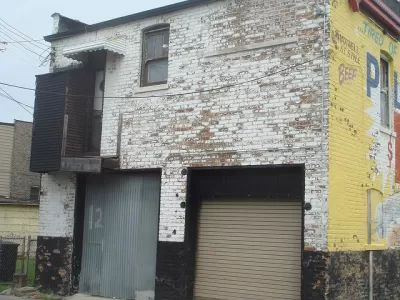
It's illegal to live in a coach houses in Chicago. Existing coach houses aren't illegal, but they cannot be built in most of the city and may not include a kitchen.
"A coach house is a typical kind of accessory dwelling unit (ADU) in Chicago that were built at the rear of lots. In the majority of cases, a principal use like a single-family house or 2-4 flat was built in the front of the lot," Steven Vance writes for Chicago Cityscape.
Couch houses could be an easy way to maintain the density of some shrinking neighborhoods, create affordable housing and provide income for property owners. But with the constraints currently put on them in Chicago they're unable to legally provide any of these functions. "In addition to banning new coach houses and non-paying guest houses, existing ones cannot be expanded and there’s a rule that can cause their disuse," Vance writes.
Changes to California zoning regulations have brought meant a big resurgence in the state's ADUs, Vance argues that Chicago should pursue the same strategy.
FULL STORY: City's real estate industry must lead way on climate change—and it is

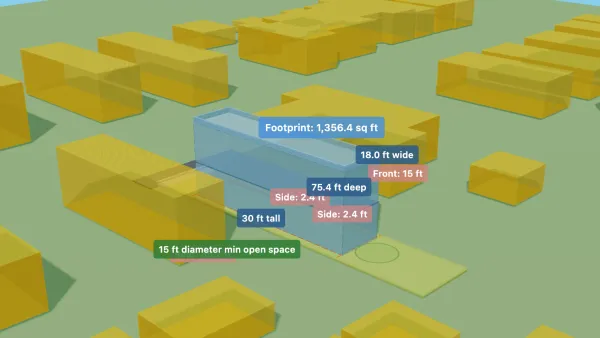
Interactive, 3D Chicago Zoning Map Lets You Visualize Potential Development
A new tool creates a visual model of potential development on Chicago lots based on the property’s specific zoning regulations.

How Much Land Is Lost to Wide Streets?
New research assesses the land value of street space in 20 of the largest counties in the United States.
The Impacts of Zoning Laws in Montgomery County
Historic zoning decisions have left a lasting legacy of housing inequality. Current leaders have the opportunity to change that.

Planetizen Federal Action Tracker
A weekly monitor of how Trump’s orders and actions are impacting planners and planning in America.

The state-sanctioned urbicide of Austin
People don’t kill cities. Freeways do.

US to reduce Colorado River water deliveries to Mexico
A new Colorado Treaty amendment reduces Mexico’s Colorado River water allocation by 250,000 acre feet.

5 New England states march closer to 800 megawatt wind energy project
Securing federal approval for the project may be complicated under the Trump administration, which has historically been hostile towards domestic wind power.

Baltimore to break ground on $50 million Transit Priority Project
The project will bring faster bus trips, safer streets and better bike connections to Baltimore.

Airbnb launches $250 million 'last-dollar financing' housing accelerator, makes first investment in Austin
The company will put $6.4 million towards affordable housing development in Texas’ capital.

FREE Course: Walkable City 1: Why Walkability?
After describing his path towards focusing on walkability as the essence of good planning, Jeff Speck marches through his five principal reasons for making more walkable places.
Reinventing Malls: Planning Alchemy—Turning Gray Fields Into Gold
The course focuses on the opportunities and imperatives that shape reinvention of mall sites.

Eagle County Government
Harvard University Graduate School of Design
Nashville Planning Department
The Architects Foundation
University of Cincinnati Online
The Pocatello Development Authority
The Urban Renewal Agency of the City of Pocatello
Journal of the American Planning Association