Roxbury, Mattapan, and parts of Dorchester are dealing with cracked and buckled sidewalks.


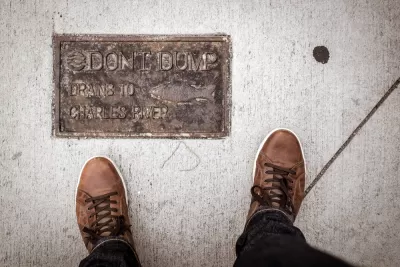
There are many ways to spot wealth, "but a new city analysis underscores a basic disparity that is often overlooked, though it’s in plain sight: Residents in the city’s poorest neighborhoods — Roxbury, Mattapan, and parts of Dorchester — are much more likely to contend with buckled asphalt, cracking concrete, and tree roots smashing through their sidewalks," Meghan E. Irons writes.
The differences are stark: "65 percent of the sidewalks in Roxbury and Dorchester are either in fair or poor condition; by contrast, 68 percent of the sidewalks downtown and in the Back Bay are in good condition, city data show."
"The city began taking a closer look at sidewalk equity last year after the issue was raised in a 154-page report from Mayor Martin J. Walsh’s Office of Resilience and Racial Equity. The document urged the city to rethink how it repairs and maintains sidewalks and develop a proactive, systematic approach in allocating resources," Irons reports.
FULL STORY: Boston’s rich and poor neighborhoods show sidewalk repair disparity

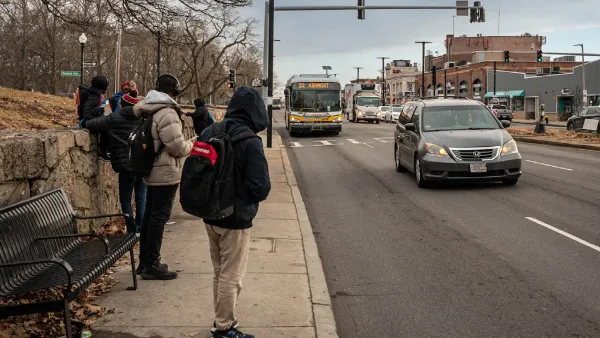
Boston’s Blue Hill Avenue to Get BRT, Safety Improvements
The key bus corridor serves over 37,000 bus riders daily.
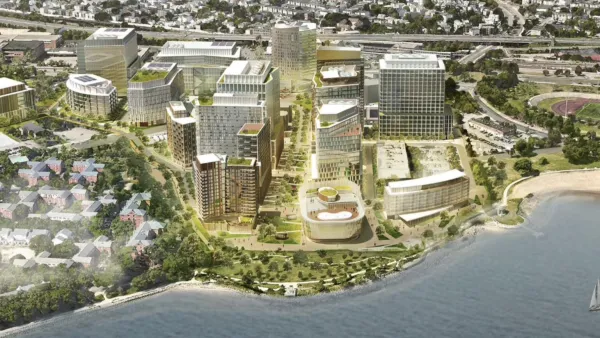
Mega-Project Aims to Transform South Boston
Developers with a ground lease for land owned by the University of Massachusetts Boston want to build a new mixed-use development to rival Kendall Square in nearby Cambridge.
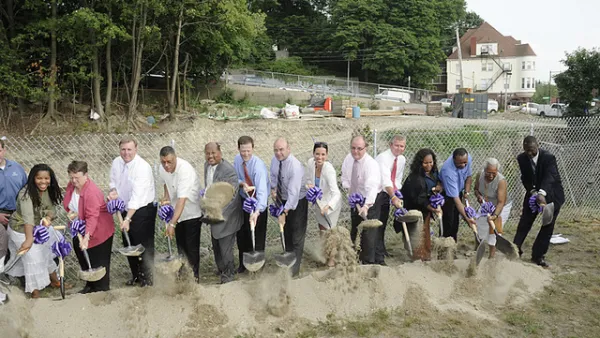
Redevelopment Without Displacement: A Boston Experiment
The city of Boston is trying to establish a model for gentrification mitigation in the Upham's Corner section of Dorchester.

Planetizen Federal Action Tracker
A weekly monitor of how Trump’s orders and actions are impacting planners and planning in America.

The state-sanctioned urbicide of Austin
People don’t kill cities. Freeways do.

US to reduce Colorado River water deliveries to Mexico
A new Colorado Treaty amendment reduces Mexico’s Colorado River water allocation by 250,000 acre feet.

5 New England states march closer to 800 megawatt wind energy project
Securing federal approval for the project may be complicated under the Trump administration, which has historically been hostile towards domestic wind power.

Baltimore to break ground on $50 million Transit Priority Project
The project will bring faster bus trips, safer streets and better bike connections to Baltimore.

Airbnb launches $250 million 'last-dollar financing' housing accelerator, makes first investment in Austin
The company will put $6.4 million towards affordable housing development in Texas’ capital.

FREE Course: Walkable City 1: Why Walkability?
After describing his path towards focusing on walkability as the essence of good planning, Jeff Speck marches through his five principal reasons for making more walkable places.
Reinventing Malls: Planning Alchemy—Turning Gray Fields Into Gold
The course focuses on the opportunities and imperatives that shape reinvention of mall sites.

Eagle County Government
Harvard University Graduate School of Design
Nashville Planning Department
The Architects Foundation
University of Cincinnati Online
The Pocatello Development Authority
The Urban Renewal Agency of the City of Pocatello
Journal of the American Planning Association