Developer Samuel Leung is facing shocking counts of conspiracy, money laundering, and bribery.


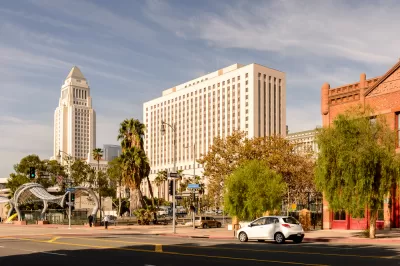
Investigative journalism by David Zahniser and Emily Alpert Reyes has led to criminal charges, after "[p]rosecutors with L.A. County Dist. Atty. Jackie Lacey's office charged Samuel Leung, developer of the 352-unit Sea Breeze project, with one felony count of conspiracy to commit campaign money laundering and one felony count of offering to bribe a legislator."
Zahniser and Alpert Reyes broke the news about the criminal charges last week, but their reporting in October 2016 paved the way for the corruption charges. Here's how last week's article describes the affair:
The filing comes more than a year after a Los Angeles Times investigation showed that more than 100 donors who were directly or indirectly connected to Leung had made donations totaling more than $600,000 to L.A.-area politicians while his Sea Breeze project was being reviewed. Of those who donated, 11 denied making contributions or said they didn't remember doing so when contacted by The Times.
The Sea Breeze development is currently rising from the ground. "Mayor Eric Garcetti and the City Council backed the project in 2015, changing the zoning so that it was no longer designated for manufacturing," according to Zahniser and Alpert Reyes.
The article examines how much campaign funding was directed by Leung to Los Angeles politicians, but so far there has been no political or legal fallout from the ongoing investigation by prosecutors.
Read the full story: L.A. developer is charged with making illegal campaign donations

Op-Ed: It’s Long Past Time for Planning Reform in L.A.
Another corruption scandal involving a Los Angeles city councilmember highlights the urgent need for major planning changes in the city.
Keeping Bees Away from Honey? Corruption Cases Expose Flaws in L.A. City’s Land Entitlement Process
Three former Los Angeles public officials share their collective perspective on how best to reform the city of Los Angeles' corrupted land use approval process.

Has The Moment Arrived To End Political Interference in L.A. City's Land Use Decisions?
Writing under the nom de plume of the ghost of Ed Logue, an L.A.-based land use professional offers this modest proposal for eliminating political interference and campaign cash from L.A. city planning.

Planetizen Federal Action Tracker
A weekly monitor of how Trump’s orders and actions are impacting planners and planning in America.

Chicago breaks ground on $3 billion megadevelopment
The new neighborhood, titled Foundry Park, will one day host 3,700 residences.

This MA town is drowning in its own sewage — and residents like it that way
Susan Murcott, a waste water expert, said if Carlisle didn't address their leaking sewage, the problem could turn “deadly.”

Feds to more closely scrutinize proposed Amtrak facility’s environmental impact
The Federal Railroad Administration had initially said the facility qualified for a less extensive environmental review.

Boston is hard to build housing in: its chief of planning wants to keep it that way
Chief of Planning Kairos Shen said she would not make changes to Boston’s affordability requirements for new housing, which critics say have slowed down development.

California plans to bury El Niño’s downpour
If the state plays its cards right, it may be able to store a billion acre-feet of El Niño’s water in aquifers.

FREE Course: Walkable City 1: Why Walkability?
After describing his path towards focusing on walkability as the essence of good planning, Jeff Speck marches through his five principal reasons for making more walkable places.
Reinventing Malls: Planning Alchemy—Turning Gray Fields Into Gold
The course focuses on the opportunities and imperatives that shape reinvention of mall sites.

City of Rosemead
Rutgers University, Edward J. Bloustein School of Planning and Public Policy
One Hundred Miles
Hunter College, City University of New York (CUNY)
The Architects Foundation
University of Cincinnati Online
Montrose County
The Pocatello Development Authority
The Urban Renewal Agency of the City of Pocatello