A rising tide doesn't necessarily lift all boats—even in a time of (mostly) decreasing income inequality at the city level.


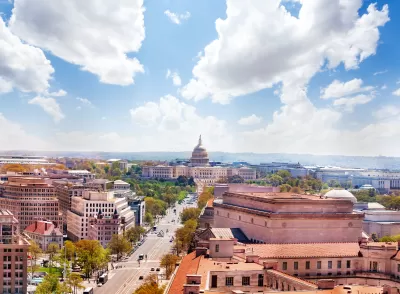
A recent study from the Brookings Institution examines income inequality at the city and metropolitan area level around the country. The major findings of the study, explained by a post sharing the new study:
- Among big cities, Atlanta and Washington, D.C. exhibited the highest rates of income inequality in 2016.
- Levels of inequality in cities reflect broader income disparities in metropolitan areas.
- More cities experienced declines in income inequality from 2014 to 2016 than saw increases.
- In contrast to the city pattern, increases in metropolitan income inequality outnumbered declines.
- Some cities posted stunning increases in top incomes from 2014 to 2016.
- Income trends at the top of the distribution in cities and metro areas had little relationship to trends at the bottom of the distribution from 2014 to 2016. I
As a follow up to the article presenting the findings of the new report, an article by Axios presents the report's findings in a graphic format. Caitlin Owens writes the post and Chris Canipe creates a helpful pair of infographics to help illustrate the cities with the largest and smallest income gaps.
FULL STORY: City and metropolitan income inequality data reveal ups and downs through 2016

What Are America's Fastest-Growing Cities?
Views about urban growth and decline often rely on statistics for metropolitan regions rather than cities proper. Here, Richard Florida looks at the fastest- and slowest-growing cities in America, separate from their metro areas.
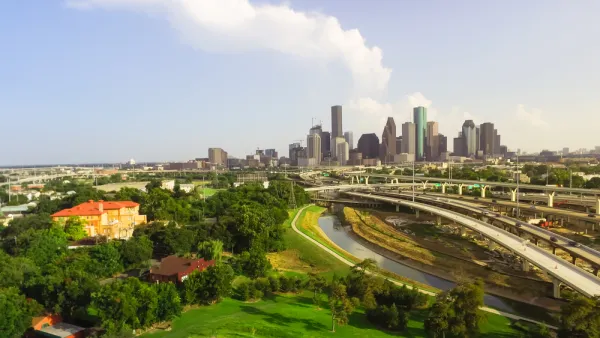
The Boundaries of Houston Don't Match the Perception of Houston
A more-than-6oo-square-mile city can get hard to map in our minds, especially when it blends so seamlessly into surrounding cities.
Employment Growth in Large, Dense Cities Paces Recovery
A study from the Oregon Office of Economic Analysis finds evidence that large, dense metropolitan areas have experienced the most complete recovery following the Great Recession.

Planetizen Federal Action Tracker
A weekly monitor of how Trump’s orders and actions are impacting planners and planning in America.

The state-sanctioned urbicide of Austin
People don’t kill cities. Freeways do.

US to reduce Colorado River water deliveries to Mexico
A new Colorado Treaty amendment reduces Mexico’s Colorado River water allocation by 250,000 acre feet.

Airbnb launches $250 million 'last-dollar financing' housing accelerator, makes first investment in Austin
The company will put $6.4 million towards affordable housing development in Texas’ capital.

Guerilla urbanists are building DIY bus stop benches in Chicago
A before-and-after of one of the bus stops with a new bench. The new benches are not officially sanctioned or permitted, but the residents who placed them hope they will be the start of a network of DIY benches across the city.

Mamdani overhauls NYC's Vision Zero plan with 100 new policy goals
The overhaul aims to reduce traffic deaths and make streets safer for pedestrians, cyclists and drivers through lower speed limits, new safety infrastructure and more.

FREE Course: Walkable City 1: Why Walkability?
After describing his path towards focusing on walkability as the essence of good planning, Jeff Speck marches through his five principal reasons for making more walkable places.
Reinventing Malls: Planning Alchemy—Turning Gray Fields Into Gold
The course focuses on the opportunities and imperatives that shape reinvention of mall sites.

Eagle County Government
Harvard University Graduate School of Design
Nashville Planning Department
The Architects Foundation
University of Cincinnati Online
The Pocatello Development Authority
The Urban Renewal Agency of the City of Pocatello
Journal of the American Planning Association