CodeNEXT is one of the most ambitious, and controversial, zoning reform projects ongoing in the country, with lessons to offer planners all over the country in code writing, public outreach, and planning outcomes.



The team working on the ongoing rewrite of Austin's land development code recently completed a series of outreach engagements that revealed a lot about the city's work on the project.
A series of four Facebook Live events, branded as CodeNEXT Live, gave a chance to use the social media platform to blast news and information about the land development code update to the public. Aly Van Dyke, from Austin's Communications and Public Information Office, interviewed four experts from different city departments on four key subjects that will influence the shape of the city's new land development code.
In the first live video, Van Dyke speaks with Matt Holton from the Watershed Protection Department on the subject of flooding. The second video called on Erica Leak from the Neighborhood Housing and Community Development Department to talk about affordable housing. Community and mobility are the subjects explored by the third and fourth video sessions, respectively. At the very least, that list of subjects and departments goes to show how multi-disciplinary planning can become, and also shows the many ways issues of planning can be connected with the interests of the public.
Read the full story: Facebook LIVE Recap
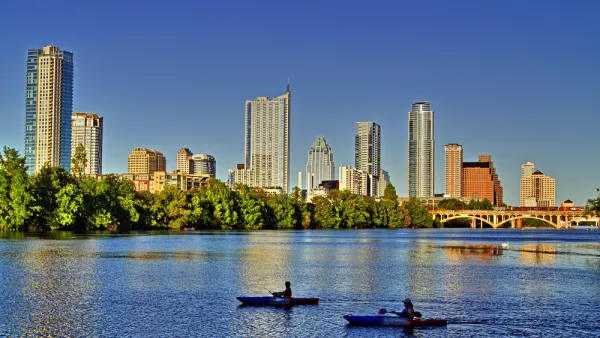
Austin Reminded to Be Respectful While Debating CodeNEXT
A call for civility amid the great zoning debate in Austin, Texas.
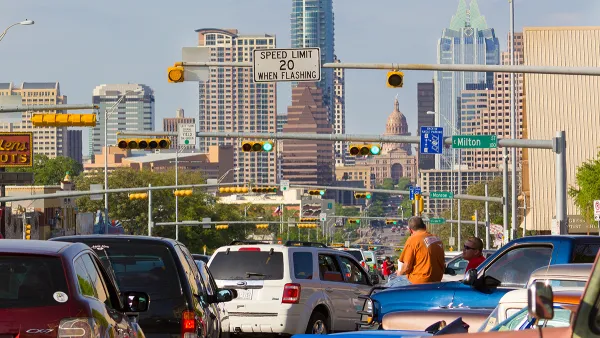
Austin Strategic Mobility Plan Final Draft Released
The first priority of the draft Austin Strategic Mobility Plan is to reduce single-occupant vehicle trips.

New 'Design Excellence Overlay' Aims to Inspire New Development in Missoula
The city of Missoula professes a strategy of "focusing inward" when it comes to growth and development. A new 'Design Excellence Overlay' will help achieve more goals toward that strategy in the city's downtown.

Planetizen Federal Action Tracker
A weekly monitor of how Trump’s orders and actions are impacting planners and planning in America.

California plans to bury El Niño’s downpour
If the state plays its cards right, it may be able to store a billion acre-feet of El Niño’s water in aquifers.

Desperate measures: Advocates weigh draining Lake Powell to fill Colorado River
Draining the reservoir could reduce evaporation losses by a couple hundred thousand acre-feet.

Housing is the top priority of Seattle’s sole new councilmember
Jenks campaigned on building 1,000 new units of affordable housing.

New tax cuts may slash $1.5 billion in funding for Miami transit, public parks
Amendment 3 will save Miami-Dade homeowners $2,700 in 2028.

Arizona, Wisconsin, Pennsylvania hope to finally advance climate goals post-midterms
The three states have spent years under Republican or divided control.

FREE Course: Walkable City 1: Why Walkability?
After describing his path towards focusing on walkability as the essence of good planning, Jeff Speck marches through his five principal reasons for making more walkable places.
Reinventing Malls: Planning Alchemy—Turning Gray Fields Into Gold
The course focuses on the opportunities and imperatives that shape reinvention of mall sites.

City of Rosemead
Rutgers University, Edward J. Bloustein School of Planning and Public Policy
One Hundred Miles
University of Michigan School for Environment and Sustainability (SEAS)
Hunter College, City University of New York (CUNY)
The Architects Foundation
City of Cambridge
Montrose County
The Pocatello Development Authority