The first priority of the draft Austin Strategic Mobility Plan is to reduce single-occupant vehicle trips.


"Austin, TX has released the final draft of its first comprehensive multimodal transportation plan [pdf], dubbed the Austin Strategic Mobility Plan (ASMP)," according to an article by Katie Pyzyk.
ASMP sets transportation goals in line with the Imagine Austin plan. Specifically, ASMP sets goals to address eight themes: Commuter Delay, Travel Choice, Health & Safety, Affordability, Sustainability, Placemaking, Economic Prosperity, and Innovation.
"An overarching goal is to reduce single-occupancy vehicle use, and especially to reduce the number of commuters who drive alone to work from about 74% now to 50% by 2039," according to Pyzyk.
For additional background on the ASMP and the process that produced the final draft, see an article by Philip Jankowski from January 2019.
Read the full story: Austin, TX releases final draft of strategic mobility plan

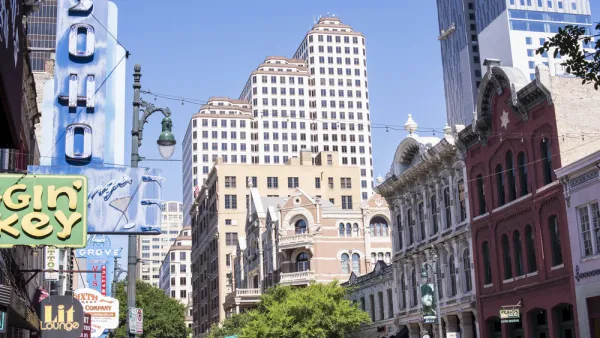
Catch Up With Austin's CodeNEXT
CodeNEXT is one of the most ambitious, and controversial, zoning reform projects ongoing in the country, with lessons to offer planners all over the country in code writing, public outreach, and planning outcomes.
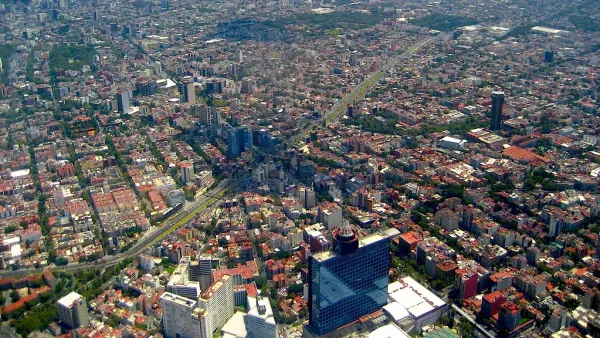
A Compact, Connected, Clean, and Inclusive Recovery for Mexico
As the Mexican government charts the country’s recovery from COVID-19, a newly published paper charts national solutions to urban transportation and housing challenges that will put Mexico’s cities on a path to prosperity and resilience.

Location Data Could Unlock a Less Car-Centric Future
A report from the Brookings Institution shows how planners can use new types of anonymized data to inform mobility planning decisions.

Planetizen Federal Action Tracker
A weekly monitor of how Trump’s orders and actions are impacting planners and planning in America.

Amtrak, CN end decades-long dispute with eight-year agreement
The new operating agreement establishes an updated framework for the companies to work together, including processes to resolve disputes.

Judges permit Denver to divert 77,000 acre feet from the Colorado River for reservoir expansion
Overuse and climate change have caused the Colorado River’s water levels to plummet.

NYC DOT wants faster, more permanent street upgrades
The city is examining ways to build more concrete infrastructure without getting entangled in 'decades-long' projects.

'Something we’ve never seen before:' rising utility rates could strain city finances nationwide
Data centers, climate change and other factors have caused utility rates in the United States to increase by 38% since 2020.

Trump to overrule local leaders, lease millions of acres of America’s Pacific Island territories’ seafloors to mining companies
International law says that the Indigenous people of America’s territories have a right to prior and informed consent regarding projects that impact their countries.

FREE Course: Walkable City 1: Why Walkability?
After describing his path towards focusing on walkability as the essence of good planning, Jeff Speck marches through his five principal reasons for making more walkable places.
Reinventing Malls: Planning Alchemy—Turning Gray Fields Into Gold
The course focuses on the opportunities and imperatives that shape reinvention of mall sites.

Harvard University Graduate School of Design
KFH Group Inc.
Greater Baltimore Committee
The Architects Foundation
University of Cincinnati Online
The Pocatello Development Authority
The Urban Renewal Agency of the City of Pocatello