While federal officials are still staying mum about the contents of a leaked draft of pages from the Trump Administration's infrastructure plan, local and regional officials in the New York area seem more than a little worried.


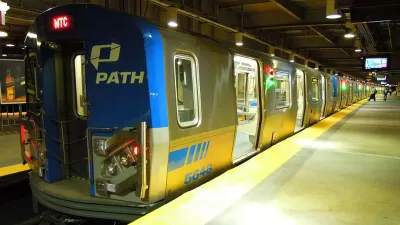
"If the principles undergirding President Donald Trump’s infrastructure plan are any indication, New York and New Jersey are going to have to scrounge up more money than expected to build a new tunnel beneath the Hudson River," according to an article by Dana Rubinstein.
Rubinstein is referring to the substance included in a leaked draft of the Trump Administration's long-promised infrastructure plan. The key point of concern to supporters of the Gateway project: the document's commitment to limits on grant funding. The 20 percent limit proposed by the document is "a good deal less than what project planners had been hoping for, though not completely surprising, given the administration's recent rhetoric on the issue," according to Rubinstein.
Rubinstein tried and failed to get comments on the draft from high-ranking members of Congress and from the Trump Administration. Local and regional officials were more than happy to use the strongest possible terms in denouncing the 20 percent limit and its potential to harm ongoing infrastructure planning and construction.
FULL STORY: Trump infrastructure ‘principles’ represent another bad omen for Gateway

No Bragging Rights for Passing the Infrastructure Act?
You'd think the passage of the $1.2 trillion bipartisan infrastructure act would convey bragging rights for Democratic congress members facing competitive midterm elections today. Ironically, Republicans who opposed the bill are taking credit.
Trump's Infrastructure Accomplishments Fall Short of Promises
President Trump has fallen short of 2016 promises to update and upgrade the key infrastructure of the United States, according to this article.
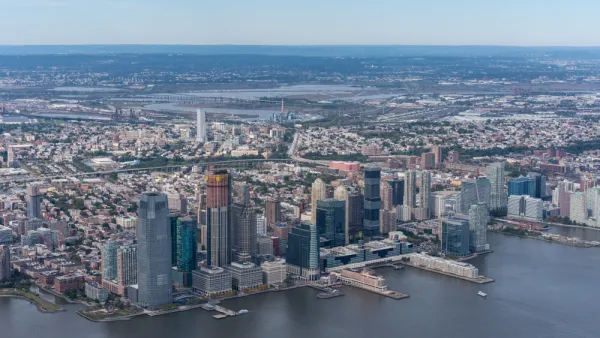
Costs, Delays Ballon on Hudson River Tunnel Project
Developers are baling the latest delays and cost increases for the Hudson Tunnel Project on uncertainty surrounding federal environmental review.

The state-sanctioned urbicide of Austin
People don’t kill cities. Freeways do.

US to reduce Colorado River water deliveries to Mexico
A new Colorado Treaty amendment reduces Mexico’s Colorado River water allocation by 250,000 acre feet.

New Jersey’s second-largest city bans standalone data centers
Jersey City will continue to allow co-location facilities, such as those meant for research institutions that store their own data.

Amtrak not solely to blame for New Jersey commuter rail's unreliability, report finds
A new study from the Garden State Initiative found that NJ Transit’s budget grew 20% across a 4 year period, but reliability declined significantly over the same period.

EPA erases limits on planet-warming pollution from power plants
Under Monday’s plan, power plants would still have some limits on how much mercury, arsenic and other contaminants they can emit.

Phoenix announces new on-demand transit service, more frequent RAPID buses
Both new services will launch in October, and are part of Phoenix's Project Effective Access Solutions for Easing Congestion.

FREE Course: Walkable City 1: Why Walkability?
After describing his path towards focusing on walkability as the essence of good planning, Jeff Speck marches through his five principal reasons for making more walkable places.
Reinventing Malls: Planning Alchemy—Turning Gray Fields Into Gold
The course focuses on the opportunities and imperatives that shape reinvention of mall sites.


Eagle County Government
Harvard University Graduate School of Design
Nashville Planning Department
The Architects Foundation
University of Cincinnati Online
The Pocatello Development Authority
The Urban Renewal Agency of the City of Pocatello
Journal of the American Planning Association