The city of Pittsburgh is responding to complaints by residents of poor road conditions after snow and ice coated the city's rad this week.



"As winter weather coated Pittsburgh's roads with snow and ice again Tuesday, the city acknowledged a need to do 'a much better job' clearing the streets," reports Julian Routh.
Mayor Bill Peduto put out a press release to that effect outlining four steps to improving its snow clearing efforts:
- "[Investing] in more road salt and liquid calcium chloride, and study ways to improve the chemical composition of the ice-fighting materials that the Department of Public Works is placing on roadways."
- "[Working] with our Department of Innovation and Performance to increase our public presence on nights and weekends and ensure that resident complaints are efficiently received, responded to, and routed to the appropriate City officials."
- "[Meeting] with DPW partners to explore ways to get more drivers onto streets, particularly on weekends, nights and holidays similar to last weekend."
- "[Issuing] a request for proposals for a redesign of our snow removal routes to make sure they are being addressed in the smartest, most efficient and most productive manner.”
While studying and investing in more and better road salt, the city might want to consider a recent study published in the Proceedings of the National Academy of Sciences documenting the negative effects of road salt on the salinity and alkalinity of streams and rivers, as reported earlier this month.
In December, Katie Pyzyk published an article surveying winter storm planning in cities like Minneapolis, Baltimore, and Portland.
Read the full story: Mayor Bill Peduto pledges to do 'a much better job' on snow removal

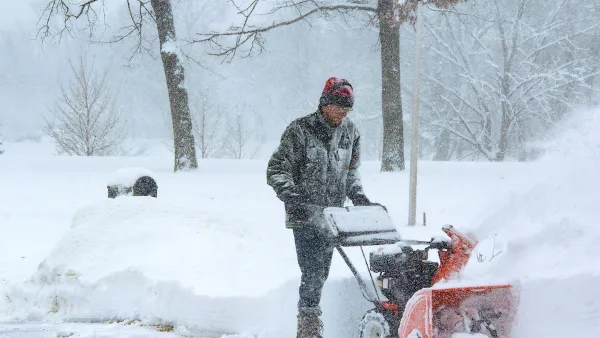
Chicago Considers Sidewalk Snow Removal Pilot
The program would keep sidewalks clear of snow in areas with heavy foot traffic, but some aldermen say it would cost too much.
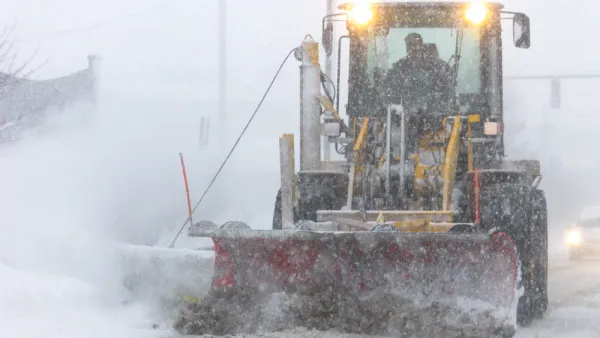
Editorial: Toronto’s Snow Clearing Plan Isn’t Fair
The city’s plan for dealing with snow and ice on sidewalks this winter doesn't address past problems and won't meet the needs of residents, say critics.
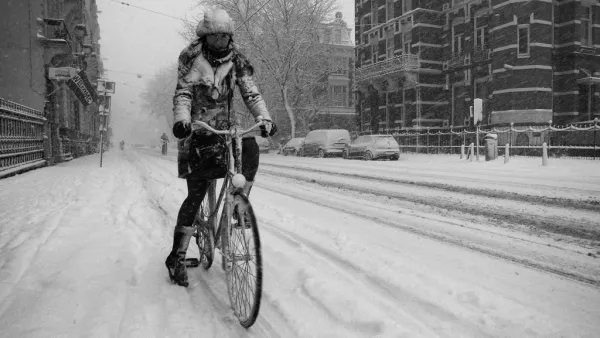
New Equipment and Staff for 'Non-Motorized Trail' Snow Removal Acquired in D.C.
A common wintertime compliant about snow removal for cars taking priority over bike lanes and sidewalks might be a little less common this winter.

Planetizen Federal Action Tracker
A weekly monitor of how Trump’s orders and actions are impacting planners and planning in America.

The state-sanctioned urbicide of Austin
People don’t kill cities. Freeways do.

US to reduce Colorado River water deliveries to Mexico
A new Colorado Treaty amendment reduces Mexico’s Colorado River water allocation by 250,000 acre feet.

Nation's most wind-powered state turns to coal as data centers increase energy demand
For the first time in decades, Iowa has increased its generation of coal power.

NYC cools commuters with city's first rain garden above a bus stop
New York City officials say the plants in the rain garden can absorb 16 gallons of rainwater during heavy storms.

Brightline West’s future may rely on $6 billion federal loan
The company has until Nov. 2 to make a $400 million equity investment into its proposed high-speed rail line.

FREE Course: Walkable City 1: Why Walkability?
After describing his path towards focusing on walkability as the essence of good planning, Jeff Speck marches through his five principal reasons for making more walkable places.
Reinventing Malls: Planning Alchemy—Turning Gray Fields Into Gold
The course focuses on the opportunities and imperatives that shape reinvention of mall sites.

Greater Baltimore Committee
Eagle County Government
Harvard University Graduate School of Design
The Architects Foundation
University of Cincinnati Online
The Pocatello Development Authority
The Urban Renewal Agency of the City of Pocatello
Journal of the American Planning Association