The terminus of the I-10 freeway is a 7,000-foot concrete trench across the heart of Santa Monica. The city's new downtown plan calls for a cap, and a new master plan will hammer out specifics.


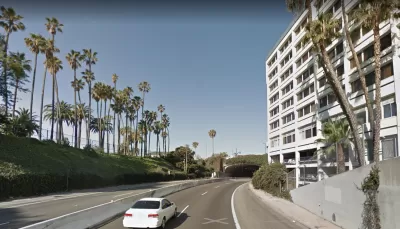
Antonio Pacheco reports on the 2017 Downtown Community Plan approved by the city of Santa Monica, focusing specifically on the plan's call for a freeway cap on the terminus of the I-10 freeway.
According to Pacheco, the freeway cap "would fully transform the southern edge of the city into a civic and commercial node while also providing the city with an opportunity to rework surface streets to better accommodate the new focus on multi-modal transport."
In a separate article, Niki Cervantes reports that the process to develop the Gateway Master Plan, the planning document that would focus specifically on the cap proposal, will launch early in 2018.
Pacheco provides additional details on the current status of the project, as well as history on similar freeway cap projects proposed in Southern California in recent years.
Read the full story: Santa Monica looks to cap Interstate 10 in new downtown plan
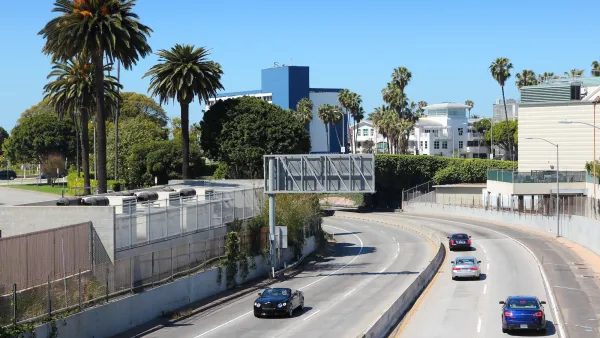
Santa Monica gets $2M grant to study I-10 freeway cap
City officials want to explore capping or even removing a portion of the freeway in the Pico neighborhood.
Minnesota Republicans Kill Passenger Rail, Freeway Cap Projects
Republicans in the Minnesota State Senate blocked the planning of a proposed passenger rail route between Duluth and the Twin Cities in addition to a plan for a freeway cap in a historically Black neighborhood in St. Paul.
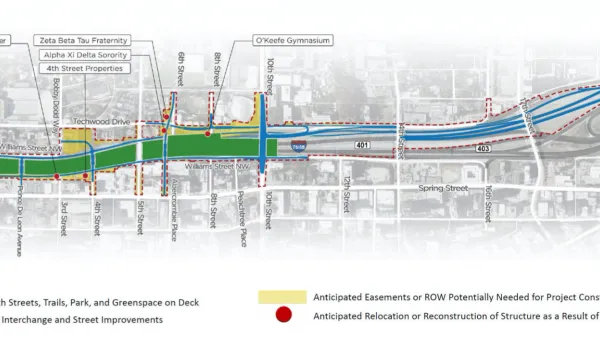
Atlanta Weighs 'Midtown Connector' Freeway Cap
The billion-dollar project would create a 25-acre park and 3.5 miles of new bike and pedestrian routes.

Planetizen Federal Action Tracker
A weekly monitor of how Trump’s orders and actions are impacting planners and planning in America.

California plans to bury El Niño’s downpour
If the state plays its cards right, it may be able to store a billion acre-feet of El Niño’s water in aquifers.

Desperate measures: Advocates weigh draining Lake Powell to fill Colorado River
Draining the reservoir could reduce evaporation losses by a couple hundred thousand acre-feet.

Mamdani’s pied-à-terre tax survives legal challenge
A panel of judges found that the plaintiffs failed to demonstrate injury as a result of New York City's implementation of the tax.

Eastern Nebraska is running out of electricity
Data centers and electrification are straining eastern Nebraska’s grid, throttling economic development.

Seattle passes record-breaking transit services expansion
Proposition 1 will double the city’s transit tax to add 95,000 more bus trips and preserve 180,000 bus trips annually.

FREE Course: Walkable City 1: Why Walkability?
After describing his path towards focusing on walkability as the essence of good planning, Jeff Speck marches through his five principal reasons for making more walkable places.
Reinventing Malls: Planning Alchemy—Turning Gray Fields Into Gold
The course focuses on the opportunities and imperatives that shape reinvention of mall sites.

City of Rosemead
Rutgers University, Edward J. Bloustein School of Planning and Public Policy
One Hundred Miles
University of Michigan School for Environment and Sustainability (SEAS)
Hunter College, City University of New York (CUNY)
The Architects Foundation
City of Cambridge
Montrose County
The Pocatello Development Authority