Several cities located in the Northeast, especially in the New York region, saw a significant increase in the number of car-free households.


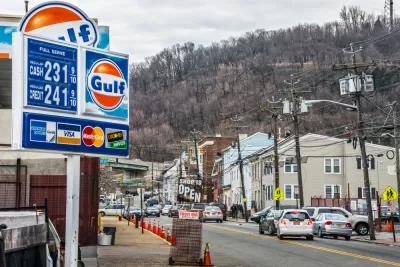
Although car ownership is increasing as the economy improves following the Great Recession (that is, fewer American households are car-free), there are exceptions to that trend to be found in a surprising kind of place—the country's medium-sized cities.
"Several mid-sized cities recorded notable increases in shares of car-free households when averages from the 2015 and 2016 American Community Surveys are compared with those for 2009 and 2010," according to an article by Mike Maciag.
The list of medium-sized cities with an increasing number of car-free households include:
- Paterson, New Jersey
- New Haven, Connecticut
- Davenport, Iowa
- Elizabeth, New Jersey
- Peoria, Illinois
The article includes additional data about car-free households, along with some helpful infographics to presenting the trends in visual form.
FULL STORY: America Still Loves Cars, But Some Cities Are Starting to Ditch Them


Where and How People Live Without Cars
The USA Today takes a closer look at data from the recent “Has Motorization in the U.S. Peaked?” report by Michael Sivak for the University of Michigan Transportation Research Institute.
Rise in Car-Free Households Supports "Peak Car" Arguments
After peaking in 2007, new research shows that the rate of vehicle ownership in the U.S. took a dive over the next five years. Researchers argue the growth in car-free households suggests the country has surpassed peak motorization.
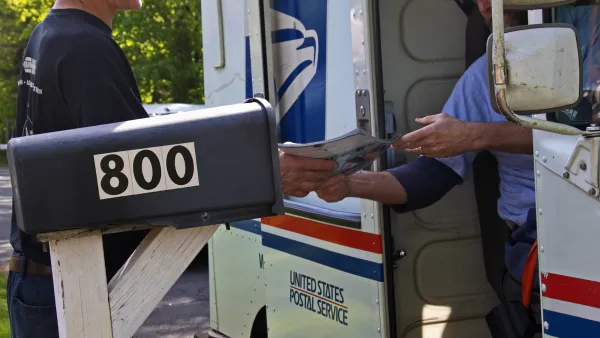
US Census Starts Using Postal Workers as Census Takers
A test program is using postal carriers to administer Census questionnaires.

Planetizen Federal Action Tracker
A weekly monitor of how Trump’s orders and actions are impacting planners and planning in America.

The state-sanctioned urbicide of Austin
People don’t kill cities. Freeways do.

US to reduce Colorado River water deliveries to Mexico
A new Colorado Treaty amendment reduces Mexico’s Colorado River water allocation by 250,000 acre feet.

5 New England states march closer to 800 megawatt wind energy project
Securing federal approval for the project may be complicated under the Trump administration, which has historically been hostile towards domestic wind power.

Baltimore to break ground on $50 million Transit Priority Project
The project will bring faster bus trips, safer streets and better bike connections to Baltimore.

Airbnb launches $250 million 'last-dollar financing' housing accelerator, makes first investment in Austin
The company will put $6.4 million towards affordable housing development in Texas’ capital.

FREE Course: Walkable City 1: Why Walkability?
After describing his path towards focusing on walkability as the essence of good planning, Jeff Speck marches through his five principal reasons for making more walkable places.
Reinventing Malls: Planning Alchemy—Turning Gray Fields Into Gold
The course focuses on the opportunities and imperatives that shape reinvention of mall sites.

Eagle County Government
Harvard University Graduate School of Design
Nashville Planning Department
The Architects Foundation
University of Cincinnati Online
The Pocatello Development Authority
The Urban Renewal Agency of the City of Pocatello
Journal of the American Planning Association