A new study finds evidence that the ripple effect from the San Francisco Bay Area's housing affordability crisis has reached all the way to Sacramento.


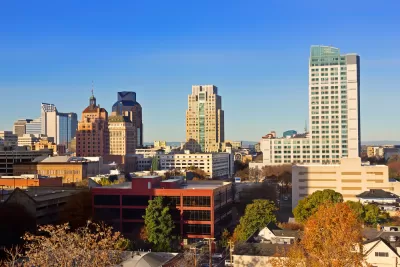
"As Bay Area residents and others flock to Sacramento to escape the housing crisis, low-income renters in the capital find themselves on shaky ground," reports Katy Murphy.
The Urban Displacement Project at the University of California, Berkeley has found evidence of gentrification and displacement in Sacramento. The study, the first-ever analysis of gentrification Sacramento, finds "an astonishing 95,000 low-income households live in Sacramento neighborhoods that 'are already undergoing or are at risk of becoming hotbeds of displacement,'" writes Murphy.
The study also examines a 13-county mega-region for signs of the housing crisis. Murphy summarizes those larger findings as follows:
Across the 13 counties studied, 900,000 low-income households — 62 percent of the low-income population — lived in gentrifying neighborhoods, researchers found. Far-flung cities such as Antioch and Pittsburg were not immune. In eastern Contra Costa County, researchers noted, the ranks of the homeless grew by 30 percent between 2015 and 2016.
FULL STORY: Amid Bay Area exodus to Sacramento, low-income families at risk of being pushed out, study finds


Louisville Launches ‘Anti-Displacement Tool’
After a years-long, tenant-led effort, Louisville will use a new tool to analyze whether a proposed housing development can meet a neighborhood’s housing needs and income levels. If it doesn’t, the city won’t subsidize it.
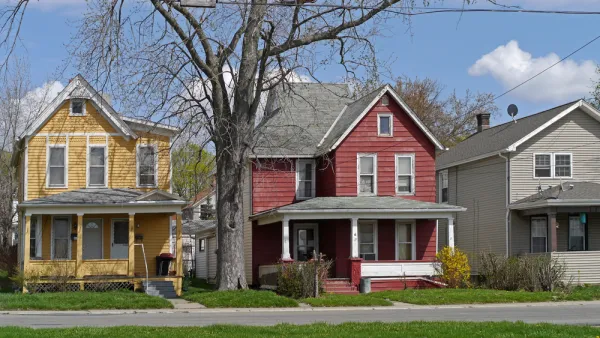
Opinion: Freeze Property Taxes in Gentrifying Neighborhoods
A proposed bill in the Texas legislature would help prevent displacement of homeowners in areas experiencing reinvestment and redevelopment.
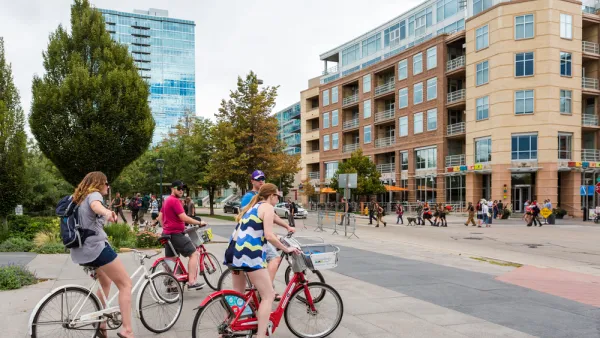
Opinion: Denver Needs New Direction on Housing
A Denver writer calls attention to the city's worsening housing affordability, gentrification, and displacement challenges, and prescribes a YIMBY response.

The state-sanctioned urbicide of Austin
People don’t kill cities. Freeways do.

US to reduce Colorado River water deliveries to Mexico
A new Colorado Treaty amendment reduces Mexico’s Colorado River water allocation by 250,000 acre feet.

New Jersey’s second-largest city bans standalone data centers
Jersey City will continue to allow co-location facilities, such as those meant for research institutions that store their own data.

Amtrak not solely to blame for New Jersey commuter rail's unreliability, report finds
A new study from the Garden State Initiative found that NJ Transit’s budget grew 20% across a 4 year period, but reliability declined significantly over the same period.

EPA erases limits on planet-warming pollution from power plants
Under Monday’s plan, power plants would still have some limits on how much mercury, arsenic and other contaminants they can emit.

Phoenix announces new on-demand transit service, more frequent RAPID buses
Both new services will launch in October, and are part of Phoenix's Project Effective Access Solutions for Easing Congestion.

FREE Course: Walkable City 1: Why Walkability?
After describing his path towards focusing on walkability as the essence of good planning, Jeff Speck marches through his five principal reasons for making more walkable places.
Reinventing Malls: Planning Alchemy—Turning Gray Fields Into Gold
The course focuses on the opportunities and imperatives that shape reinvention of mall sites.

Eagle County Government
Harvard University Graduate School of Design
Nashville Planning Department
The Architects Foundation
University of Cincinnati Online
The Pocatello Development Authority
The Urban Renewal Agency of the City of Pocatello
Journal of the American Planning Association