The Regional Transportation Authority has been supporting transit oriented development planning processes in suburbs like Bartlett.


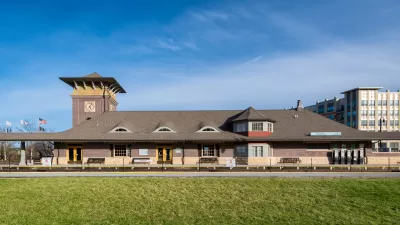
With funding from the Regional Transportation Authority, and the hard work of planners, suburban communities in the Chicago area are implementing a new wave of transit oriented developments (TODs).
An in-depth column by Mary Wisniewski examines the city of Bartlett as a case study of the growing trend toward transit oriented development. According to Wisniewski, Bartlett "got help putting together its transit-oriented development plan from the Regional Transportation Authority, the state-sponsored entity that oversees funding for Metra, the CTA and Pace."
"The plans include improvements to the village’s frequently flooded bike path, new crosswalks and new, multi-unit residential buildings and an office/retail building near the train," explains Wisniewski.
While Wisniewski ties Bartlett's TOD plans to a larger, nationwide trend, the regionwide efforts of the RTA don't go unnoticed. "The RTA has provided $20 million to support 187 community planning projects over the past 19 years, in suburbs such as Orland Park, Elmhurst and Evanston."
The article includes more about the history of Bartlett's TOD planning and development, while also sharing lessons learned from Bartlett and other cities in the RTA's purview.
FULL STORY: Transit-centric communities sprouting in the suburbs

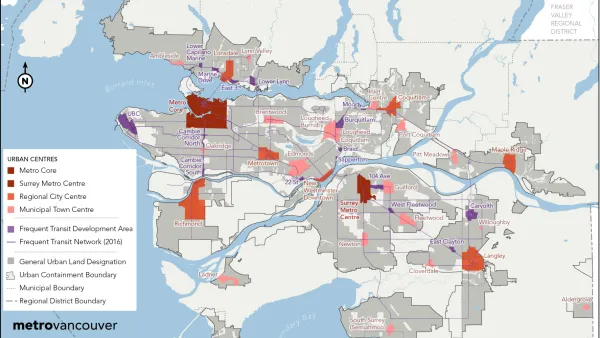
Vancouver Approves New Metro 2050 Regional Plan
The region around Vancouver in British Columbia has a new 30-year regional plan.
Priority on Equity Gives Hope for Chicago's Transit-Oriented Development Plans
The city of Chicago's Equitable Transit Oriented Development Policy Plan prioritizes three key strategies for bringing equity to transit-oriented development.
A First for Chicago: City Releases Equitable Transit-Oriented Development Plan
The city of Chicago's first-ever Equitable Transit-Oriented Development policy attempts to address long-standing inequities in the built environment and access to transportation in the city.

The state-sanctioned urbicide of Austin
People don’t kill cities. Freeways do.

US to reduce Colorado River water deliveries to Mexico
A new Colorado Treaty amendment reduces Mexico’s Colorado River water allocation by 250,000 acre feet.

New Jersey’s second-largest city bans standalone data centers
Jersey City will continue to allow co-location facilities, such as those meant for research institutions that store their own data.

Amtrak not solely to blame for New Jersey commuter rail's unreliability, report finds
A new study from the Garden State Initiative found that NJ Transit’s budget grew 20% across a 4 year period, but reliability declined significantly over the same period.

EPA erases limits on planet-warming pollution from power plants
Under Monday’s plan, power plants would still have some limits on how much mercury, arsenic and other contaminants they can emit.

Phoenix announces new on-demand transit service, more frequent RAPID buses
Both new services will launch in October, and are part of Phoenix's Project Effective Access Solutions for Easing Congestion.

FREE Course: Walkable City 1: Why Walkability?
After describing his path towards focusing on walkability as the essence of good planning, Jeff Speck marches through his five principal reasons for making more walkable places.
Reinventing Malls: Planning Alchemy—Turning Gray Fields Into Gold
The course focuses on the opportunities and imperatives that shape reinvention of mall sites.

Eagle County Government
Harvard University Graduate School of Design
Nashville Planning Department
The Architects Foundation
University of Cincinnati Online
The Pocatello Development Authority
The Urban Renewal Agency of the City of Pocatello
Journal of the American Planning Association