A new graphic novel has magic to stir blood.



Mimi Kirk shares news of a new graphic novel titled No Small Plans that introduces young people to a greater understanding of planning and a greater appreciation for their neighborhoods.
Inspired by the precedent sent by Wacker's Manual, a 1911 book that explained and explored Daniel Burnham's 1909 Plan of Chicago, Gabrielle Lyon, the vice president of education and experience at the Chicago Architecture Foundation, conceived of the idea, spearheaded the production, and hired illustrators to complete the book. The Chicago Architecture Foundation has since launched a Kickstarter campaign to pay for cost of printing 5,000 books to be distributed for free to teens through teachers, schools, and libraries. "Since Illinois recently passed a civic education graduation requirement for public high schools, it will likely be widely used," explains Kirk.
According to Kirk, "the book chronicles young people’s adventures in Chicago neighborhoods of the past, present, and future." A lot more detail about how the book achieves its lofty goals, and a sampling of images from the book, are included in the article.
Read the full story: Drawing Up an Urban Planning Manual for Chicago Teens

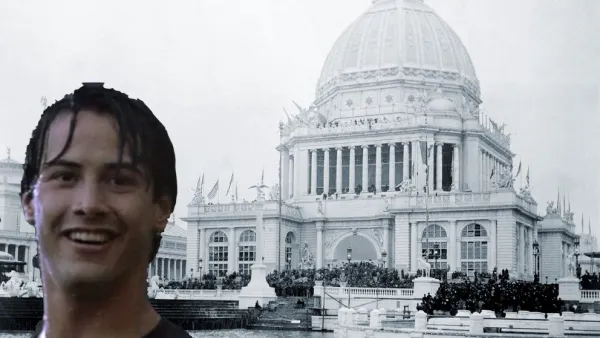
Keanu Reeves, Daniel Burnham Dream No Longer a Reality
Keanu Reeves will no longer portray Daniel Burnham in a film adaptation of The Devil in the White City.
Keanu Reeves Set to Play Daniel Burnham in ‘The Devil in the White City’
Planning is going to get a new level of star power as a limited series adaptation of The Devil in the White City gets ready for television screens in 2024.

Lincoln Park and the Complicated History of Gentrification in Chicago
The following excerpt, written by Daniel Kay Hertz in the introduction to The Battle of Lincoln Park, challenges assumptions about the forces of gentrification in Chicago, with lessons for communities around the country.

Planetizen Federal Action Tracker
A weekly monitor of how Trump’s orders and actions are impacting planners and planning in America.

California plans to bury El Niño’s downpour
If the state plays its cards right, it may be able to store a billion acre-feet of El Niño’s water in aquifers.

Chicago breaks ground on $3 billion megadevelopment
The new neighborhood, titled Foundry Park, will one day host 3,700 residences.

Satanic place names
From streams and lakes to valleys and canyons, I mapped more than 1,000 places named after the Devil.

California High-Speed Rail Authority CEO resigns after $600,000 scandal
Under Ian Choudri, the authority used taxpayer dollars to fund first class flights and trips to nightclubs.

Want to study the Missouri River? Soon, you may need unanimous approval from 10 states
Legislation would require 10 governors’ permission to study or build projects moving water outside the basin.

FREE Course: Walkable City 1: Why Walkability?
After describing his path towards focusing on walkability as the essence of good planning, Jeff Speck marches through his five principal reasons for making more walkable places.
Reinventing Malls: Planning Alchemy—Turning Gray Fields Into Gold
The course focuses on the opportunities and imperatives that shape reinvention of mall sites.

City of Rosemead
Rutgers University, Edward J. Bloustein School of Planning and Public Policy
One Hundred Miles
Hunter College, City University of New York (CUNY)
The Architects Foundation
University of Cincinnati Online
City of Cambridge
Montrose County
The Pocatello Development Authority