Tiny houses aren’t just for eco-warriors. They can also be a means for homeless and mentally ill individuals to reenter mainstream society.


Eve Andrews points to several tiny house communities that depart from the affluent-hipster stereotype. There’s Community First! Village, the combo RV/tiny-house development for homeless and low-income residents that will soon break ground near Austin, Texas. Quixote Village, in Olympia, Washington, targets people transitioning out of homelessness.
These success stories aside, municipal zoning and building codes stand in the way of a tiny-house revolution. Community First! Village, for instance, is located outside Austin proper because of building code restrictions. “[A]s tiny houses are viewed less and less as the hermetic retreats of antisocial weirdos, and more as a viable basis for sustainable, community-driven living, it would seem to behoove cities interested in greening themselves to sit up and start paying attention,” writes Andrews.
FULL STORY: How tiny house communities can work for both the haves and the have-nots


Tiny House Movement Pushing the Boundaries of Traditional Zoning
Tiny Houses on trailers are available and buyers are ready to live small, but most zoning regulations don’t allow recreational vehicles as a permanent residence. Can zoning catch up to the tiny living trend?
Tiny Houses Shelter the Homeless in Wisconsin
Cheap construction materials, crowdfunding, and volunteer construction crews have produced villages of tiny homes as a place for the homeless to find shelter in every corner of the United States. What does it take for such homes to work?
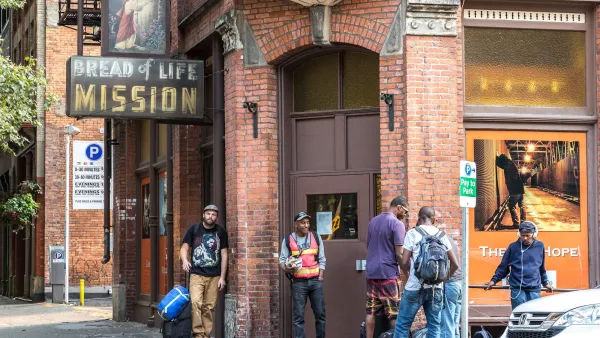
Seattle mayor pledges to build 500 shelter units by June
The Seattle Times editorial board expresses cautious optimism about the mayor's ambitious supportive housing plan.

Planetizen Federal Action Tracker
A weekly monitor of how Trump’s orders and actions are impacting planners and planning in America.

The state-sanctioned urbicide of Austin
People don’t kill cities. Freeways do.

US to reduce Colorado River water deliveries to Mexico
A new Colorado Treaty amendment reduces Mexico’s Colorado River water allocation by 250,000 acre feet.

LA Metro’s ultimatum: no extra buses for LA28 if federal funding isn’t imminently secured
If Metro does not provide additional buses, LA28 organizers will have to find a new way to manage Olympic traffic. LA28’s budget does not include a line item for transit.

Colorado’s Largest Data Center Could Rise Next to Homes — Without a Public Hearing
The proposed campus would consume 11 times the power of Denver International Airport; as it has across the country, opposition mounts.

5 New England states march closer to 800 megawatt wind energy project
Securing federal approval for the project may be complicated under the Trump administration, which has historically been hostile towards domestic wind power.

FREE Course: Walkable City 1: Why Walkability?
After describing his path towards focusing on walkability as the essence of good planning, Jeff Speck marches through his five principal reasons for making more walkable places.
Reinventing Malls: Planning Alchemy—Turning Gray Fields Into Gold
The course focuses on the opportunities and imperatives that shape reinvention of mall sites.

Eagle County Government
Harvard University Graduate School of Design
Nashville Planning Department
The Architects Foundation
University of Cincinnati Online
The Pocatello Development Authority
The Urban Renewal Agency of the City of Pocatello
Journal of the American Planning Association