Randal O'Toole argues that transit will never be energy efficient because ridership is never high enough to warrant the energy expelled.


O'Toole says that on average, public transit runs at about 1/5th of capacity:
"...there are very good reasons why public transit occupancy rates will never rise much above their current levels of about one-fifth full. Suppose you take a bus or train to work during rush hour and it seems full. But it really only seems full as it approaches the center of town. It is likely to be nearly empty when it starts its journey in the suburbs, and be nearly full only when it gets close to the city center."
And, says O'Toole, the "actual energy costs of buses and other forms of transit tend to be not significantly better (and in the cases of buses much worse) than cars."
Read the full story: Why Transit Will Never Be Energy Efficient

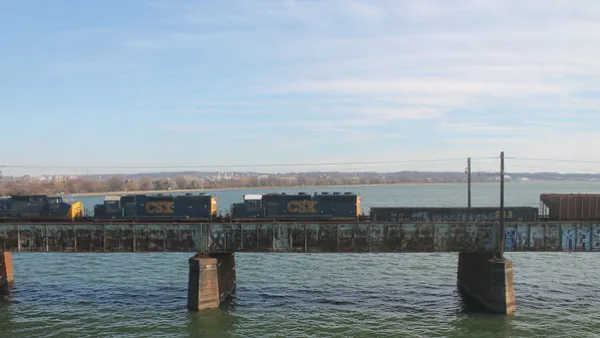
Virginia Passenger Rail Sets Ridership Records, Seeks More Wins
Virginia’s commitment to intercity rail is paying off in record ridership numbers, but more work will be necessary to achieve the state’s ambitions for passenger rail.
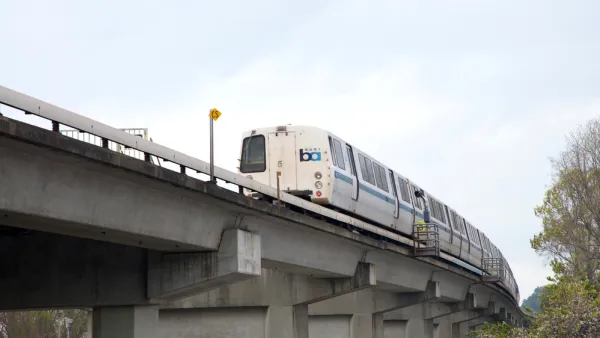
California Could Cut Transit Spending Even as Systems Struggle
Governor Newsom’s proposed budget would cut over $2 billion from transit infrastructure funds.
Public Transit’s Existential Crisis
U.S. transit systems are still scrambling to find alternate funding sources and adjust their service to new needs as ridership remains below pre-pandemic levels.

Planetizen Federal Action Tracker
A weekly monitor of how Trump’s orders and actions are impacting planners and planning in America.

Amtrak, CN end decades-long dispute with eight-year agreement
The new operating agreement establishes an updated framework for the companies to work together, including processes to resolve disputes.

Northwest rail fans eager for Sept. 30 debut of Amtrak’s Airo fleet
Get ready for that new train smell and more seats. But they won’t go faster or run more frequently on the Cascades route in Washington and Oregon.

St. Louis Metro to test if single-car trains can reduce operating costs, maintain rider satisfaction
The pilot program will run from October to spring 2027, and begin with one single-car train operating on Metrolink’s Red and Blue lines.

Pennsylvania is building data centers in abandoned mines
Housing data centers in mines provides an alternative to destroying local forests and may spare residents from data centers’ noise and air pollution.

If Corpus Christi can’t revive desalination plant project, it may owe Texas $235 million
Earlier this month, city officials declined to pursue developing the plant for the second time in a year.

FREE Course: Walkable City 1: Why Walkability?
After describing his path towards focusing on walkability as the essence of good planning, Jeff Speck marches through his five principal reasons for making more walkable places.
Reinventing Malls: Planning Alchemy—Turning Gray Fields Into Gold
The course focuses on the opportunities and imperatives that shape reinvention of mall sites.

City of Thousand Oaks
City of Wisconsin Rapids
Harvard University Graduate School of Design
The Architects Foundation
University of Cincinnati Online
The Pocatello Development Authority
The Urban Renewal Agency of the City of Pocatello