Land Use
Westside Fights Smart Growth: Can Any Development Navigate L.A.'s Traffic Nightmare?
On the Westside of L.A., where rush hour traffic slows to a crawl on the best days, a proposed transit-oriented development called the 'quintessential example' of smart growth by the Mayor's staff faces opposition to its size and attraction to autos.
The Case for Protecting Strip Malls from 'Commercial Gentrification'
As our suburbs diversify, the most affordable commercial districts found in such areas (often in strip malls) become an important entry point for immigrants to build their 'American Dream'. Kaid Benfield asks if such opportunities deserve protection.
Finding Room for a Million More New Yorkers
New York City's population is expected to grow by one million residents by 2040. But where can housing be built to accommodate all these new residents? A new report from a Columbia University think tank identifies the most promising candidates.
Could Golf Courses Become the Next Redevelopment Frontier?
In Portland, Oregon an unlikely partnership of environmental and business interests is supporting a plan to rezone an 84-year-old golf course to allow industrial development, bringing a new slant to the term 'greenfield development'.
D.C. Bike Share Steers Economic Growth
Real estate listings tout proximity to it, retailers want to be near it, and communities are clamoring for it; Capital Bikeshare has become an economic development tool that some think could be as potent as cars and Metro in guiding development.
Flooding Inundates Central and Eastern Europe; Urban Development and Climate Change Blamed
Record floods are swelling major rivers and tributaries across Central and Eastern Europe; disrupting transportation, displacing thousands of people, and causing what is estimated to be several billion dollars of damage.
The Enduring Attraction of the Grid
Fresh from a lively debate about the desirability of the gridiron layout of cities at CNU 21, Paul Knight shares his eight central arguments for why one would be wise to use the rectilinear grid today.
Federal Funds Intended to Help Homeowners Will Instead Fund Demolitions
Federal money earmarked to help prevent foreclosures and assist underwater homeowners will instead be used to fund housing demolitions in a $100 million pilot project in five Michigan cities.
In Aftermath of Building Collapse, Philly Mulls Vacant Property Tax
The tragic deaths of six people in last week's downtown building collapse have prompted Philadelphia City Council President Darrell L. Clarke to revive a bill he originally sponsored 13 years ago that would penalize owners of vacant properties.
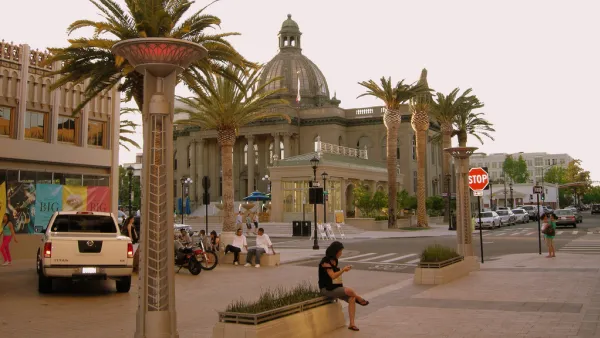
From 'Deadwood City' to Thriving Downtown: Redwood City's Remarkable Comeback
Downtown Redwood City (near San Francisco) has seen an amazing turnaround due to an aggressive program of code reform, strong investments in public spaces, and a strategy of using entertainment as a catalyzing force.
Smart growth and city budgets: what matters most?
Where you build is important. But when it comes to city budgets, how much you build matters more.
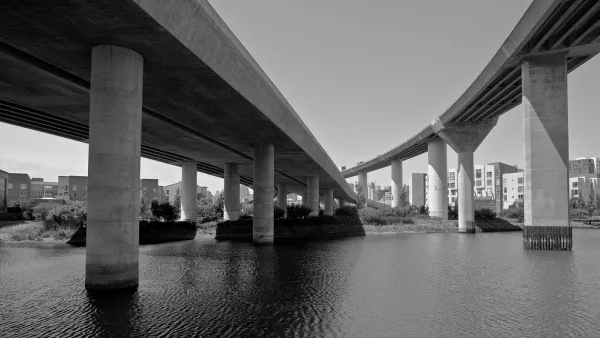
'Mr. Mayor, Tear Down This Freeway', Says San Francisco Planning Think Tank
In their June magazine, SPUR proposes a bold vision for transforming several San Francisco neighborhoods based on three big moves: tear down the end of Interstate 280, put Caltrain and high-speed rail underground, and redevelop the Caltrain railyard.
Fabricating Philadelphia's Industrial Revival
A newly adopted master plan seeks to transform Philadelphia's underperforming industrial belt along the Lower Schuylkill River into a modern manufacturing hub.
What is the Role of the National Mall?
The cancellation of the Hirshhorn Museum's bubble project has Dan Malouff pondering the role of the National Mall. Should it be an urban room whose buildings define its open space, or the setting for risk-taking architecture?
Is Philadelphia Building Collapse the City's Fault?
On Wednesday, a four-story building that was being demolished in downtown Philadelphia collapsed on top of a neighboring store, killing one person and injuring several people. According to Inga Saffron, the city bears some responsibility.
Which of America's Cities Has the Most Plentiful Parks?
Emily Badger looks at the latest "ParkScore" rankings released by the Trust for Public Land (TPL). Using advanced GIS, TPL ranks America's fifty largest cities by evaluating factors including park access, size, services and investment.
Piecing Together a Central Park for the Entire United States
The American Prairie Foundation is piecing together 500,000 acres of privately owned land across the Great Plains to join with three million acres of public land in forming one of the world’s largest wildlife reserves.
After a Slow Start, Can the BeltLine Speed a Culture Shift in Atlanta?
Much to the chagrin of those who partake in the city's congested commute, cars dominate as Atlantans' prime means of mobility. The city's wildly ambitious BeltLine project seeks to change this, but can it be built fast enough to have an impact?
Oil and Ag Fight Over Prime California Farmland
What's the most productive way to utilize the fertile land that sits above California's vast Monterey Shale oil reserve? The environmental impacts of fracking on California's farmland could derail what promises to be an enormous oil boom.
Sharing Transit Costs Produces Shared Benefits in D.C.'s NoMa Neighborhood
Jay Corbalis profiles NoMa (short for “North of Massachusetts Avenue”), Washington D.C.'s fastest growing neighborhood, where a building boom has been propelled by an innovative transit funding partnership between the public and private sectors.

FREE Course: Walkable City 1: Why Walkability?
After describing his path towards focusing on walkability as the essence of good planning, Jeff Speck marches through his five principal reasons for making more walkable places.
Reinventing Malls: Planning Alchemy—Turning Gray Fields Into Gold
The course focuses on the opportunities and imperatives that shape reinvention of mall sites.

City of Rosemead
Rutgers University, Edward J. Bloustein School of Planning and Public Policy
One Hundred Miles
University of Michigan School for Environment and Sustainability (SEAS)
Hunter College, City University of New York (CUNY)
The Architects Foundation
City of Cambridge
Montrose County
The Pocatello Development Authority









