Land Use
Terms and Concepts for Understanding Land Banks
Clarifying some of the jargon that drives the land bank process in Cuyahoga County, Ohio reveals the importance and scale of neighborhood stabilization in some parts of the country.
Should Architects Be Citizen Scientists?
Can self-contained urban food systems exist in the core of our cities? Architect Darrick Borowski of New York based firm ARExA developed a model to determine just that.
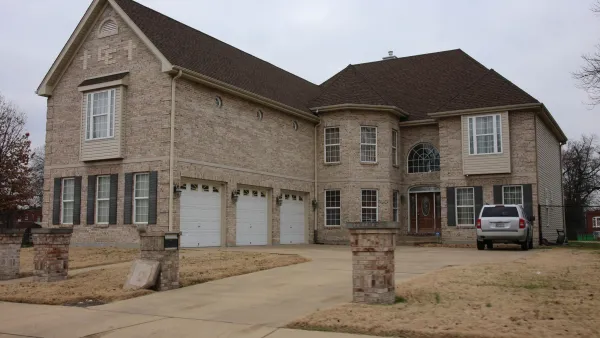
Why the McMansion Isn't Really Back
Joe Cortright criticizes reports linking high median new home sizes to a renewed demand for McMansions. The market for single-family homes, he argues, locks out buyers of modest means. Only the well-off are buying.

Smart Planning for Economic Opportunity
The Center for Opportunity Urbanism has a wonderful goal—to improve economic opportunities for working class households—but uses terrible research to reach confusing recommendations about which policies are best. Please do better!
Kentucky Landfill No Longer Accepting New York's Trash
East Coast states will no longer be able to send their waste to a landfill in Kentucky—where regulators and residents clearly got more than they bargained for.
TIF Shifts to the Suburbs in Minnesota
A common and sometimes controversial funding mechanism is growing in popularity in suburban Minnesota, even as its use in the urban core decreases.
Density Bonuses Proposed in High-Demand San Francisco Neighborhoods
The San Francisco Planning Department is proposing new densities in certain neighborhoods in exchange for building new units for low- and middle-income residents.
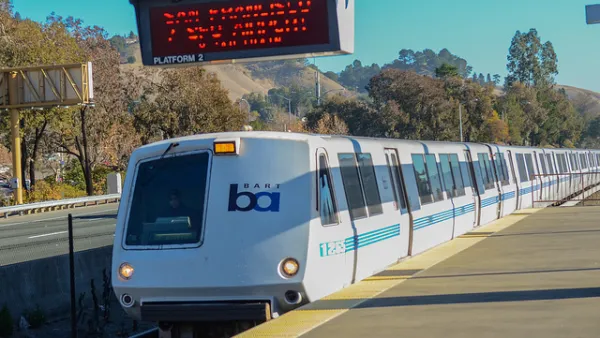
Bay Area Town: 44 Single-Family Homes on a Site Once Considered for 315 Apartments
Lafayette provides a case study of the San Francisco Bay Area housing market.
'Digital Coast' Connects Planners and Data for Coastal Resilience
A new resource created by the National Oceanic and Atmospheric Administration in partnership with the APA makes it easier for planners to access the data necessary to plan for climate adaptation, sea level rise, and other forms of coastal resilience.

Lesson from Seattle: Zoning Is a Political Debate, Not a Policy Debate
The swift rejection of a proposal to upzone residential neighborhoods in Seattle inspired The Urbanist to evaluate the lessons of the episode. One takeaway: don't demonize single-family homeowners.
Critiquing the UN's Sustainable Development Goals
Much to the chagrin of Americans of conservative political stripes, the United Nations has adopted a set sustainable development goals. According to a recent op-ed, however, the left also has reason to fault the UN's efforts.

$1 Billion Master Planned Community Moving Forward on the Ohio River
A suburb of Cincinnati provides evidence of renewed demand for master planned communities.

Frank Gehry Hired to Plan the Los Angeles River—Controversy Ensues
Details are scarce—but reports are that Frank Gehry has been working behind the scenes to create a new vision for the Los Angeles River.
Seattle's 'Oh So Human' Hesitations About Change
Seattle's recent Housing and Livability Agenda (HALA) recommendations have created a sensational dialogue about zoning, affordability and neighborhood change. Chuck Wolfe explains how this may create an unprecedented basis for consensus in the city.

Explaining the Importance of Mandatory Inclusionary Zoning
A term you need to know.

A Visionary Plan for an Urban Village in Minneapolis-Saint Paul
The Prospect North Partnership intends to build a fully integrated, resource-efficient neighborhood in a prime yet underdeveloped location.

Los Angeles Mandates Fault Surveys in Risky Areas
According to a new rule, developers building over known faults will need to drill or take samples to find the rift's exact position. While it slows down construction, the measure might prevent catastrophic future quake damage.

Strategies for Maximizing Transit Ridership
Jarrett Walker outlines the conditions under which transit serves the greatest number of travelers. Maximizing ridership, he argues, requires thinking like a business and catering to demand.

Connecticut Shoreline Rail Vulnerable to Floods
Long stretches of Connecticut's "lifeblood" shoreline rail line lie in the path of rising seas and future floods. While moving the tracks further inland is prohibitively expensive, a resilience plan is still needed.

NIMBY Obstruction and the Density Paradox
An op-ed describes a paradox produced by the ongoing debates over density while also presenting potential solutions for overcoming the resulting impasse.

FREE Course: Walkable City 1: Why Walkability?
After describing his path towards focusing on walkability as the essence of good planning, Jeff Speck marches through his five principal reasons for making more walkable places.
Reinventing Malls: Planning Alchemy—Turning Gray Fields Into Gold
The course focuses on the opportunities and imperatives that shape reinvention of mall sites.

One Hundred Miles
County of Mendocino
planning NEXT
The Architects Foundation
University of Cincinnati Online
Montrose County
Northern Illinois Transit Authority (NITA)
The Pocatello Development Authority









