Environment
How to Make a Resilient City (budget)
Building intensity can do just about everything: make a city budget more resilient, conserve land, and encourage infill. And possibly make your morning omelet.
As Feds Drag Their Feet on New Regulations, Environmentalists Fume
Worries about the economic impacts of new regulations, high-level vacancies and election-year politics have raised the review time for new rules being considered by the Obama administration to a 20-year high. Many in his own party are not pleased.
New York Plans $20 Billion Battle Against Climate Change
On Tuesday, Mayor Bloomberg outlined an ambitious $20 billion plan to adapt New York City's infrastructure and built and natural environments to respond to the threats of rising seas and extreme storms.
It's Alive! 5 of the World's Most Bionic Buildings
Cate St Hill examines the futuristic systems being employed by the most biologically advanced buildings in the world.
Flooding Inundates Central and Eastern Europe; Urban Development and Climate Change Blamed
Record floods are swelling major rivers and tributaries across Central and Eastern Europe; disrupting transportation, displacing thousands of people, and causing what is estimated to be several billion dollars of damage.
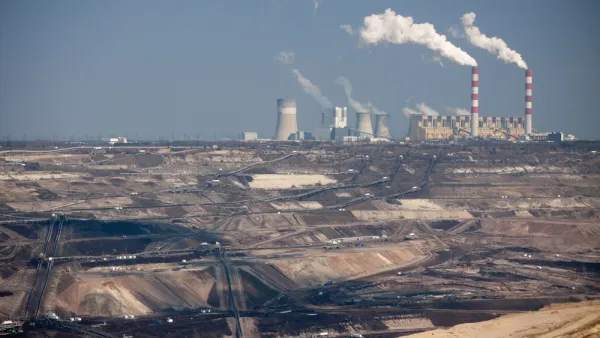
4 Measures Could Help Stave Off the Worst Effects of Global Warming
A new report from the International Energy Agency has some sobering news about the planet's record setting carbon emissions. But it also identifies four policy recommendations that could help stave off warming in excess of the dreaded 2°C mark.
The Weight of Development: Could Shanghai be Sinking?
Shanghai and the Pudong District in particular have seen unprecedented development over the past 25 years. The soil the city is built upon, however, has begun to subside recently.
CEQA Reform Advances in CA Legislature, Likely to Become Law
A bill aimed to 'modernize' California's landmark environmental law passed the state's Senate by a vote of 39-0, and its chances of being signed into law appear strong. A bill to revive redevelopment advanced, but seems destined to be vetoed.
Little-Noticed Rule Change May Be Big Statement of Obama's Climate Agenda
The DoE recently updated its energy-efficiency standards for microwaves. Big deal, right? Actually, observes Brad Plumer, by upping the 'social cost of carbon' used to calculate the benefits of the rule, the government has made a big shift.
In Key Ruling, Court Orders Study of Highway Expansion's Effect on Sprawl
A federal court has ruled that a proposed highway expansion said to be the largest single transportation project in Wisconsin history must consider regional impacts (on sprawl and transit-dependent populations) in its environmental analysis.
Piecing Together a Central Park for the Entire United States
The American Prairie Foundation is piecing together 500,000 acres of privately owned land across the Great Plains to join with three million acres of public land in forming one of the world’s largest wildlife reserves.
Oil and Ag Fight Over Prime California Farmland
What's the most productive way to utilize the fertile land that sits above California's vast Monterey Shale oil reserve? The environmental impacts of fracking on California's farmland could derail what promises to be an enormous oil boom.
British Columbia Rejects Massive Northern Gateway Oil Pipeline
The rejection may ultimately doom the $6 billion pipeline to transport Alberta's oil sands crude west through British Columbia for export. Final word is reserved for Prime Minister Stephen Harper, but many say an overturn would be highly unusual.
Visualizing Global Greenhouse Gas Emissions
A new infographic shows in elegant detail exactly how much individual sources and sectors contribute to global greenhouse gas emissions. Brad Plumer parses the data.
On the Waterfront in Post-Sandy New York
On Places, Tom Vanderbilt surveys the landscape and politics of New York City after Hurricane Sandy, focusing on both early response and long-range planning.
Urbanism and the Landscape Architect
Even as the landscape becomes increasingly important to cities, landscape architects remain underrated as contributors to the urban realm. When is everyone else going to see what we already know?
Free NY/NJ Ferry Service For Bicyclists?
The epic, years-long battle for converting one Holland Tunnel tube to a bicycle/pedestrian-only facility may find compromise in this proposed free ticket voucher program for bicycle-toting ferry passengers.
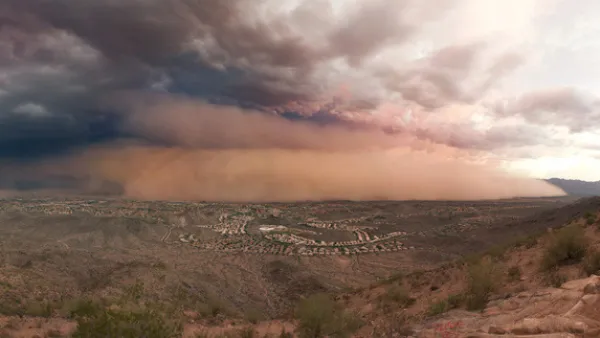
The Ten American Cities Most At Risk from Climate Change
Grist has compiled a list of the ten U.S. cities most likely to be affected by climate change.
The Future of Vertical Urban Farming is Pink
Let's put aside those renderings of high-rise urban greenhouses with lush, vertical gardens. Vertical farming's future, instead, lies more practically in large, suburban "pinkhouses", says one expert.
Does Delhi's Drive to be a World-Class City Doom Low-Income Communities?
A proposal for a vertical neighborhood in Delhi is long on height but short on insight, according to Greg Randolph of the American India Foundation. Is Delhi ‘poised to repeat the public housing mistakes of the West’?

FREE Course: Walkable City 1: Why Walkability?
After describing his path towards focusing on walkability as the essence of good planning, Jeff Speck marches through his five principal reasons for making more walkable places.
Reinventing Malls: Planning Alchemy—Turning Gray Fields Into Gold
The course focuses on the opportunities and imperatives that shape reinvention of mall sites.

City of Rosemead
Rutgers University, Edward J. Bloustein School of Planning and Public Policy
One Hundred Miles
University of Michigan School for Environment and Sustainability (SEAS)
Hunter College, City University of New York (CUNY)
The Architects Foundation
City of Cambridge
The Pocatello Development Authority
The Urban Renewal Agency of the City of Pocatello









