Community / Economic Development
Chicago to 'Facilitate and Accelerate' Growth in Seven Promising Neighborhoods
Chicago Mayor Rahm Emanuel has identified seven city neighborhoods as "Opportunity Planning Areas" where public resources will be directed to help shape and accelerate nascent redevelopment efforts, reports Fran Spielman.
Great Placemaking Begins with Acknowledging the Obvious
Our brains simply tune out anything that might suggest that our behavior is in some way complicit in our problems. Scott Doyon zeros in on the obvious, but often overlooked, problems with our auto-oriented culture.

Top Trends 2012-2013
Over the course of the year, the editors of Planetizen review and summarize thousands of articles, books, studies and editorials related to planning and urban development. Here are our picks for the most notable planning trends of the past year.
Taking the Fun out of Entertainment Districts
Using Omaha's Old Market neighborhood as an example, Nathaniel M. Hood calls for an end to the urban "Entertainment District" - the common revitalization tool that produces a "single-use monoculture" that alienates families and baby boomers.
Schizo Skyline: Warring Williamsburg Mandates Leave Waterfront Out of Whack
Did the rezoning of the Williamsburg waterfront backfire? Stephen Jacob Smith reflects on the lack of transition between the neighborhood's skyscraping waterfront and its low-rise inland, a missing middle mandated by recent upzoning.
Filmmaker Tells Her Side of Williamsburg's Gentrification Story
As SHoP unveils massive redevelopment plans for the Domino Factory site in Williamsburg, Su Friedrich rails against the gentrification that has already transformed the neighborhood in her film Gut Renovation, which premiered at Film Forum last week.
Growing Disparities Belie Chicago's Bloom
Recent exultant headlines about downtown's astounding growth overlook Chicago's troubling bifurcation into two cities — "one where optimism abounds, one where hope and opportunity are hard to find," writes Marilyn Katz.
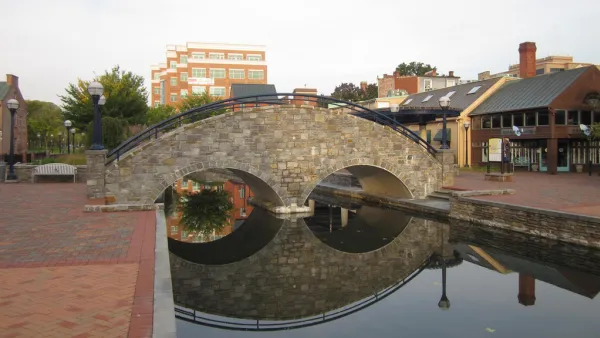
America's Biggest Small Town Comebacks
Jordan Rane profiles 8 historic towns from across the country that have overcome significant challenges to become desirable destinations once again.
Haiti Update: Reshaping Ravines
Haiti has seen improvements since the 2010 earthquake. However, persistent challenges remain. Dave Hampton, architect and international development consultant for natural and built environment integration, writes about one in particular: ravines.
Serving the Needs of Seniors: Solutions in Practice
We've long focused on the *what* when providing housing for seniors. Today Hazel Borys reminds us that the *where* is equally critical, if not more so.
Participation Makes for Successful Placemaking
In a compelling entry into the public dialog around placemaking, Project for Public Spaces argues that people, rather than merely places, create vibrancy in a community.
Chaining Bicycles to Economic Development
Biking can be a formidable economic development tool, argues James A. Bacon, who examines several ways in which investment in bicycle infrastructure can create wealth and jobs.
One Detroit Rises, While the Other Falls
Monica Davey describes the divergent paths of Detroit's public and private sectors.
For California, Success as Environmental Pioneer Means Others Must Follow
Although California has long been a pioneer in protecting the environment, for its most innovative policies - from mandating renewable energy to limiting greenhouse gas emissions - to succeed, it will need other states, and countries, to follow.
Bike-Oriented Development Sprouts in Portland
With the traditional metrics of retail economics and geography being undermined by the Internet, businesses are searching for new ways to reach potential customers. Astute business owners in Portland are recognizing the value in good bike exposure.
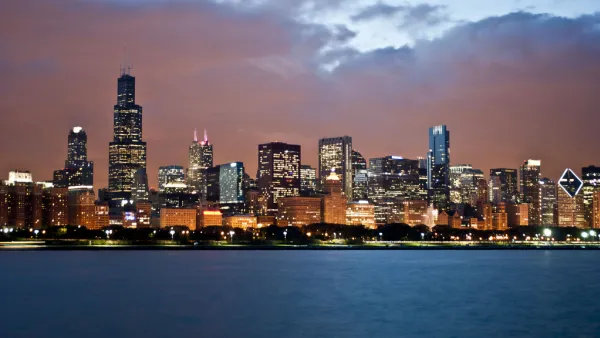
Downtown Chicago: America's Hottest Urban Center
With its surging job and population growth, and high retail sales, downtown Chicago is outperforming the suburbs for the first time in decades. Perhaps more than any other city in the country, it reflects the inversion of the post-war paradigm.
How Will New York's Landscape Change Once Mayor Mike Leaves Office?
Ryan Holeywell looks at the land use legacy of the Bloomberg Administration - perhaps his "signal achievement" - and wonders if his successor can continue the momentum.
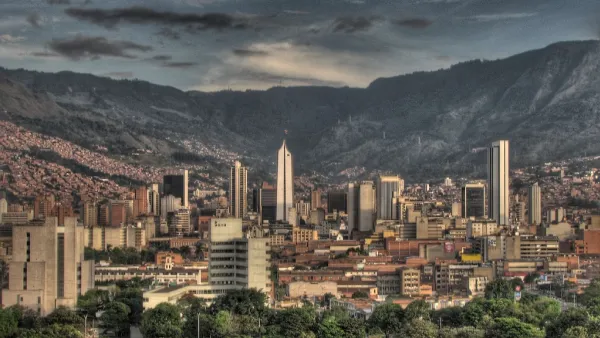
Medellin Chosen as 'Innovative City of the Year'
From an initial list of 200 candidates, Medellín, Colombia has been selected as the winner of The Wall Street Journal and Citi's “City of the Year” competition.
Essence of Sustainability
Challenges that strong and weak markets alike share
Look to the Old Confederacy, not the Coasts, for America's Economic Revival
Accounting for 45% of America's land mass and 30% of its population, the Great Plains, the Intermountain West, the Gulf states, and the Southeastern industrial belt are key to a national revival, says a new report from the Manhattan Institute.

FREE Course: Walkable City 1: Why Walkability?
After describing his path towards focusing on walkability as the essence of good planning, Jeff Speck marches through his five principal reasons for making more walkable places.
Reinventing Malls: Planning Alchemy—Turning Gray Fields Into Gold
The course focuses on the opportunities and imperatives that shape reinvention of mall sites.

City of Rosemead
Rutgers University, Edward J. Bloustein School of Planning and Public Policy
One Hundred Miles
University of Michigan School for Environment and Sustainability (SEAS)
Hunter College, City University of New York (CUNY)
The Architects Foundation
City of Cambridge
Montrose County
The Pocatello Development Authority









