Community / Economic Development
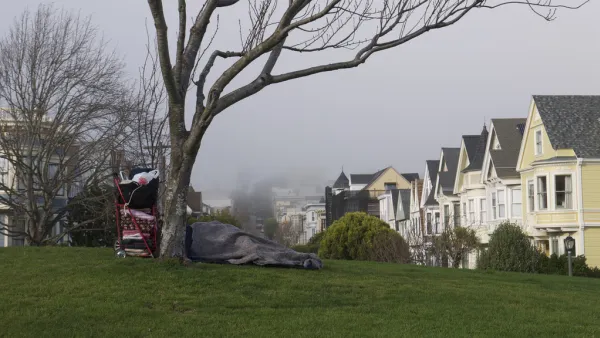
Homeless Are No Longer 'Out of Sight, Out of Mind' in Booming Cities
One of the sad contradictions of the revival of core urban areas has been the clash between waves of investment and affluence with large populations of homelessness. Many cities are still coming to terms with the issue, much less solving it.

Heady Market in Chicago's North Side Drives Teardowns
Lakeview, located north of Lincoln Park and adjacent to Lake Michigan, leads the city by a wide margin in residential teardowns over the past five years. Local developers are selling new homes for four times the original price paid.

Op-Ed: Sharing Cities We Can Trust
Duncan McLaren and Julian Agyeman launch a withering critique of the sharing economy as we know it, and envision "sharing cities" built around technologies that put community before commerce.
Filling in the 'Missing Middle': No New Wheels, Please
A new crop of developers are delivering fine-grained urbanism. Ben Brown checks into their boot camp and provides an update on the movement.
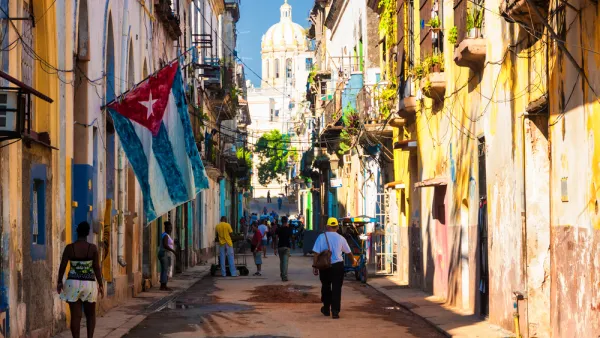
Everyone Wants a Piece of Havana—Can Cuba Keep Up?
Cuba and its capital city of Havana are experiencing several, simultaneous revolutions. The opportunity for residents is also an opportunity for developers and architects, as well as a challenge for planners.
The Trouble With Using GDP to Measure Economic Growth
Following recent bad news about the sluggish growth of the country's gross domestic product (GDP), the Brooking Institution reminds policy makers that growth does not necessarily trickle down to economic well-being.
How to Beat Extreme Heat
Louisville, Kentucky has recently been named the "most rapidly growing urban heat island" in the U.S., but what led to this title? Jeff Byles traces how cities are becoming increasingly warm through a number of different factors, including economic.

Houston's Lower-Income and Minority Communities Face Lack of Access to Medical Care
Maps showing the concentration of medical facilities in Houston, shows a greater density in higher-income areas.
Wave of Walmart Closures Cuts Across the Rural, Urban Divide
January marked an unprecedented contraction for Walmart, which closed 269 stores, including all 105 of its small format Walmart Express stores.
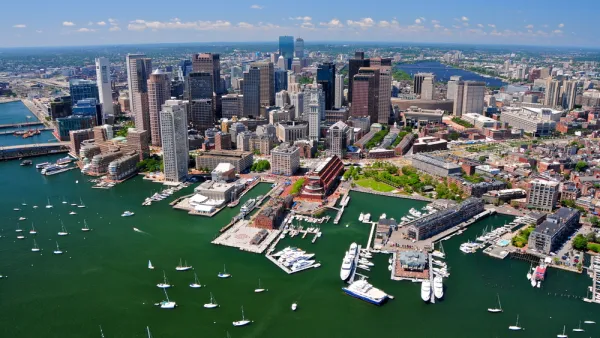
Digging Deeper Into the Deal That Brought GE to Boston
The big news about GE moving to Boston is more than just a story about a large company moving from the suburbs to the big city—it's also about how far cities will go to attract new jobs, and at what cost.
Eminent Domain an Issue in Republican Presidential Primary, Again
Sen. Ted Cruz (R-Texas) is using a new ad against GOP frontrunner Donald Trump, a billionaire real estate developer, based on his use of eminent domain against an elderly woman in Atlantic City. Trump strongly defended using the controversial tool.

The Plan to Bring 50,000 People Back to Akron, Ohio
Down to a population of 197,859 from its 1960 peak of 290,351, the city of Akron is looking for a way to bring people back to its community. One thing Akron has going for it already: an enthusiastic champion of the cause.
Charrette: A Social Innovation Lab
When charrettes and public design workshops reach their most inclusive and transparent forms, do they become social innovation labs? Hazel Borys thinks so.
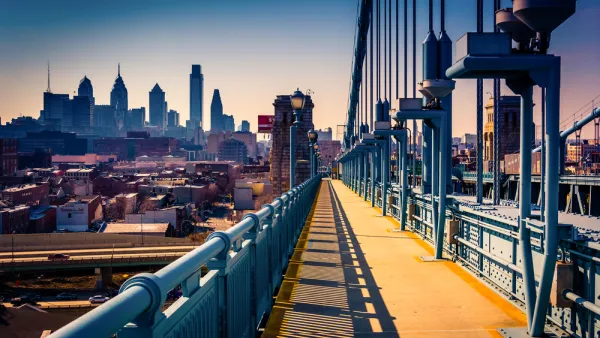
Philadelphia's Old City Finally on a Roll
The comeback story for the city of Philadelphia's oldest neighborhood—Old City—displays the power of community organization and deliberate planning.
The Big Debate: How Urban Is Job Growth?
Jed Kolko, former Chief Economist and VP of Analytics at Trulia, and Joe Cortright of City Observatory dug deep into a debate that gets at the heart of recent trends in how and where the United States works.
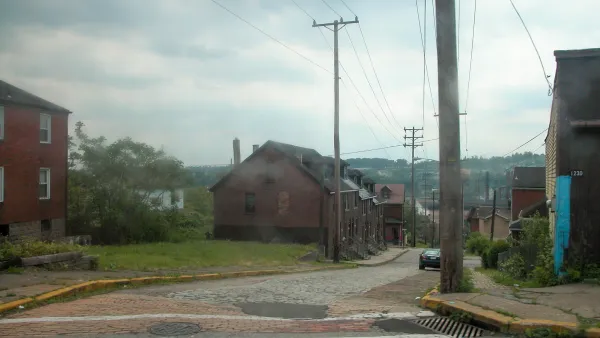
Managing Abandoned Homes in North Braddock
The usual litany of Rust Belt woes hit North Braddock, Pennsylvania particularly hard. The Pittsburgh suburb has shed two-thirds of its population and is burdened with 350 abandoned properties.
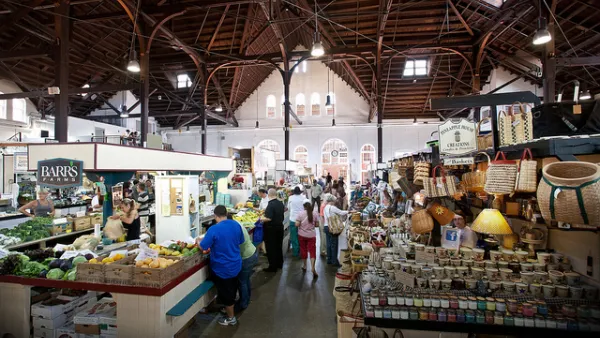
Imagining the Future Urban Food Market
Public food markets can be key centers of urban commerce and social life. Late last year, a brainstorming event in London considered how they might evolve to accommodate modern lifestyles and technologies.
Data Plus Community: A Winning Formula for Green Infrastructure
These days, Big Data is the topic at hand, but Arup's Vincent Lee says data analysis can only go so far. He uses his work on the New York Rising Community Reconstruction Program to illustrate why a "human element" is crucial to finding solutions.
New Studies Reveal 5 Reasons Policymakers Should Prioritize Local Business in 2016
A raft of recent research finds that small, local businesses are critical to overcoming many of our biggest challenges. This article rounds up the new studies and what they say about why local business should be a focus of planning in 2016.

Friday Funny: A History of Political Cartoons on the Subject of Gentrification
Cartoonists have been satirizing the issue of gentrification for almost a century. Witness the evolution of gentrification political cartoons in an article by The Guardian.

FREE Course: Walkable City 1: Why Walkability?
After describing his path towards focusing on walkability as the essence of good planning, Jeff Speck marches through his five principal reasons for making more walkable places.
Reinventing Malls: Planning Alchemy—Turning Gray Fields Into Gold
The course focuses on the opportunities and imperatives that shape reinvention of mall sites.

City of Rosemead
Rutgers University, Edward J. Bloustein School of Planning and Public Policy
One Hundred Miles
University of Michigan School for Environment and Sustainability (SEAS)
Hunter College, City University of New York (CUNY)
The Architects Foundation
City of Cambridge
Montrose County
The Pocatello Development Authority









