Amidst a spate of rare good news, cities are pulling investments from their Vision Zero commitments. They’re getting it all wrong.



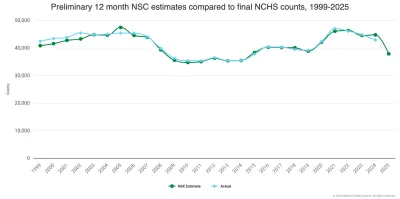
The National Safety Council has good news: it’s estimated that traffic deaths decreased by 12 percent in 2025. While final traffic death data for 2025 from the National Highway Traffic Safety Administration (NHTSA) will take longer to be released, the National Safety Council's estimate is an exciting declaration of safety trends moving in the right direction.
A 12 percent decline in traffic deaths means that in 2025, an estimated 37,810 people still died on American roadways, or an estimated 1.14 deaths per 100 million vehicle miles traveled. Cities are seeing a similar trend in declining traffic deaths. Preliminary data from San Francisco reported a 42 percent drop in traffic deaths year over year, New York City had the fewest traffic deaths ever recorded in the city’s history, and New Jersey traffic deaths declined by 15 percent in 2025. While these declines reflect a significant win for all, they are still far from the only acceptable number of traffic deaths, which is zero.
The 2025 trends highlight that when we invest in Vision Zero, we typically see success. When cities have the resources and funding to install safety improvements like proven safety countermeasures, the time and energy to devote to Safe System Approach adoption, and the safety and outreach data to drive decisions, we see, time and time again, that Vision Zero can work.
But what if they don’t have those resources? A key factor in securing the resources and funding to install safety improvements is the Bipartisan Infrastructure Law’s Safe Streets and Roads for All (SS4A) Grant Program. The National Safety Council argues that infrastructure investments, like SS4A, stemming from federal and state safety initiatives, supported the decline in deaths in 2025. SS4A is a competitive grant program with $5 billion in appropriated funds over 5 years to support the implementation of safety work. The foundation of the program is creating an Action Plan, which can then be used to make safety investment decisions. While SS4A is the start of a funding conversation, cities need to figure out how to find sustainable and long-term funding sources that allow them to invest in safety work outside of grant funding, too. The bad news? Many have not.
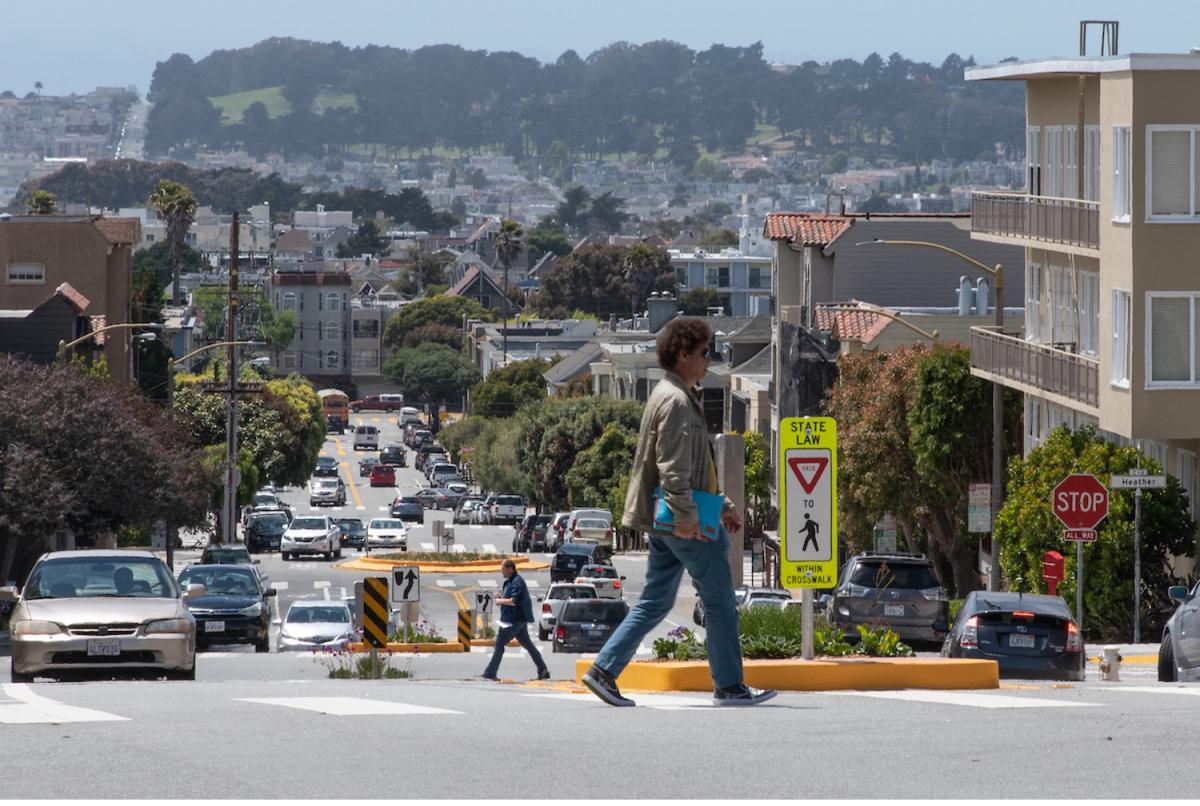
For example, Chicago saw the lowest number of traffic deaths in the city since 2016 in 2025, and acknowledges that major street safety infrastructure projects have driven that decline. However, despite investment success, the city is targeting a nearly 50 percent reduction in their Complete Streets and Vision Zero budget by 2028, and around an 80 percent reduction by 2029. Despite seeing success with investment, Chicago has decided to slow it down. Chicago is only one example of a city changing the funding equation for Vision Zero. In Los Angeles, millions of dollars in grants for safety projects have been returned because the projects could not be completed on time. For other cities, changing requirements on SS4A grants means they either have to change their project scope or return the funding.
The advice is true, regardless of whether you’re a city, state, or federal program: when you see success in Vision Zero, that is the time to increase funding and invest in roadway safety, not the time to walk away. When we (hopefully) continue to see declines in traffic deaths and success in implementing proven safety countermeasures, that is the time to mature a Vision Zero program, invest in additional solutions, build redundancy, and prioritize safety culture change.
We are now at an inflection point with many early adopter cities reaching their Vision Zero commitment date. Surface transportation reauthorization is looming and safety trends are moving in the correct direction. Now is the time to double down and continue the work so we can get to the only acceptable number of traffic deaths in the United States: zero.

Hoboken's $20 Vision Zero fix
The New Jersey city eliminated traffic deaths for the last nine years in a row.
Pedestrian Deaths Fell by Largest Percentage in 15 Years, but Remain Above Pre-Pandemic Levels
After a spike in deaths during the Covid-19 years, road deaths fell to 3,024 in the first half of 2025.
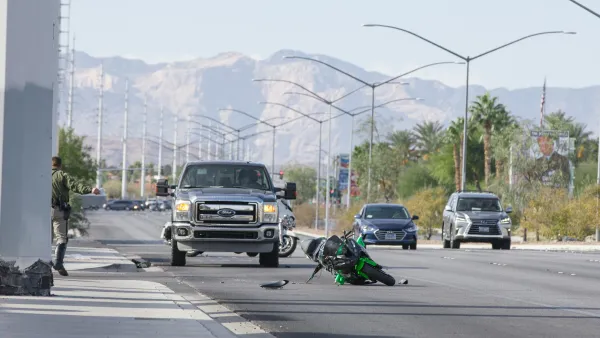
Nevada’s Highway Safety Plan Targets 35% Drop in Traffic Deaths by 2035
The 2026-2030 plan aims to reduce deaths and serious injuries with a long-term goal of eliminating traffic deaths by 2050.

The state-sanctioned urbicide of Austin
People don’t kill cities. Freeways do.

US to reduce Colorado River water deliveries to Mexico
A new Colorado Treaty amendment reduces Mexico’s Colorado River water allocation by 250,000 acre feet.

New Jersey’s second-largest city bans standalone data centers
Jersey City will continue to allow co-location facilities, such as those meant for research institutions that store their own data.

Amtrak not solely to blame for New Jersey commuter rail's unreliability, report finds
A new study from the Garden State Initiative found that NJ Transit’s budget grew 20% across a 4 year period, but reliability declined significantly over the same period.

EPA erases limits on planet-warming pollution from power plants
Under Monday’s plan, power plants would still have some limits on how much mercury, arsenic and other contaminants they can emit.

Phoenix announces new on-demand transit service, more frequent RAPID buses
Both new services will launch in October, and are part of Phoenix's Project Effective Access Solutions for Easing Congestion.

FREE Course: Walkable City 1: Why Walkability?
After describing his path towards focusing on walkability as the essence of good planning, Jeff Speck marches through his five principal reasons for making more walkable places.
Reinventing Malls: Planning Alchemy—Turning Gray Fields Into Gold
The course focuses on the opportunities and imperatives that shape reinvention of mall sites.

Eagle County Government
Harvard University Graduate School of Design
Nashville Planning Department
The Architects Foundation
University of Cincinnati Online
The Pocatello Development Authority
The Urban Renewal Agency of the City of Pocatello
Journal of the American Planning Association

