Urban Development
Are Social and Economic Justice Planning Outcomes?
New York Mayor Bill de Blasio appointed Planning Commission Chair Carl Weisbrod while promising planning decisions that produce economic and social justice benefits. The question is to what degree planning can influence those outcomes.
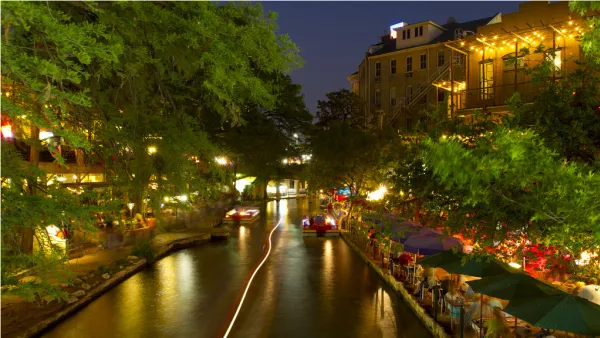
10 Unexpected Cities to Love
A valentine to ten cities around the world that are quietly creating urban paradigms to admire and emulate.
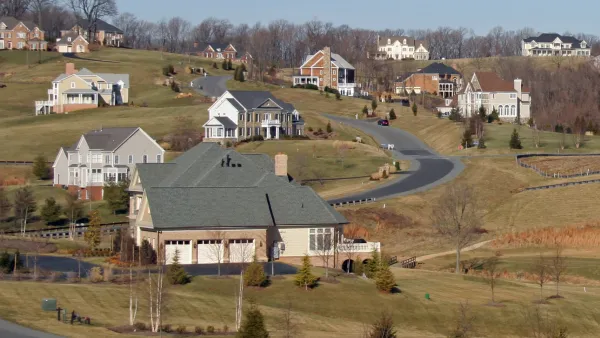
Drive Till You Disqualify: Will Businesses Continue Hiring Super-Commuters?
Workers with long commutes are more likely to be be tired and stressed at work, and businesses are learning that they often make for less productive employees.
Peak Sprawl Happened—20 Years Ago
Analysis of the USDA’s 2010 National Resources Inventory, which tracks land use, shows the growth rate of suburban sprawl peaking in the mid-1990s, declining by two-thirds since then, even through the most recent housing boom. How did that happen?

Ranking Freeways Without Futures
The Congress for the New Urbanism releases a Top 10 list highlighting the worst, most ready-to-be-junked urban freeways. New Orleans, Syracuse, and Detroit make the list. Boulevards are a viable and much-needed alternative, says CNU.
Zoning Code Change Considered to Protect Philly’s Cornice Lines
To protect the character of city blocks, a Philadelphia councilwoman has proposed new restrictions on building heights on blocks with uniformly two-story buildings.
Imagining Silicon Valley Parking Lots as Corporate Housing
A series of renderings asks the question: "What might it look like if tech campuses replaced their parking lots and provided all the necessary housing on-site?"
Study: New Mexico MainStreet Achieves Dramatic Success
A new study shows evidence of dramatic positive impacts for the New Mexico MainStreet program, a state program working in coordination with the National Trust for Historic Preservation.
New Study Changes the Narrative on Slums
Researchers are building a more complete archive of life in slums, home to one-third of the urban population of developing countries. A new study from the Massachusetts Institute of Technology (MIT) rejects assumptions about the benefits of slums.
De Blasio Selects Planning Director
Mayor Bill de Blasio has selected Carl Weisbrod, the co-chairman of his transition team and a veteran New York City real estate executive to be the Chair of the City Planning Commission, aka Planning Director. Housing affordablity will be a priority.

San Francisco Planners Pitch Freeway Removal
Planners in the city of San Francisco have a proposed a $1.4 million study to examine the possibility of removing part of Interstate 280 in the city and convert a rail yard would yield 37 acres of prime urban real estate.
Researchers Link Density, Destinations to Active Transportation Habits
What, exactly, makes a neighborhood walkable? A new study published in the science journal PLOS-ONE begins to answer that question.
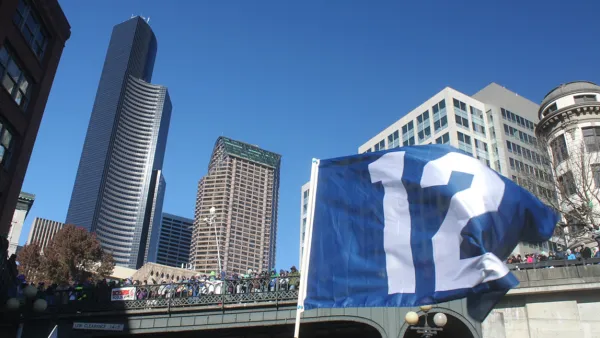
Placemaking Lessons Learned from Seattle's Super Bowl Parade
Last Wednesday, an estimated 700,000—more than the city's population of 635,000—welcomed the Seahawks home, without major incident. Writing in The Atlantic Cities, Chuck Wolfe describes five lessons for placemaking through words and photographs.

Arizona’s Suburb of the Future
Atlantic Cities details the new urbanist vision of a master planned community called Eastmark in Mesa, Arizona. The development’s mix of uses, form-based code, and walkability create “an uncommon sales pitch for car-dependent Arizona.”
Recapping the Tenure of D.C. Planning Director Harriet Tregoning
Harriet Tregoning recently announced the end of her seven-year tenure as planning director of Washington D.C. Called by some the “futurist-in-chief,” Tregoning will head to HUD, where she’ll head the Office of Sustainable Housing and Communities.
Miami Dig ‘One of the Earliest Urban Plans in Eastern North America’
Plans to build “movie theaters, restaurants and a 34-story hotel” overlap with the archaeological site of a 2,000-year-old Tequesta village.
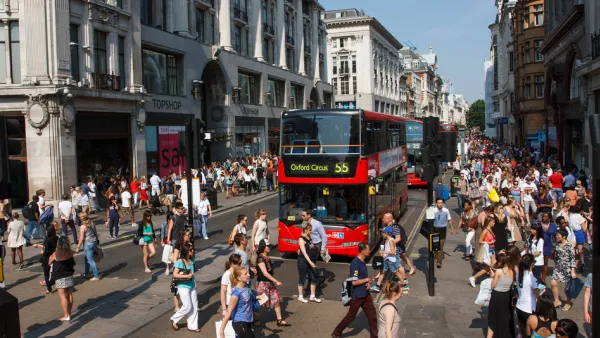
What Is 'Walkability,' Really?
Walkable developments are in demand, but what really makes a community "walkable"? It all boils down to three simple principles—physical access, proximity, and places—says John Lavey.
Train Stations Plan for the Future
In many places across the country, rail is breaking ridership records as we move away from the personal car. How does a rail hub manage the influx of passengers while being a good neighbor?
Ballot Box Zoning Initiative Possible for San Francisco
Proponents of a ballot initiative that would require a vote for any development on the San Francisco waterfront that exceeds existing height limits have gathered enough signatures to put the issue to a vote.
Why the U.S. is Auto-Dependent (and Europe isn't)
In the early part of the 20th century, Europe looked toward the U.S. to learn how to adapt cities to car travel, as difficult as that may seem. It wasn't until the 1990s, in the presence of sprawl and failing public transit that the pattern reversed.

FREE Course: Walkable City 1: Why Walkability?
After describing his path towards focusing on walkability as the essence of good planning, Jeff Speck marches through his five principal reasons for making more walkable places.
Reinventing Malls: Planning Alchemy—Turning Gray Fields Into Gold
The course focuses on the opportunities and imperatives that shape reinvention of mall sites.

Greater Baltimore Committee
Eagle County Government
Harvard University Graduate School of Design
The Architects Foundation
University of Cincinnati Online
The Pocatello Development Authority
The Urban Renewal Agency of the City of Pocatello
Journal of the American Planning Association