In an interview with The Wall Street Journal, emergency manager Kevyn Orr explains how his own experiences living in once-derelict, now-thriving cities leave him optimistic about Detroit's revival.


"What do northwest Washington, D.C., South Beach Miami and upper Manhattan have in common? Less than 50 years ago, the now vibrant communities didn't look much different from most of Detroit, says emergency manager Kevyn Orr—whom Gov. Rick Snyder tapped in March to revive the broken Motor City. This is what gives him hope that Detroit can stage a comeback," writes Allysia Finley.
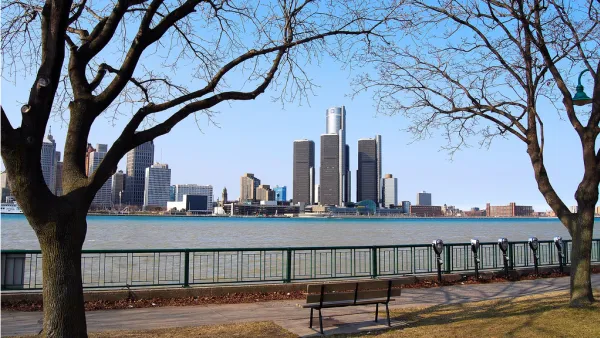
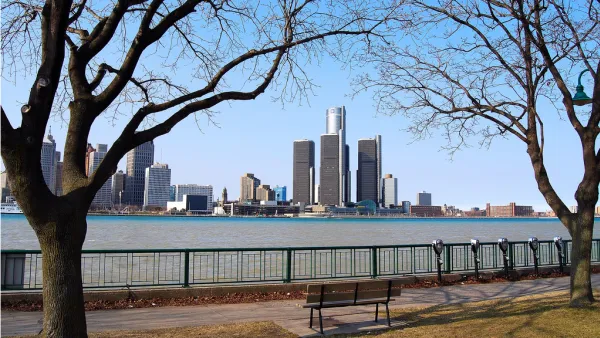
"His downtown office overlooks Detroit's restored waterfront and the redeveloped General Motors Renaissance Center. From this vantage point the city appears almost lustrous, and Mr. Orr exudes a contagious energy and optimism about the future. He plans to navigate the city out of bankruptcy by next fall, when his 18-month term expires, notwithstanding opposition from creditors who want to gut public services and soak taxpayers to get their money back."
"But Mr. Orr says his primary responsibility is to the city's 700,000 residents, not its capital market creditors and 30,000 retirees and workers. Despite vocal union opposition, he believes he has support from the silent majority. 'The vast majority of people are like, 'We just want it fixed even if we don't like the emergency manager.'"
Read the full story: Kevyn Orr: How Detroit Can Rise Again

Detroit Still a Long Way from Recovery
It's fun to write miracle comeback stories, but the epic of Detroit's resurgence has been exaggerated, according to an article in The Conversation.
Lessons from Masterminds of Detroit's Rebirth
The enthusiasm of Detroit's new civic leadership, who engineered its bankruptcy and set up its recovery, is infectious. How the city will ultimately fare, and how other troubled cities learn from Detroit's mistakes, remains to be seen.

Editorial: Streetcar Funding Better Spent Elsewhere
The Economist introduces the concept of the streetcar in America—its history and its recent revival—before laying the arguments in support of, and against, the role of streetcars in urban revival.

Planetizen Federal Action Tracker
A weekly monitor of how Trump’s orders and actions are impacting planners and planning in America.

California plans to bury El Niño’s downpour
If the state plays its cards right, it may be able to store a billion acre-feet of El Niño’s water in aquifers.

Chicago breaks ground on $3 billion megadevelopment
The new neighborhood, titled Foundry Park, will one day host 3,700 residences.

California High-Speed Rail Authority CEO resigns after $600,000 scandal
Under Ian Choudri, the authority used taxpayer dollars to fund first class flights and trips to nightclubs.

Want to study the Missouri River? Soon, you may need unanimous approval from 10 states
Legislation would require 10 governors’ permission to study or build projects moving water outside the basin.

Desperate measures: Advocates weigh draining Lake Powell to fill Colorado River
Draining the reservoir could reduce evaporation losses by a couple hundred thousand acre-feet.

FREE Course: Walkable City 1: Why Walkability?
After describing his path towards focusing on walkability as the essence of good planning, Jeff Speck marches through his five principal reasons for making more walkable places.
Reinventing Malls: Planning Alchemy—Turning Gray Fields Into Gold
The course focuses on the opportunities and imperatives that shape reinvention of mall sites.

City of Rosemead
Rutgers University, Edward J. Bloustein School of Planning and Public Policy
One Hundred Miles
Hunter College, City University of New York (CUNY)
The Architects Foundation
University of Cincinnati Online
City of Cambridge
Montrose County
The Pocatello Development Authority