Transportation
Amtrak Gateway Planning Is Coming Together
Initial planning steps toward replacement of the 105-year-old tunnels under the Hudson River between New Jersey and New York's Penn Station are underway, with New Jersey Transit, Amtrak, and the Port Authority of N.Y & N.J. all playing key roles.
Audit: Arizona DOT Facing $62.7 Billion Budget Shortfall through 2035
Something needs to change if Arizona is going to be able to pay the bills for maintaining and building new roads, according to the findings of an audit by the state.

Educational Level Linked to Traffic Fatalities
A new study published in the American Journal of Epidemiology has linked an increase in the likelihood of being in a traffic fatality to a person's educational level.
Standards of Scrutiny for Transit Projects Not Extended for Highway Projects
A case study of media coverage in Connecticut finds a double standard between the CTFastrak and Interstate 84 projects.
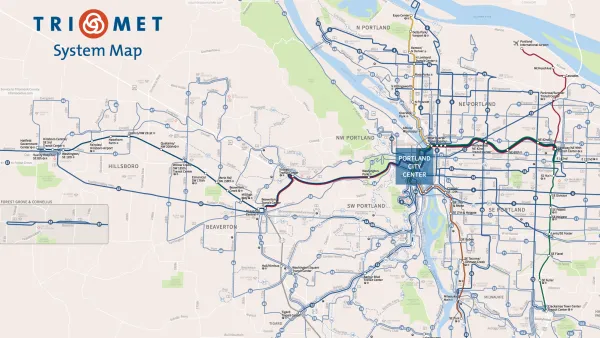
How to Design a Better Bus Transit Map
Not all transit maps are created equal. The new Portland TriMet map, for instance, does a much better job of illustrating the usefulness of its high-frequency network.
Pope's Visit Converts Car-Free Believers in Philadelphia
The decision to shut down a 4.7-square-mile swath of Philadelphia's Center City on the occasion of the Pope's visit last weekend has converted a lot of new believers to the open streets cause.
King County, Sound Transit Announce $83 Million for Transit Oriented Development
A new regional transit oriented development initiative in Seattle will focus on affordable housing and walkable communities. The Executive's Transit Station Housing and Development Initiative will partner King County and Sound Transit.
DUIDs Rival DUIs as Cause of Driver Fatalities
Driving Under the Influence of Drugs, be they prescription, illegal, or marijuana, now accounts for 40 percent of driver fatalities, about the same as alcohol-related deaths, according to a new report from the Governors Highway Safety Association.
Protected Bike Lane Setback in Boulder
Boulder, Colorado may be one of the most bike-friendly cities in the U.S., but that did not stop the City Council on Tuesday night from voting to remove the protected bike lanes on Folsom street and return the road to four lanes of vehicle traffic.
Health by Design: Findings from ULI
A new ULI report finds that innovation in placemaking is about the inter-relatedness of health and the built environment.
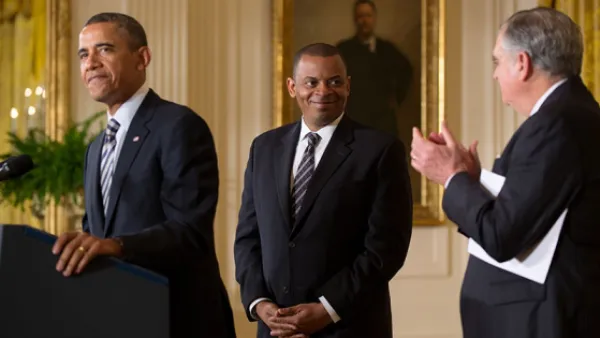
What's Up With Transportation Secretary Anthony Foxx?
The Hill explores the ambitions and motivations of Anthony Foxx, former mayor of the city of Charlotte and current secretary for the U.S. Department of Transportation.
Chicago Approves Big Expansion of TOD Ordinance
Ten times more land in Chicago is now designated for transit oriented development—affording new development reduced parking requirements, density bonuses for affordable housing, and new strength for the city's Pedestrian Street design regulations.
Open Streets Success Story: Atlanta Streets Alive
The vast appeal of the open streets movement was on display in Atlanta last weekend, as the city hosted the Open Streets Summit and its very own event: Atlanta Streets Alive.
Washington State's First Express Toll Lanes Open
Washington has Express Lanes on I-5 and I-90 and HOT Lanes on SR 167, but the 17 miles of lanes that opened Sunday on I-405 from Bellevue to Lynnwood will be the state's first Express Toll Lanes.
Traffic Deaths in California Continue to Rise—How to Stem the Tide
Traffic fatalities in California have been rising since 2010, rising to 3,104 in 2013 after decreasing from 2006 to 2010. Experts point to several specific reasons for the increase; one of the most prominent may be in your hand right now.
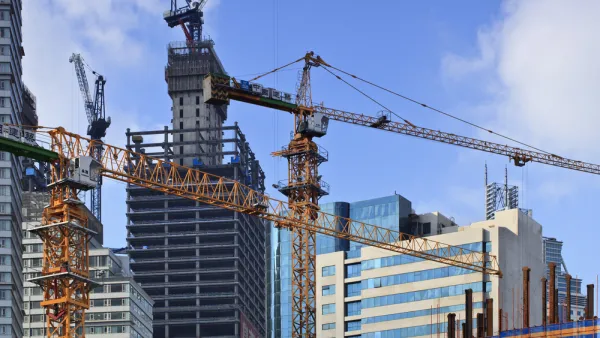
Can Reduced Parking Requirements Generate Too Much Development Competition?
A new argument has appeared in the ongoing debate about parking requirements. A university in a college town objected to reduced parking requirements on the grounds that it would make the city too attractive to developers.
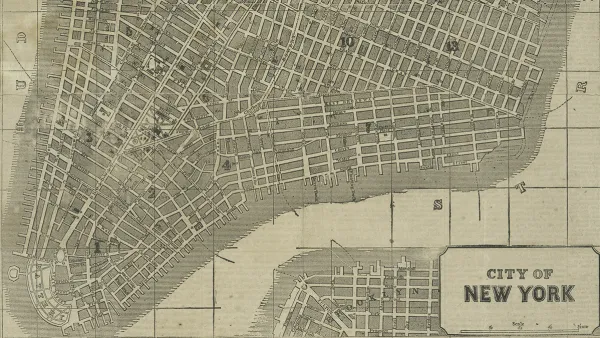
Study Quantifies Land Use Benefits of Transit Investments
A study by the Transportation Research Board calculates "land use effect" and "ridership effect" to show how much land is saved when cities include public transit.
Congestion as an Economic—Not an Engineering—Problem
Thinking about congestion as an economic problem generates new solutions for the problem as well as a response to accusations of social engineering.
Transportation Bond Funding Divides Suburban County in Texas
It's a case of the haves vs. the have-nots in transportation spending for a rapidly growing suburban area of Houston.

More and More Americans Working From Home
In a pattern evident in communities all over the country, U.S. Census data shows more Americans are working from home. Researchers from the Brookings Institution are hoping that planners have noticed the trend.

FREE Course: Walkable City 1: Why Walkability?
After describing his path towards focusing on walkability as the essence of good planning, Jeff Speck marches through his five principal reasons for making more walkable places.
Reinventing Malls: Planning Alchemy—Turning Gray Fields Into Gold
The course focuses on the opportunities and imperatives that shape reinvention of mall sites.

City of Rosemead
Rutgers University, Edward J. Bloustein School of Planning and Public Policy
One Hundred Miles
University of Michigan School for Environment and Sustainability (SEAS)
Hunter College, City University of New York (CUNY)
The Architects Foundation
City of Cambridge
The Pocatello Development Authority
The Urban Renewal Agency of the City of Pocatello









