Technology
Los Angeles Metro and Lyft Considering a Data Sharing Partnership
Metro, the transit agency for Los Angeles County, could be the first to peak under the hood at trip data generated by Lyft.
Florida City First to Subsidize Uber Rides
A city in Florida is betting that transportation network companies can help reduce congestion and increase transit ridership.
GPS Tech Breakthrough Has Big Implications for the Future of Transportation
It's easy to think of GPS technology as a personal navigation device, but the potential for a faster, cheaper GPS technology extends deep into the emerging Internet of Things.

The Changing Nature of Retail: The Impact of Online Shopping on Cities
As consumers increasingly buy online, technology is changing the shape of our cities, reducing demand for retail space, increasing freight congestion, and leaving parking lots empty.
An App Made for Urban Explorers
The Likeways app offers a "Space Recommender System" that aims to return serendipity to the process of navigating a city.

New Tool Accesses Chicago Open Data
OpenGrid gathers together Chicago's open data, letting users specify areas of focus on a map of the city. Users can also overlay different datasets on the same map.

Op-Ed: Facial Recognition on Transit Goes a Step Too Far
Despite its insistence that the technology would only target criminals, Dallas Area Rapid Transit (DART) should reconsider using facial recognition software to address crime. The potential for abuse may be too high.
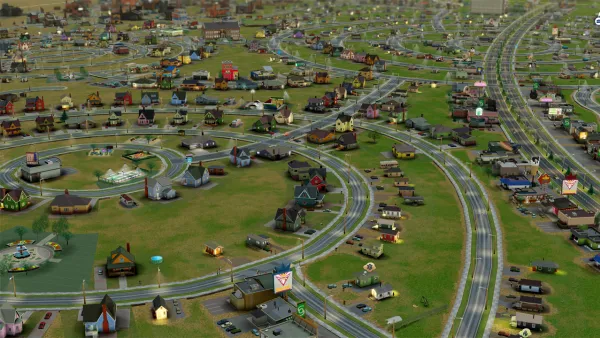
The Not-So-Great Lessons of SimCity
A game encountered as a youth has brought many adults to the ranks of professional planning. What, then, is the legacy of the lessons offered by SimCity and its brethren?
Facebook Is Mapping the World's Buildings
A mapping project lead by Facebook's Connectivity Lab is gathering data from all over the atmosphere, and beyond, to make a comprehensive map of the world's buildings.

Tip of the Iceberg: Seeking Real Accessibility in Community Engagement
Do modern accessibility regulations go far enough to ensure fair access to all community members for public engagement activities? How can we design our planning processes to reach the broadest demographic?
U.S. Consumer Product Safety Commission: Hoverboards Unsafe Until Regulated
The federal government will implement safety protocols for the popular new personal mobility device known as hoverboards. Hoverboards are deemed officially unsafe until the industry complies with the new regulations.
Mobile Apps Provide the Ultimate Guide to Los Angeles
Get this guide for 21 apps and services for enjoying the city of Los Angeles to its fullest, whether you're a resident or a visitor.
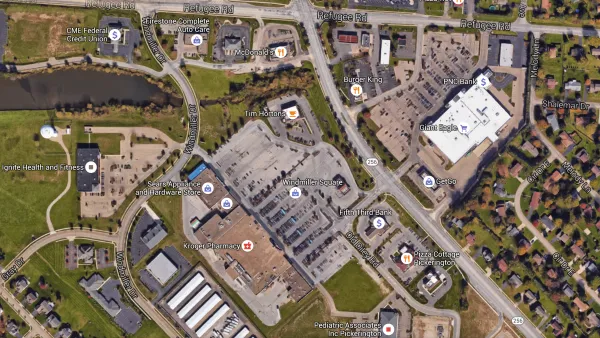
Retail Parking: A View from Google Earth
Google Earth can be a useful tool for understanding how parking is being used in your community and to identify where over- or under-utilization occurs.

New Study Looks at the Mystery and Benefits of Food Truck Movements
The seemingly non-complex decisions on where food trucks park is examined in a new study that finds there's actually a lot more to it than just an empty curb.
Virtual Reality a Game Changer for Real Estate
The New York Times details how virtual reality is expected to change the game of real estate. The possibilities for planners and architects are endless as well.

Friday Funny: Video Game Allows Players to Deface an Icon of Modernism
An online video game has the perfect remedy for anyone who hates modernism—and Le Corbusier more specifically.
'Smart Cities Challenge' Attracts a Crowd
A competition with $50 million at stake, sponsored by the U.S. Department of Transportation, recently completed its submission deadline. The U.S. DOT reported shock at the level of interest in the competition.

Google's Self-Driving Car Had a Big Week
Breaking news came in a pair this week for Google's self-driving car technology.

Why So Big? Rethinking Fire Truck Design
When they're not extinguishing actual flames, fire trucks can seem comically over-sized on city streets. Replacing portions of the fleet with smaller response vehicles might save money without sacrificing capability.
Kayoola: Uganda's Solar Powered Bus
The Kiira Motor Corporation of Uganda has developed a 35-seat bus that includes solar panels on the roof. The bus travels up to 50 miles on two rechargeable batteries. Due to its limited range, the Kayoola is intended for inner-city travel.

FREE Course: Walkable City 1: Why Walkability?
After describing his path towards focusing on walkability as the essence of good planning, Jeff Speck marches through his five principal reasons for making more walkable places.
Reinventing Malls: Planning Alchemy—Turning Gray Fields Into Gold
The course focuses on the opportunities and imperatives that shape reinvention of mall sites.

City of Rosemead
Rutgers University, Edward J. Bloustein School of Planning and Public Policy
One Hundred Miles
University of Michigan School for Environment and Sustainability (SEAS)
Hunter College, City University of New York (CUNY)
The Architects Foundation
City of Cambridge
Montrose County
The Pocatello Development Authority









