Automobile Dependency

Breaking the Cycle of Automobile Dependency
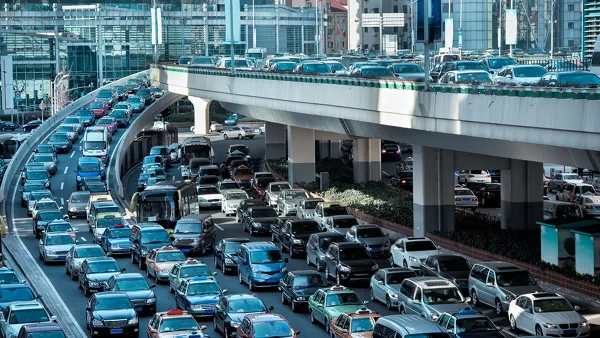
Many current planning practices reinforce a cycle of increased automobile use, more automobile-oriented community redevelopment, and reduced mobility options. There are good reasons to break this pattern.

The Wonderful World of Vicious Circles
Government's pro-sprawl and anti-density policies often create problems that justify more of the same.

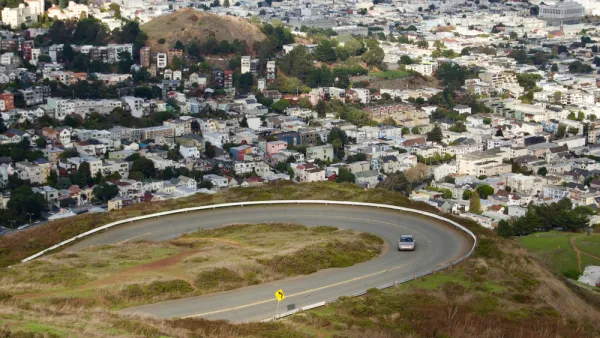
The Automobile as Prison. The City as Freedom.
The automobile has been pitched as a machine for freedom, but travelling inside a small metal box, strapped to a chair, forced to focus on the road while your life is threatened by two-ton projectiles doesn’t sound like freedom to David Levinson.
Economic Independence or Auto Dependency?
A new study calls for "universal auto access" to combat poverty. It recommends subsidizing auto ownership or access for those who are economically unable to afford the high cost of owning, maintaining, and operating a personal motor vehicle.
Peter Calthorpe's Self-Driving Car Dissent
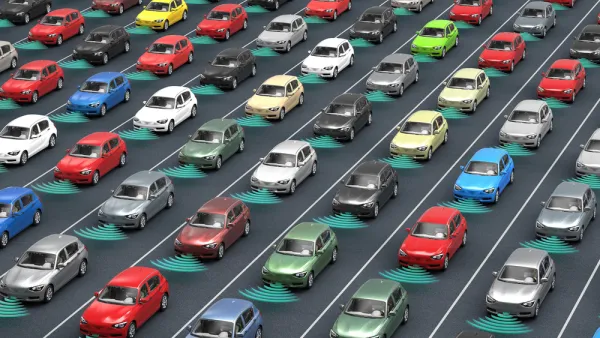
The founder of New Urbanism takes his autonomous vehicle skepticism, and ideas for other solutions to congestion, to the pages of the New York Times.

Funding Multi-Modalism
The new Republican Party Platform wants to stop spending federal fuel tax funds on walking, cycling, and public transit. That would be unfair and inefficient.
Self-Fulfilling Automobile Dependency
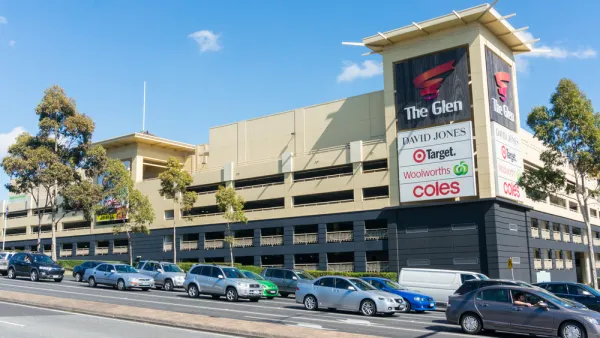
Common planning practices create automobile-dependent communities where driving is convenient and other forms of travel are inefficient. It's time to recognize the value of transportation diversity.
Charlotte Confronts Big Asphalt
For the Charlotte Observer, Ely Portillo reports on a forum calling for urbanist reforms and doubts whether auto-loving residents will be receptive.

Does America Still Want Sprawl?
Increased awareness of sprawl’s negative effects has not led to a drop-off in its construction. Developers say they only build what the market demands.
Arguing for Cars, Not Transit, as a Poverty Solution
Data show that cars are more effective than transit in providing poor people to jobs and economic opportunity. But does that mean transit systems are fundamentally inadequate or just currently inadequate?
Cars Are Key to Reducing Poverty
Many advocates for new ways of thinking about places and streets argue for reduced use of cars as the dominant mode of transportation. A new study finds, however that poverty is improved when the poor have access to a car for transportation.
Be Careful With Statistics
Last week the Carnegie Endowment for International Peace published a report, In Search of the Global Middle Class: A New Index, by researcher Uri Dadush, which uses car ownership rates as an indication of the size of a country's middle class
In China, Are Bikes Going the Way of the Dodo?
Matthew Stevenson anticipates the end of the bicycle in China's major cities, now overrun with scooters and scrambling for Western status symbols – in spite of ever-worsening traffic.
Avoiding Undesirable Self-Fulfilling Prophecies
Planners strive to anticipate future needs, which sometimes creates self-fulfilling prophecies: by preparing for a situation we help cause it. This is particularly true of automobile dependency. Planning decisions intended to accommodate automobile.
A War On Cars? Let There Be Peace!
Our job as planners is ultimately to manage change, which is often fun but occasionally ugly. A good example is a current debate over a supposed “war against the car.”
The Selfish Automobile
Why are otherwise generous and smart people sometimes selfish and irrational?
Accessibility, Mobility and Automobile Dependency
Let me wade into an ongoing debate among fellow Planetizen bloggers Samuel Staley and Michael Lewyn concerning the meanings of accessibility and mobility, and their implications for transportation and land use policy.

FREE Course: Walkable City 1: Why Walkability?
After describing his path towards focusing on walkability as the essence of good planning, Jeff Speck marches through his five principal reasons for making more walkable places.
Reinventing Malls: Planning Alchemy—Turning Gray Fields Into Gold
The course focuses on the opportunities and imperatives that shape reinvention of mall sites.

City of Thousand Oaks
City of Wisconsin Rapids
Harvard University Graduate School of Design
The Architects Foundation
University of Cincinnati Online
The Pocatello Development Authority
The Urban Renewal Agency of the City of Pocatello