Social / Demographics
Parsing Margaret Thatcher's Architectural Legacy
According to Anna Winston, the former prime minister's impact on the architecture profession was huge. With the redevelopment of Canary Wharf, for example, her administration gave a leg up to Cesar Pelli, Sir Norman Foster and SOM, among others.
Economic Competitiveness of the Midwest Relies on Immigration Reform
Cities like St. Louis, where the 44,000 native-born Americans that left in the last decade have been replaced by 31,000 immigrants, offer a case study for why comprehensive immigration reform has a good chance of passing in divided Washington.

America's Safest Cities
Gallup has published the results of its survey of the cities deemed safest by their residents. The results closely track the FBI's violent crime rates.
Inequality Finds a Home in the Suburbs
Through the lens of the Los Angeles region, Becky M. Nicolaides and Andrew Wiese examine how America's suburbs sustain and reinforce inequality.
Does Walkability Equal Walking?
Using data from the Women’s Health Initiative, a new study reveals that a walkable environment may not be enough to get people to walk more.
Interest in City-Center Living a Key to Integrating Cape Town
Twenty years after the end of apartheid in South Africa, Cape Town is preparing to become World Design Capital. Zoe Dare Hall looks at the coastal city's burgeoning real estate market, which reflects two decades of integrative planning.
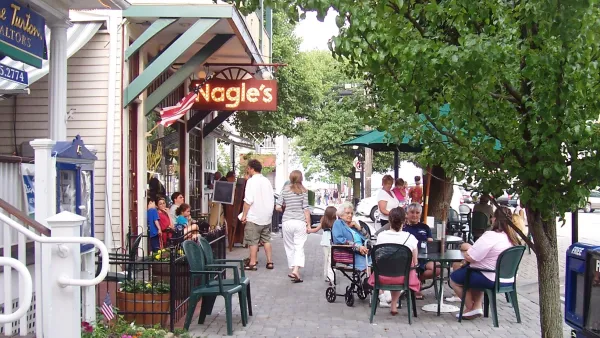
The Case for Age-Friendly Suburbs
Several trends are conspiring to challenge America's ability to house and care for its senior citizens. Utilizing successful examples, architect and planner Eric C.Y. Fang examines how the suburbs can be adapted to support an aging population.

New Study Raises Questions About Relevance of Food Deserts
The role of access to fresh food in contributing to people's eating habits has been at the heart of efforts to identify and eliminate 'food deserts.' However, a new study questions the connection between obesity and the food environment.
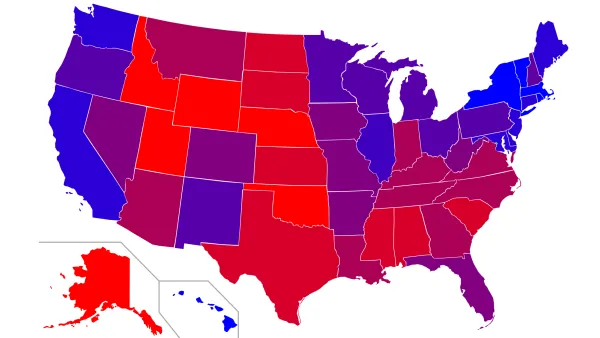
Why Americans Are Moving from Blue to Red States
In this op-ed, Arthur B. Laffer and Stephen Moore analyze the recent Census findings showing renewed migration from the Northeast and Midwest to the South and Southwest. They note the movement is clearly from blue states to red, and explain why.
Supposed Safe Havens Pose Danger to Pedestrians in NYC
A new study conducted by NYU's Langone Medical Center reveals that pedestrians are most often struck by cars in New York's supposed safe havens: in a crosswalk with the signal on their side. Findings related to bicycle safety were also revealed.
New Study Details the Deadly Effects of China's Air Pollution Problem
New details from a landmark study on the leading causes of death worldwide presents a gloomy picture of the effect of air pollution on the health of China's residents. The toll is 25 million healthy years of life snatched from the population.
ASLA Launches National Landscape Architecture Month
The American Society of Landscape Architects and its local chapters are organizing a series of events during April to celebrate National Landscape Architecture Month. The theme of this year's events is "Healthy Living Through Design."
Trend Towards Engagement Transforms America's Public Housing
Public housing models in the U.S. are becoming more community-oriented and taking varying demographics into account during the design process. Engagement with the street, the neighborhood, and social services are creating new design typologies.
Parks: An Antidote to 'Brain Fatigue'
Scientists have long theorized that natural settings can help us manage the stress induced by urban living. New research made possible by advances in EEG technology has confirmed the restorative effects of parks.
Serendipitous Interactions: Good for Cities, Good for Companies
A rambling walk through New York City, with no destination in mind, reveals to FT columnist John Kay the value of unplanned social interactions - a value that's behind Yahoo’s recent policy limiting telecommuting.
The Power of Place: On Democracy and Public Participation in Planning
More thoughts on how public participation in the placemaking process can create better places and better functioning democracies.
New Study is First to Show that Traffic Pollution Causes Childhood Asthma
While pollution from vehicle exhausts has been known for some time to exacerbate the symptoms of asthma, a new study published in the European Respiratory Journal establishes for the first time the direct causal link between the two.
Departure of USDA's No. 2 Official Deals Blow to Sustainable Agriculture
In an essay for Grist, Tom Laskawy laments the departure of deputy secretary Kathleen Merrigan, the Obama administration's "most powerful supporter of local and organic foods," from the U.S. Department of Agriculture.

The Prevalence of Play Deserts
A new study analyzing the amenities in 165 parks in the four-county Kansas City metro region found that low-income neighborhoods suffer from a lack of play spaces, despite having more parks per capita, reports Emily Badger.
Can Cities Help Solve Global Food Challenges?
With growing populations demanding more food and growing borders requiring more land, cities are one of the primary challenges to feeding the world's hunger problem. Can they also be the solution?

FREE Course: Walkable City 1: Why Walkability?
After describing his path towards focusing on walkability as the essence of good planning, Jeff Speck marches through his five principal reasons for making more walkable places.
Reinventing Malls: Planning Alchemy—Turning Gray Fields Into Gold
The course focuses on the opportunities and imperatives that shape reinvention of mall sites.

City of Charlotte
City of Rosemead
Rutgers University, Edward J. Bloustein School of Planning and Public Policy
University of Michigan School for Environment and Sustainability (SEAS)
Hunter College, City University of New York (CUNY)
The Architects Foundation
University District Partnership









