Despite rising death tolls for pedestrians, cities around the country are getting rid of red light cameras. New York City will be next.


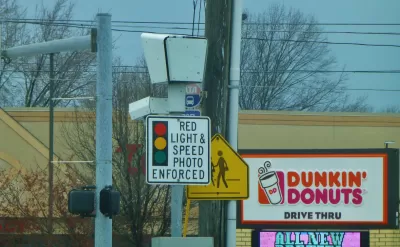
Around the country, red light cameras are turning off. Between 2012 and 2016, the number of red light cameras fell by a fifth according to numbers from the Insurance Institute for Highway Safety (IIHS). At the same time, "The IIHS reports that 811 people were killed in crashes caused by red light runners nationwide in 2016, an increase of 17 percent compared to the previous four-year average," writes Angie Schmidtt.
There's more bad news coming for pedestrians, 140 speed cameras in New York City school zones will be turned off this week.
These devices are going offline at a time when pedestrian fatalities are going up around the United States. The fatality numbers from red light runners may also be getting pushed up by the increasing prevalence of SUVs, which are more deadly to pedestrians.
FULL STORY: As Cities Turn Off Red Light Cameras, Red Light Runners Claim More Lives

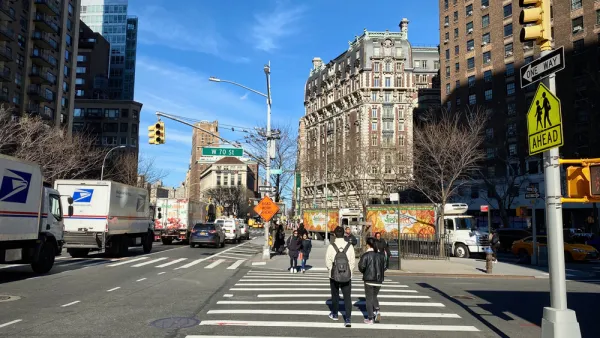
Study: Speed Camera Citations Correlate to Safe Infrastructure
New research suggests that fewer speeding tickets are issued in neighborhoods where the city has invested in traffic calming and pedestrian safety improvements.
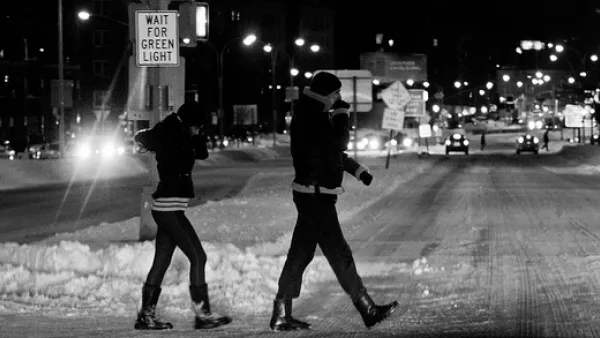
A Vision Zero Success Story in New York
The 300-foot wide Queens Boulevard has been known as the Boulevard of Death. Since 1990, it has claimed 186 lives, 74 percent being pedestrians, including 18 in 1997 alone. A series of safety improvements have brought fatalities to zero since 2014.
In N.Y.C., Speeding Is Up as Pandemic Continues
Data shows that drivers are speeding on the city’s mostly deserted streets.

Planetizen Federal Action Tracker
A weekly monitor of how Trump’s orders and actions are impacting planners and planning in America.

The state-sanctioned urbicide of Austin
People don’t kill cities. Freeways do.

US to reduce Colorado River water deliveries to Mexico
A new Colorado Treaty amendment reduces Mexico’s Colorado River water allocation by 250,000 acre feet.

5 New England states march closer to 800 megawatt wind energy project
Securing federal approval for the project may be complicated under the Trump administration, which has historically been hostile towards domestic wind power.

Baltimore to break ground on $50 million Transit Priority Project
The project will bring faster bus trips, safer streets and better bike connections to Baltimore.

Airbnb launches $250 million 'last-dollar financing' housing accelerator, makes first investment in Austin
The company will put $6.4 million towards affordable housing development in Texas’ capital.

FREE Course: Walkable City 1: Why Walkability?
After describing his path towards focusing on walkability as the essence of good planning, Jeff Speck marches through his five principal reasons for making more walkable places.
Reinventing Malls: Planning Alchemy—Turning Gray Fields Into Gold
The course focuses on the opportunities and imperatives that shape reinvention of mall sites.

Eagle County Government
Harvard University Graduate School of Design
Nashville Planning Department
The Architects Foundation
University of Cincinnati Online
The Pocatello Development Authority
The Urban Renewal Agency of the City of Pocatello
Journal of the American Planning Association