"Looking at the suburbs, therefore, provides a way of understanding a vast segment of the public without the need to endorse or slander their homes."


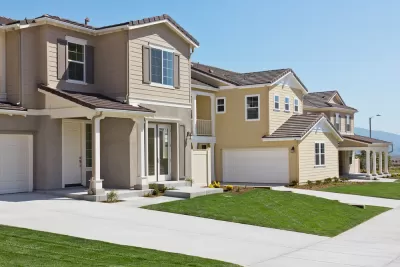
Anthony Alofsin, an architect, historian, and author of Wright in Gotham, writes of the need for urbanists and urbanophiles to treat the suburbs more respectfully:
Open-minded curiosity can also teach much about another foreigner in our midst: the American suburb. Often vilified or ignored by urbanites, architects, and critics, the suburb is nevertheless the residential heart of America.
Alofsin writes specifically about the preference of most Americans for builder-constructed. Production housing is the most common form of single-family housing in the United States, according to Alofsin. According to some reports, only 2 percent of production housing is designed by architects. "As the architect Duo Dickinson has observed, this means that the profession has largely ceded the best opportunity to be relevant and useful to ordinary people," writes Alofsin.
Reflecting the open-minded curiosity called for at the beginning of the article, Alofsin lists many of the benefits of suburban production housing that makes the model so successful in the American real estate market. Alofsin is also ready to list the standard criticisms of the suburban housing model, but quickly follows that section of the article with another less common point: "Despite their broad attacks, critics sometimes overlook the suburbs’ real downsides." Those downsides include a lack of coordination with public transit, which increases commuting costs, a lack of innovative site planning, and a lack of mix when it comes to the services located nearby.
Read the full story: A Defense of the Suburbs

Will sprawl save California?
California residents will vote on Proposition 45 in November, which would make it easier to build large housing developments on the outskirts of the state’s cities.
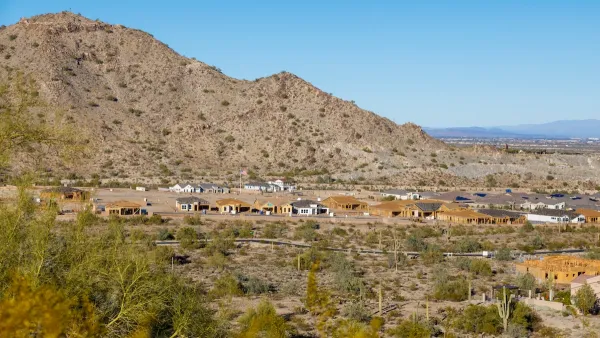
Arizona Overrides Moratorium Imposed due to Water Crisis, Approves up to 60K New Homes
A newly created legal process allows development to proceed if builders agree to bring in renewable water sources and reduce their groundwater use by 25%.
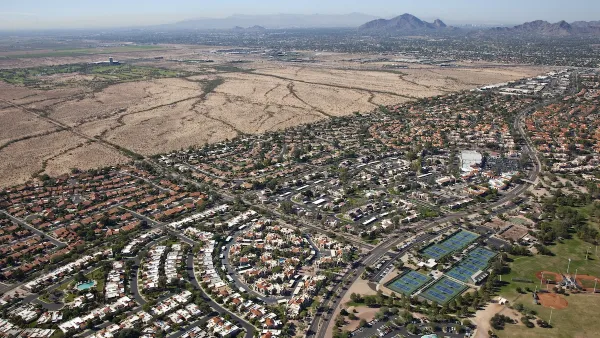
Nearly Half a Million New Arizona Homes Halted Due to Water Crisis
The Arizona Department of Water Resources has put a moratorium on new water supply permits, making the future of planned residential developments uncertain.

Planetizen Federal Action Tracker
A weekly monitor of how Trump’s orders and actions are impacting planners and planning in America.

California plans to bury El Niño’s downpour
If the state plays its cards right, it may be able to store a billion acre-feet of El Niño’s water in aquifers.

Desperate measures: Advocates weigh draining Lake Powell to fill Colorado River
Draining the reservoir could reduce evaporation losses by a couple hundred thousand acre-feet.

Housing is the top priority of Seattle’s sole new councilmember
Jenks campaigned on building 1,000 new units of affordable housing.

New tax cuts may slash $1.5 billion in funding for Miami transit, public parks
Amendment 3 will save Miami-Dade homeowners $2,700 in 2028.

Arizona, Wisconsin, Pennsylvania hope to finally advance climate goals post-midterms
The three states have spent years under Republican or divided control.

FREE Course: Walkable City 1: Why Walkability?
After describing his path towards focusing on walkability as the essence of good planning, Jeff Speck marches through his five principal reasons for making more walkable places.
Reinventing Malls: Planning Alchemy—Turning Gray Fields Into Gold
The course focuses on the opportunities and imperatives that shape reinvention of mall sites.

City of Rosemead
Rutgers University, Edward J. Bloustein School of Planning and Public Policy
One Hundred Miles
University of Michigan School for Environment and Sustainability (SEAS)
Hunter College, City University of New York (CUNY)
The Architects Foundation
City of Cambridge
Montrose County
The Pocatello Development Authority