Electric scooters need maintenance and charges, so Bird is using the gig economy to make sure its scooters keep scooting.


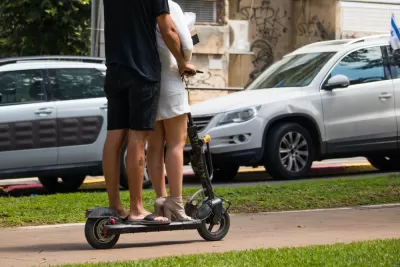
Scooter Rental service Bird uses the gig economy to maintain and charge its electric scooter fleet. Bird employs contractors to do basic repairs, like fixing flats and brake lines and to charge its scooters. "Casey Dalton, 44, a part-time security guard who lives in Venice, has been charging for about four months out of a one-bedroom guest house he rents. On an average day, he can make about $110," Patrick Sisson reports for Curbed.
Contractors are paid based on how many scooters they fix or charge, with different fees depending on where the scooters need to be picked up and other factors that affect the job. "Every morning, scooters that have been charged overnight need to be released back onto the street into what’s called a nest, a predetermined corner or location on the map chargers can find via their app," Sisson reports.
Read the full story: The new gig economy job? Charging electric scooters

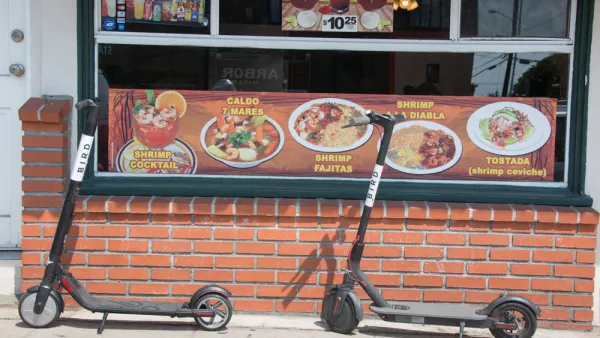
More Rights, Fewer Responsibilities, for Electric Scooter Riders in California
A bill that would toss the helmet requirement for adult e- scooter riders and allow them to ride on roads where the speed limit is 35 mph, up from the current limit of 25 mph, is on Governor Jerry Brown's desk. He has until Sept. 30 to decide.
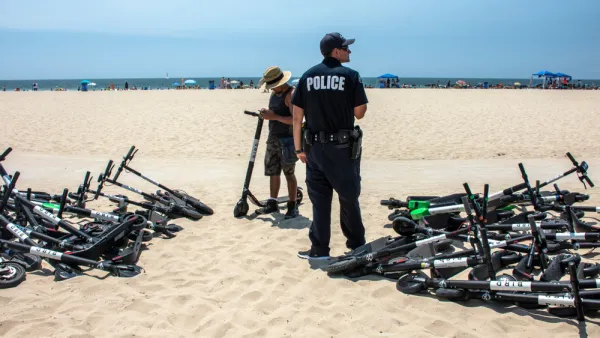
Pilot Bike and Scooter Share Program Inspires Protest in Santa Monica
Bird and Lime launched their "Day Without A Scooter" protest this week.
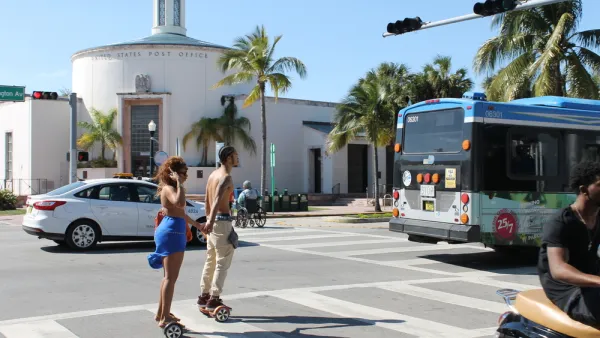
Miami Sends Cease and Desist to Electric Scooter Companies
Two major scooter companies operating in Miami have ceased operations in the city, at least for now.

Planetizen Federal Action Tracker
A weekly monitor of how Trump’s orders and actions are impacting planners and planning in America.

Amtrak, CN end decades-long dispute with eight-year agreement
The new operating agreement establishes an updated framework for the companies to work together, including processes to resolve disputes.

Judges permit Denver to divert 77,000 acre feet from the Colorado River for reservoir expansion
Overuse and climate change have caused the Colorado River’s water levels to plummet.

NYC DOT wants faster, more permanent street upgrades
The city is examining ways to build more concrete infrastructure without getting entangled in 'decades-long' projects.

'Something we’ve never seen before:' rising utility rates could strain city finances nationwide
Data centers, climate change and other factors have caused utility rates in the United States to increase by 38% since 2020.

Trump to overrule local leaders, lease millions of acres of America’s Pacific Island territories’ seafloors to mining companies
International law says that the Indigenous people of America’s territories have a right to prior and informed consent regarding projects that impact their countries.

FREE Course: Walkable City 1: Why Walkability?
After describing his path towards focusing on walkability as the essence of good planning, Jeff Speck marches through his five principal reasons for making more walkable places.
Reinventing Malls: Planning Alchemy—Turning Gray Fields Into Gold
The course focuses on the opportunities and imperatives that shape reinvention of mall sites.

Harvard University Graduate School of Design
KFH Group Inc.
Greater Baltimore Committee
The Architects Foundation
University of Cincinnati Online
The Pocatello Development Authority
The Urban Renewal Agency of the City of Pocatello