Homeowners in almost every corner of the United States are making more off the accruing value of their homes every hour than minimum wage workers. In some cases, homeowners are even making a lot more than decent middle class wages.


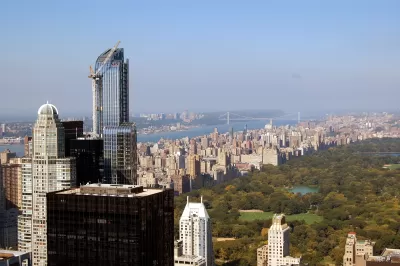
A post on the Zillow Research digs into the amount of money homeowners are making in equity in large cities around the United States—finding that owning a home pays better on an hourly basis than many jobs in today's real estate market.
For instance, "[t]he typical U.S. homeowner is gaining $7.09 of equity in their home every working hour, $0.16 less than federal minimum wage." And, "[h]ome values in San Jose, Calif., San Francisco and Seattle have been appreciating more than 3.5 times faster per working hour than the cities’ minimum wage workers earn." In San Jose's case, more than 3.5 times faster is quite a bit more: "In San Jose, the typical homeowner is gaining $99.81 of equity in their home every hour they’re at the office. The city’s hourly minimum wage is $13.50."
In all, "owners of the median-valued home in 24 of the nation’s 50 largest cities earned more in equity per hour over the past year than their local minimum wage."
The analysis provides a new angle on equity, just days after a report by financial analytics company Black Knight found that homeowner equity reached a new record in 2017.
Read the full story: Homes 'Earn' Minimum Wage or More in Almost Half the Nation's Largest Cities

Is Inequality Destroying American Cities?
A recent video claimed that high income inequality is the “Thing That Will Destroy Our Cities.” Is this true?

Mapping the Wealth Accumulation of Homeowners
Exclusionary zoning really pays off for people that already had enough money to buy a home. A new mapping project shows exactly where that's true int he area around Minneapolis.
Say it Loud: Inequality is Bad for Everyone
There is an invisible culprit in the great scandal of inequality in America: your Econ 101 textbook. Go ahead, dig it out from that storage chest, and undoubtedly you’ll read that inequality, while we might not like it, is good for economic growth

Planetizen Federal Action Tracker
A weekly monitor of how Trump’s orders and actions are impacting planners and planning in America.

Amtrak, CN end decades-long dispute with eight-year agreement
The new operating agreement establishes an updated framework for the companies to work together, including processes to resolve disputes.

Judges permit Denver to divert 77,000 acre feet from the Colorado River for reservoir expansion
Overuse and climate change have caused the Colorado River’s water levels to plummet.

NYC DOT wants faster, more permanent street upgrades
The city is examining ways to build more concrete infrastructure without getting entangled in 'decades-long' projects.

'Something we’ve never seen before:' rising utility rates could strain city finances nationwide
Data centers, climate change and other factors have caused utility rates in the United States to increase by 38% since 2020.

Trump to overrule local leaders, lease millions of acres of America’s Pacific Island territories’ seafloors to mining companies
International law says that the Indigenous people of America’s territories have a right to prior and informed consent regarding projects that impact their countries.

FREE Course: Walkable City 1: Why Walkability?
After describing his path towards focusing on walkability as the essence of good planning, Jeff Speck marches through his five principal reasons for making more walkable places.
Reinventing Malls: Planning Alchemy—Turning Gray Fields Into Gold
The course focuses on the opportunities and imperatives that shape reinvention of mall sites.

Harvard University Graduate School of Design
KFH Group Inc.
Greater Baltimore Committee
The Architects Foundation
University of Cincinnati Online
The Pocatello Development Authority
The Urban Renewal Agency of the City of Pocatello