A new study shows that these groups exist in around 10 percent of counties, and those counties are scattered across all 50 states.


At CityLab, Richard Florida dissects a new study on the geography of hate groups from researchers at the University of Utah.
"The geography of organized hate in America is at once significantly concentrated and considerably spread out. On the one hand, hate groups are found in slightly more than 10 percent of U.S. counties (340 of 3,142), according to the study. But on the other, hate groups span the entire country, and can be found in every single state. While the heartland—stretching from the Dakotas, Minnesota, and Nebraska to Iowa, Kansas, Missouri, Arkansas, Oklahoma, and Texas—has among the highest levels of hate groups, the East and West Coasts have a high density of these groups as well."
The study produced maps that illustrate not only the location of these counties, but how race, poverty, religion, and political conservatism correlate. And although there are hate groups in every state, those correlations vary significantly by region.
An article Florida wrote nearly seven years ago noted the number of hate groups was up 50 percent over the year 2000; according to the Southern Poverty Law Center, there has been a significant increase in the short time that Donald Trump has been president.
Planetizen has published several articles by Jason Reese about the implications of the rise in white nationalism for planning, and more specifically its influence on fair housing.
FULL STORY: Where Hate Groups Are Concentrated in the U.S.


The New Supreme Court and the Future of Fair Housing
The retirement of Supreme Court Justice Anthony Kennedy introduces the possibility that a future court will overturn the doctrine of disparate impact central to fair housing practices and policies.
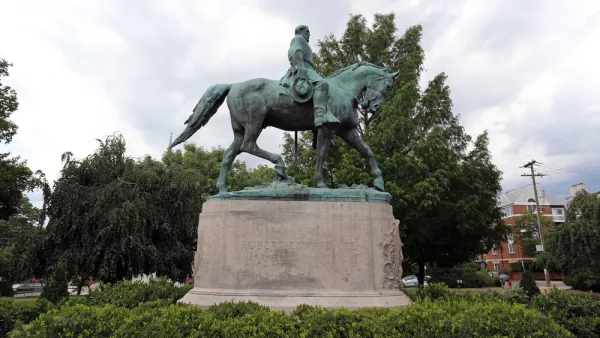
Do Confederate Statues Belong in Public Spaces?
In the aftermath of the violence in Charlottesville, resulting from the gathering of white supremacists and neo-Nazis, American cities are rethinking whether statues honoring the heroes of the Confederacy belong in public spaces.
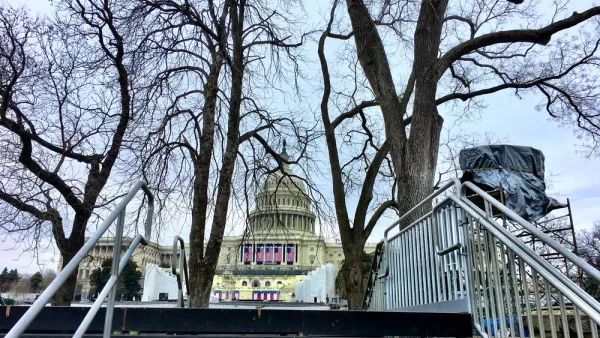
Over 275 Architects Agree: Trump Should Focus on Climate Change
An open letter to President-elect Donald Trump, signed by 276 architecture and design firms, argues that the country's new leader should build the economy by protecting the environment.

Planetizen Federal Action Tracker
A weekly monitor of how Trump’s orders and actions are impacting planners and planning in America.

The state-sanctioned urbicide of Austin
People don’t kill cities. Freeways do.

US to reduce Colorado River water deliveries to Mexico
A new Colorado Treaty amendment reduces Mexico’s Colorado River water allocation by 250,000 acre feet.

Amtrak not solely to blame for New Jersey commuter rail's unreliability, report finds
A new study from the Garden State Initiative found that NJ Transit’s budget grew 20% across a 4 year period, but reliability declined significantly over the same period.

EPA erases limits on planet-warming pollution from power plants
Under Monday’s plan, power plants would still have some limits on how much mercury, arsenic and other contaminants they can emit.

Phoenix announces new on-demand transit service, more frequent RAPID buses
Both new services will launch in October, and are part of Phoenix's Project Effective Access Solutions for Easing Congestion.

FREE Course: Walkable City 1: Why Walkability?
After describing his path towards focusing on walkability as the essence of good planning, Jeff Speck marches through his five principal reasons for making more walkable places.
Reinventing Malls: Planning Alchemy—Turning Gray Fields Into Gold
The course focuses on the opportunities and imperatives that shape reinvention of mall sites.

Eagle County Government
Harvard University Graduate School of Design
Nashville Planning Department
The Architects Foundation
University of Cincinnati Online
The Pocatello Development Authority
The Urban Renewal Agency of the City of Pocatello
Journal of the American Planning Association