Extra charges for Uber and Lyft rides isn't enough to decrease traffic and speed public transit Joe Cortright argues in City Observatory.



Joe Cortright believes that cities have a rare opportunity to change how we fund roads. "A system of road pricing would make a world of difference, reducing traffic in Manhattan, speeding buses, and easing the strain on the subways," Cortright writes for City Observatory.
Cortright argues against the notion that the road pricing should only be levied on ride-hailing services as a dangerous half-measure. "It strikes us that there’s little reason to single out ride-hailed vehicles for congestion pricing. Each incremental vehicle (taxi, Uber/Lyft, delivery truck or private car) makes essentially the same contribution to congestion as it travels city streets at the rush hour," Cortright argues. Further, if road pricing for these services doesn't cut congestion, it will be used by enemies of these policies. "As we’ve argued, even a 'dumb' vehicle miles tax is a half-step in the direction of a road pricing system that embraces readily available technology and achieve maximum results," Cortright says.
FULL STORY: Road pricing for all vehicles, not just ride-hailed ones


Ride-Hailing Prices Skyrocket as the U.S. Emerges From the Pandemic
A shortage of drivers and spiking demand are driving Uber and Lyft prices higher than ever as the companies struggle to achieve profitability.
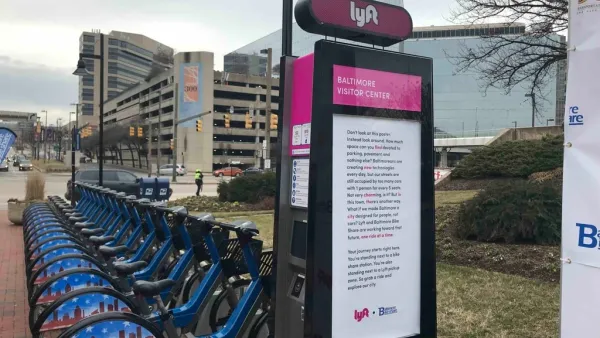
Lyft Enters Into Bikeshare With Baltimore Partnership
Lyft has entered into a partnership with Baltimore Bike Share, on the heels of Uber's entrance into the San Francisco bike-share market.

Portland’s Uber, Lyft, Taxi Ridership is Slower to Recover Than Transit
Fewer Portland residents are calling ride-hailing services than before the pandemic.

Planetizen Federal Action Tracker
A weekly monitor of how Trump’s orders and actions are impacting planners and planning in America.

The state-sanctioned urbicide of Austin
People don’t kill cities. Freeways do.

US to reduce Colorado River water deliveries to Mexico
A new Colorado Treaty amendment reduces Mexico’s Colorado River water allocation by 250,000 acre feet.

5 New England states march closer to 800 megawatt wind energy project
Securing federal approval for the project may be complicated under the Trump administration, which has historically been hostile towards domestic wind power.

Baltimore to break ground on $50 million Transit Priority Project
The project will bring faster bus trips, safer streets and better bike connections to Baltimore.

Airbnb launches $250 million 'last-dollar financing' housing accelerator, makes first investment in Austin
The company will put $6.4 million towards affordable housing development in Texas’ capital.

FREE Course: Walkable City 1: Why Walkability?
After describing his path towards focusing on walkability as the essence of good planning, Jeff Speck marches through his five principal reasons for making more walkable places.
Reinventing Malls: Planning Alchemy—Turning Gray Fields Into Gold
The course focuses on the opportunities and imperatives that shape reinvention of mall sites.

Eagle County Government
Harvard University Graduate School of Design
Nashville Planning Department
The Architects Foundation
University of Cincinnati Online
The Pocatello Development Authority
The Urban Renewal Agency of the City of Pocatello
Journal of the American Planning Association