Free easily-accessible parking rewards car ownership and pushes up the cost of housing, argue Rebecca Clements and Alan March.


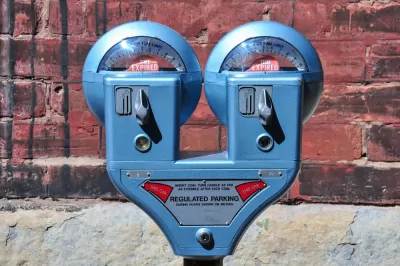
Australia's parking minimums and other parking policies are widely acknowledged to be outdated and dangerous to the environment, but efforts to move away from this type of 'predict-and-provide,' have been incomplete and sporadic. Rebecca Clements and Alan March write that, while efforts to price parking based on demand have suffered from being irregular, "Australian planners have largely ignored the untapped potential of car park policy to be one of planning’s fundamental control mechanisms," they write in Foreground.
They point out that parking can compete for space with other forms of transportation, and parked cars can present a danger to cyclists who risk being doored. "Parking can directly compromise the adoption of active and sustainable modes of transport," Clements and March write. Also, access to free parking can entice would-be transit riders to drive.
FULL STORY: Car parking is choking our cities, and we’re paying for the privilege

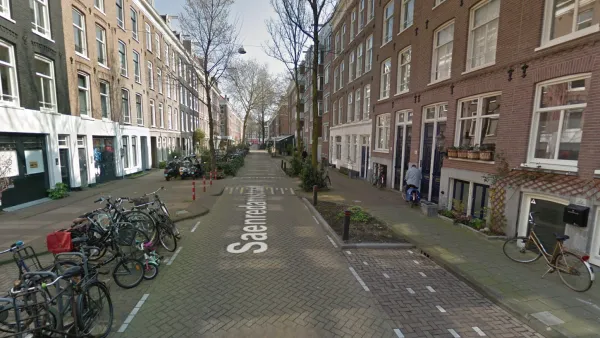
Watch: How to Remove Thousands of Parking Spaces
What the city of Amsterdam will gain by removing cars from on-street parking space.
Opponents Question Plan to Replace Sydney CBD Parking With Cycle Lanes
Debates rages on in response to the City Centre Access Strategy as it's revealed that the CBD could loose around 20% of its parking places and loading zones on two key streets to make way for the expanded cycle path scheme.
Expanding Bike Lanes a Focus of Sydney "Access Strategy"
New South Wales Government have published the "City Centre Access Strategy", their vision for transport planning in Sydney for the next two decades. Jacob Saulwick reviews the mixed responses to the long awaited plan.

Planetizen Federal Action Tracker
A weekly monitor of how Trump’s orders and actions are impacting planners and planning in America.

The state-sanctioned urbicide of Austin
People don’t kill cities. Freeways do.

US to reduce Colorado River water deliveries to Mexico
A new Colorado Treaty amendment reduces Mexico’s Colorado River water allocation by 250,000 acre feet.

5 New England states march closer to 800 megawatt wind energy project
Securing federal approval for the project may be complicated under the Trump administration, which has historically been hostile towards domestic wind power.

Baltimore to break ground on $50 million Transit Priority Project
The project will bring faster bus trips, safer streets and better bike connections to Baltimore.

Airbnb launches $250 million 'last-dollar financing' housing accelerator, makes first investment in Austin
The company will put $6.4 million towards affordable housing development in Texas’ capital.

FREE Course: Walkable City 1: Why Walkability?
After describing his path towards focusing on walkability as the essence of good planning, Jeff Speck marches through his five principal reasons for making more walkable places.
Reinventing Malls: Planning Alchemy—Turning Gray Fields Into Gold
The course focuses on the opportunities and imperatives that shape reinvention of mall sites.

Eagle County Government
Harvard University Graduate School of Design
Nashville Planning Department
The Architects Foundation
University of Cincinnati Online
The Pocatello Development Authority
The Urban Renewal Agency of the City of Pocatello
Journal of the American Planning Association