Two new reports from Rider Levett Bucknall offer a positive outlook for the construction industry.


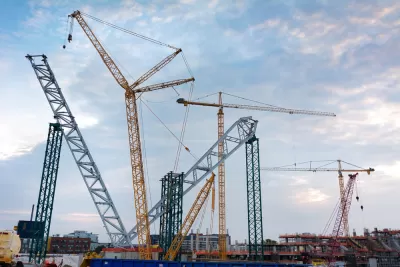
"Two reports issued by Rider Levett Bucknall, an international property and construction consultancy, show construction activity is strong across North America," according to an article by Gail Kalinoski. The conspicuous sign of that strength, according to the Rider Levett Bucknall report: construction cranes dotting the skyline from coast to coast.
The two reports, the Quarterly Construction Cost Report (QCR) and Crane Index, produce a positive overall outlook for the construction industry, explains Kalinoski.
Between July 1, 2017, and Oct. 1, 2017, the national average increase in construction costs was approximately 1 percent while the Crane Index found 383 cranes counted in January 2018 compared to 381 in July for an increase of 0.5 percent, according to RLB research.
For more on the number of cranes working in North American cities, and the kinds of projects they are building:
Six of the 13 cities in the Crane Index held steady from July while five had an increase in cranes and two had fewer cranes. At nearly 40 percent of the total crane count, the residential market dominates sector activity with Toronto leading the pack with 70 of its 88 cranes dedicated to high-rise condominium projects. Mixed-use development is the second largest market, making up nearly 25 percent of all cranes in North America with Los Angeles, Seattle, Portland and Washington, D.C., leading that sector, according to the Crane Index.
More info on the studies and a map showing the findings of the Crane Index report (with the glaring omission of cities from Texas) are also available in the source article.
FULL STORY: North America Construction Trends: RLB Reports

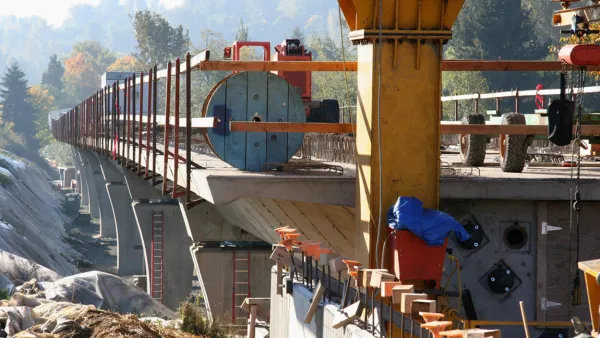
30 Health and Safety Requirements Determine Which Construction Projects Can Restart in Washington
New construction projects are still on hold, but the state of Washington is allowing some projects to restart under strict health and safety guidelines.
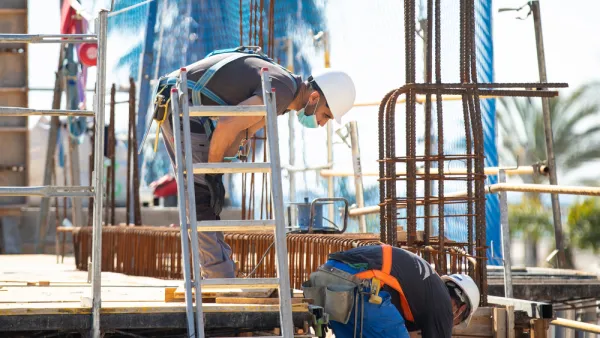
Layoffs Sweeping the Construction Industry
Halted construction work has contributed to a growing number of layoffs in the construction industry during the month of April.

Shipping Delays Causing Construction Slowdown
Materials procured overseas are taking longer to arrive in the United States, and the delays are causing a ripple effect in the construction industry.

Planetizen Federal Action Tracker
A weekly monitor of how Trump’s orders and actions are impacting planners and planning in America.

The state-sanctioned urbicide of Austin
People don’t kill cities. Freeways do.

US to reduce Colorado River water deliveries to Mexico
A new Colorado Treaty amendment reduces Mexico’s Colorado River water allocation by 250,000 acre feet.

Amtrak not solely to blame for New Jersey commuter rail's unreliability, report finds
A new study from the Garden State Initiative found that NJ Transit’s budget grew 20% across a 4 year period, but reliability declined significantly over the same period.

EPA erases limits on planet-warming pollution from power plants
Under Monday’s plan, power plants would still have some limits on how much mercury, arsenic and other contaminants they can emit.

Phoenix announces new on-demand transit service, more frequent RAPID buses
Both new services will launch in October, and are part of Phoenix's Project Effective Access Solutions for Easing Congestion.

FREE Course: Walkable City 1: Why Walkability?
After describing his path towards focusing on walkability as the essence of good planning, Jeff Speck marches through his five principal reasons for making more walkable places.
Reinventing Malls: Planning Alchemy—Turning Gray Fields Into Gold
The course focuses on the opportunities and imperatives that shape reinvention of mall sites.

Eagle County Government
Harvard University Graduate School of Design
Nashville Planning Department
The Architects Foundation
University of Cincinnati Online
The Pocatello Development Authority
The Urban Renewal Agency of the City of Pocatello
Journal of the American Planning Association