A new report from the Regional Plan Association identifies the nature of the problem with the New York MTA's construction costs, and recommends 11 possible solutions.


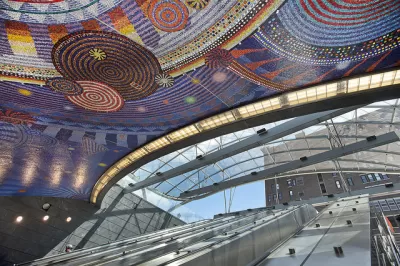
Brian M. Rosenthal reports:
The Metropolitan Transportation Authority could dramatically reduce its sky-high construction costs by rethinking how it manages projects, prioritizing efficiency over bureaucracy and ending rules that require far more workers than are needed, according to a new report based on two years of research.
The Regional Plan Association released the report, "Building Rail Transit Projects Better for Less" [pdf], earlier this week to highlight recommendations included in the Fourth Regional Plan.
"Among other factors, the report’s authors found that recent megaprojects like the first phase of the Second Avenue Subway on Manhattan’s Upper East Side have suffered from overly burdensome environmental reviews, repeated political interference, out-of-date work rules, 'excessive customization' and a lack of coordination, communication and accountability," adds Rosenthal.
The report reaches some of the same conclusions put forward in a December feature published by the New York Times, but the RPA also takes the additional step of providing 11 policy recommendations to rein in the MTA's capital spending. Rosenthal summarizes that list of solutions in the source article.
Read the full story: M.T.A. Construction Costs ‘Threaten to Strangle’ Growth, Report Warns
An Investigation of New York's Record Shattering Subway Construction Costs
The New York Times devotes feature-length coverage to the soaring costs of subway construction in New York City, where the cost of construction has reached as high as seven times the average around the world.
NYC to Upgrade 1/3 of its Subway Car Fleet
The MTA is seeking proposals for up to 2,390 new subway cars to upgrade its aging fleet.
New York MTA Seeks New Funding Sources
The agency plans to negotiate new options for operational funding as farebox and toll revenue lingers far below pre-pandemic levels.

Planetizen Federal Action Tracker
A weekly monitor of how Trump’s orders and actions are impacting planners and planning in America.

California plans to bury El Niño’s downpour
If the state plays its cards right, it may be able to store a billion acre-feet of El Niño’s water in aquifers.

Desperate measures: Advocates weigh draining Lake Powell to fill Colorado River
Draining the reservoir could reduce evaporation losses by a couple hundred thousand acre-feet.

US buildings threatened, destroyed by fires set to triple by 2060
Researchers found a high fire risk for socioeconomically vulnerable neighborhoods in the American West.

LA residents may be allowed to paint their own crosswalks
Councilwoman Katy Yaroslavsky put out a motion instructing the Los Angeles Department of Public Transportation to study the feasibility of allowing volunteers to paint crosswalks.

Dallas moves to overhaul its zoning code
The city's zoning reform will allow more multi-family and mixed-use developments.

FREE Course: Walkable City 1: Why Walkability?
After describing his path towards focusing on walkability as the essence of good planning, Jeff Speck marches through his five principal reasons for making more walkable places.
Reinventing Malls: Planning Alchemy—Turning Gray Fields Into Gold
The course focuses on the opportunities and imperatives that shape reinvention of mall sites.

City of Rosemead
Rutgers University, Edward J. Bloustein School of Planning and Public Policy
One Hundred Miles
Hunter College, City University of New York (CUNY)
The Architects Foundation
University of Cincinnati Online
City of Cambridge
Montrose County
The Pocatello Development Authority