The government of the Balearic Islands drafts new law that requires rental car companies to phase out fossil fuel vehicles and to switch to a 100% electric fleet by 2030.


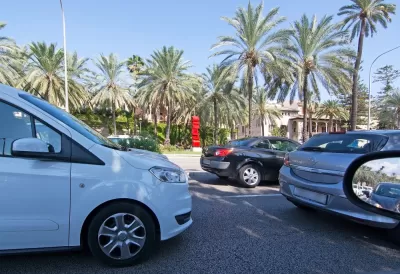
About 90,000 rental cars clog the roads of Mallorca during the summer — with another 30,000 split between the other islands — offering tourists, and some locals, a cheap way to get around. Competition is fierce and, if you reserve a few weeks in advance, it is possible to rent a small car for less than $100 a week (incl. taxes).
The result is that the islands have the highest density of vehicles in Spain, with 850 units per 1,000 inhabitants (not including vehicles registered on the mainland and circulating on the islands). The European Union’s average is 563 passenger car per 1,000 inhabitants.
According to Marc Pons, Balearic minister of territory and mobility, 35% of emissions on the islands come from motor vehicles.
The new law is expected to reach the Balearic parliament before the end of March, with the goal of switching the islands to all electric by 2030.
Read the full story: Balearic government leans towards electric, as rental cars overrun islands


Swapping your gas car for an EV is greener than keeping it, research shows
An EV repays the 'carbon debt' caused by building it after 4,400 miles.
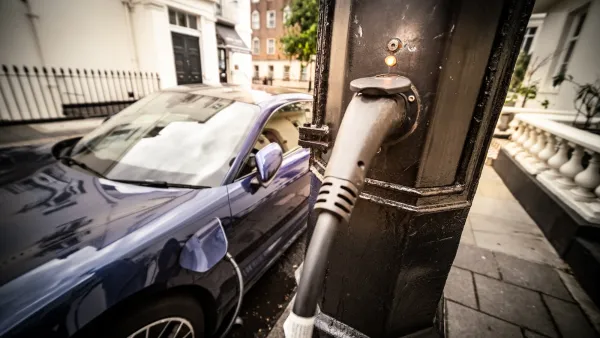
DC light poles will soon charge your electric car
The city awarded three grants to companies that will install more publicly available EV chargers.

In Maine's Cold, Remote Waters, Electric Workboats are Being Put to the Test.
Tired of polluting the waters that feed them, Maine's remote aquaculture innovators are making the dream of marine electrification a reality.

Planetizen Federal Action Tracker
A weekly monitor of how Trump’s orders and actions are impacting planners and planning in America.

The state-sanctioned urbicide of Austin
People don’t kill cities. Freeways do.

US to reduce Colorado River water deliveries to Mexico
A new Colorado Treaty amendment reduces Mexico’s Colorado River water allocation by 250,000 acre feet.

Nation's most wind-powered state turns to coal as data centers increase energy demand
For the first time in decades, Iowa has increased its generation of coal power.

NYC cools commuters with city's first rain garden above a bus stop
New York City officials say the plants in the rain garden can absorb 16 gallons of rainwater during heavy storms.

Brightline West’s future may rely on $6 billion federal loan
The company has until Nov. 2 to make a $400 million equity investment into its proposed high-speed rail line.

FREE Course: Walkable City 1: Why Walkability?
After describing his path towards focusing on walkability as the essence of good planning, Jeff Speck marches through his five principal reasons for making more walkable places.
Reinventing Malls: Planning Alchemy—Turning Gray Fields Into Gold
The course focuses on the opportunities and imperatives that shape reinvention of mall sites.

Greater Baltimore Committee
Eagle County Government
Harvard University Graduate School of Design
The Architects Foundation
University of Cincinnati Online
The Pocatello Development Authority
The Urban Renewal Agency of the City of Pocatello
Journal of the American Planning Association