A short and simple "explainer" post makes sense of why there seems to be so little ground on affordable housing issues in expensive urban areas.


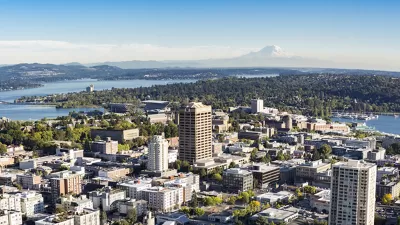
Mathew Yglesias explains the affordable housing problem in urban areas in the United States by calling out two definitions of "affordable." Both are "things that a reasonable person could be interested in," writes Yglesias:
- In one usage, the goal of improving affordability is to make it possible for more people to share in the economic dynamism of a growing, high-income city like Seattle.
- In the other usage, the goal of improving affordability is to reduce (or slow the rise of) average rents in an economically dynamic, high-income city like Seattle.
Because these two definitions are so different, different policies are required to further the goals desired in each case. Yglesias points out the shortcomings of both approaches, and suggests that the best option might be to pursue both.
FULL STORY: What “affordable housing” really means

Feds Cap Rent Raises on Subsidized Housing
Owners of affordable housing developments that take advantage of federal tax incentives will be barred from raising rents more than 10 percent per year.
New York Residents Support Affordable Housing, Survey Says
Contrary to the dominant narrative about the negative perceptions of affordable housing projects among the public, a recent survey reveals widespread support for affordable housing in the New York-New Jersey-Connecticut metropolitan region.
A masterful, human-centered defense of rent control
Book Review: "Fortunate People in a Fortunate Land" offers a human look at how rent control is more than just numbers and data in a spreadsheet.

Planetizen Federal Action Tracker
A weekly monitor of how Trump’s orders and actions are impacting planners and planning in America.

The state-sanctioned urbicide of Austin
People don’t kill cities. Freeways do.

US to reduce Colorado River water deliveries to Mexico
A new Colorado Treaty amendment reduces Mexico’s Colorado River water allocation by 250,000 acre feet.

Colorado’s Largest Data Center Could Rise Next to Homes — Without a Public Hearing
The proposed campus would consume 11 times the power of Denver International Airport; as it has across the country, opposition mounts.

5 New England states march closer to 800 megawatt wind energy project
Securing federal approval for the project may be complicated under the Trump administration, which has historically been hostile towards domestic wind power.

Baltimore to break ground on $50 million Transit Priority Project
The project will bring faster bus trips, safer streets and better bike connections to Baltimore.

FREE Course: Walkable City 1: Why Walkability?
After describing his path towards focusing on walkability as the essence of good planning, Jeff Speck marches through his five principal reasons for making more walkable places.
Reinventing Malls: Planning Alchemy—Turning Gray Fields Into Gold
The course focuses on the opportunities and imperatives that shape reinvention of mall sites.

Eagle County Government
Harvard University Graduate School of Design
Nashville Planning Department
The Architects Foundation
University of Cincinnati Online
The Pocatello Development Authority
The Urban Renewal Agency of the City of Pocatello
Journal of the American Planning Association