A new study by Rahul Pathaka, Christopher K. Wyczalkowskib, Xi Huangb produces new evidence for the most effective method for improving conditions of poverty.


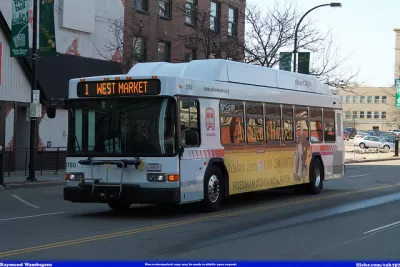
[Updated January 15, 2018] Affordable housing projects might not be the best way to improve concentrated poverty. In fact, "[n]ew research suggests that a more effective approach to changing the geography of poverty requires the expansion of effective public transportation systems," according to an article by Andrew Miller.
The study, published in the Regional Science and Urban Economics journal, finds evidence that, for transit-dependent commuters, the affordability of a neighborhood can depend on proximity to transit stops. The study analyzes tract-level U.S. census data in the Atlanta metropolitan area from 1970 to 2010. According to Miller, "the authors found that the presence of a public bus route in Atlanta’s suburban census tracts is associated with a 2.32 percent increase in the poverty rate on average, compared to census tracts without bus routes."
The study also established a causal relationship between bus routes and poverty, and expands similar findings from previous studies to suburban settings.
Read the full story: HOW PUBLIC BUS ROUTES CAN DECONCENTRATE POVERTY AND PROMOTE EQUITY


Should Governments Subsidize Uber and Lyft Connections to Transit?
According to a new report from the Center for American Progress, technology network companies like Uber and Lyft offer a unique opportunity for low-income users to connect with transit routes and on to greater economic opportunities.
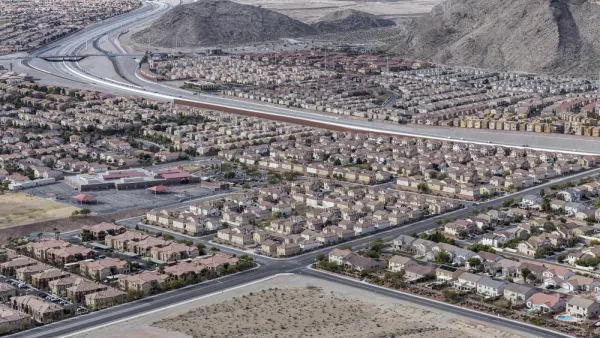
Research: Sprawl Linked to Poverty
Low-income families living in high-sprawl neighborhoods are limited in their access to education, jobs, and other amenities, often trapping them in a cycle of poverty.
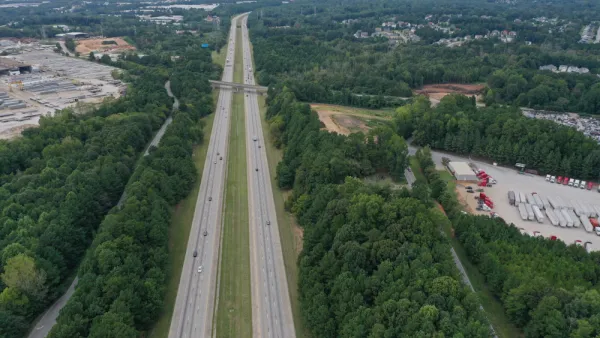
Study: Transit Cuts Can Increase Poverty, Unemployment
An analysis of Clayton County, Georgia, which lost access to public transit for five years, shows a significant increase in unemployment rates and poverty during that timeframe.

Planetizen Federal Action Tracker
A weekly monitor of how Trump’s orders and actions are impacting planners and planning in America.

The state-sanctioned urbicide of Austin
People don’t kill cities. Freeways do.

US to reduce Colorado River water deliveries to Mexico
A new Colorado Treaty amendment reduces Mexico’s Colorado River water allocation by 250,000 acre feet.

Nation's most wind-powered state turns to coal as data centers increase energy demand
For the first time in decades, Iowa has increased its generation of coal power.

NYC cools commuters with city's first rain garden above a bus stop
New York City officials say the plants in the rain garden can absorb 16 gallons of rainwater during heavy storms.

Brightline West’s future may rely on $6 billion federal loan
The company has until Nov. 2 to make a $400 million equity investment into its proposed high-speed rail line.

FREE Course: Walkable City 1: Why Walkability?
After describing his path towards focusing on walkability as the essence of good planning, Jeff Speck marches through his five principal reasons for making more walkable places.
Reinventing Malls: Planning Alchemy—Turning Gray Fields Into Gold
The course focuses on the opportunities and imperatives that shape reinvention of mall sites.

Greater Baltimore Committee
Eagle County Government
Harvard University Graduate School of Design
The Architects Foundation
University of Cincinnati Online
The Pocatello Development Authority
The Urban Renewal Agency of the City of Pocatello
Journal of the American Planning Association