UCLA Graduate Students Association President Michael Skiles recently announced a plan to break with the Westwood neighborhood Council and establish a new neighborhood council that speaks for the development interest of students.


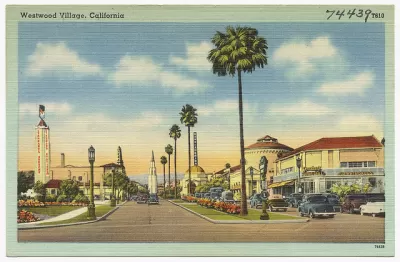
Students attending the University of California, Los Angeles, have decided they are fed up with the anti-development politics of local interests in the neighborhoods around the university campus. They have decided to set up their own neighborhood council, splintering from the Westwood Neighborhood Council, reports Bianca Barragan.
The city of Los Angeles offers a platform for community engagement in the form of neighborhood councils—the politics of each of the city's just-under-100 neighborhood councils vary. The UCLA students, however, say the Westwood Neighborhood Council has a track record of opposing and defeating developments that would add housing and amenities to the neighborhoods adjacent to the university.
Barragan quotes UCLA Urban Planning Professor Paavo Monkkonen in support of the students' decision to form their own neighborhood council:
“It makes no sense that a handful of local homeowners should be able to block new student housing projects and prevent Westwood village from being a vibrant area that appeals to students with restaurants and bars,” he says. He looks forward to having “a rare west LA neighborhood council that wants more housing and more activity.”
Read the full story: UCLA students announce plan to split from Westwood Neighborhood Council over housing

UCLA Will Build California’s First EV Charging Roadway
The ¾-mile segment will allow electric shuttles and buses to charge while driving.

L.A. Program Brings Earthquake Preparedness to Neighborhoods
A new Los Angeles initiative looks to neighborhood councils to lead disaster planning efforts that involve more residents.
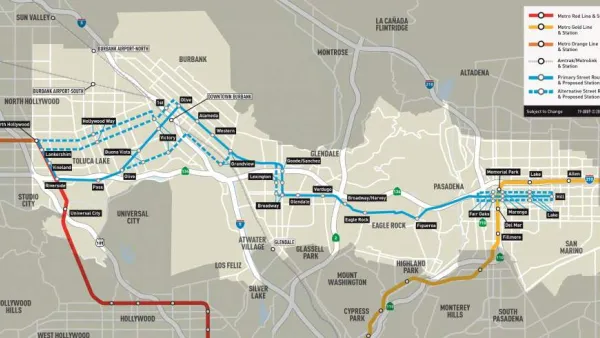
Public Outcry Greets Plan to Connect L.A. to Pasadena via Bus Rapid Transit
Voters might have approved transit funding multiple measures by wide margins in Los Angeles County in recent years, but actual project proposals still have trouble appealing at the hyper-local level.

Planetizen Federal Action Tracker
A weekly monitor of how Trump’s orders and actions are impacting planners and planning in America.

California plans to bury El Niño’s downpour
If the state plays its cards right, it may be able to store a billion acre-feet of El Niño’s water in aquifers.

Desperate measures: Advocates weigh draining Lake Powell to fill Colorado River
Draining the reservoir could reduce evaporation losses by a couple hundred thousand acre-feet.

Los Angeles just elected an urban planner as its mayor
Transportation analysts are optimistic that Raman will be more aggressive in addressing transit issues than Bass.

Mamdani’s pied-à-terre tax survives legal challenge
A panel of judges found that the plaintiffs failed to demonstrate injury as a result of New York City's implementation of the tax.

Eastern Nebraska is running out of electricity
Data centers and electrification are straining eastern Nebraska’s grid, throttling economic development.

FREE Course: Walkable City 1: Why Walkability?
After describing his path towards focusing on walkability as the essence of good planning, Jeff Speck marches through his five principal reasons for making more walkable places.
Reinventing Malls: Planning Alchemy—Turning Gray Fields Into Gold
The course focuses on the opportunities and imperatives that shape reinvention of mall sites.

City of Rosemead
Rutgers University, Edward J. Bloustein School of Planning and Public Policy
One Hundred Miles
University of Michigan School for Environment and Sustainability (SEAS)
Hunter College, City University of New York (CUNY)
The Architects Foundation
City of Cambridge
Montrose County
The Pocatello Development Authority