Granny flats, mother-in-law units, accessory dwelling units (ADUs), or secondary units—whatever you call them, more and more cities, regions, and states are making it easier to deliver subtle density in the backyard.


Billy Ulmer writes of the broadening appeal of accessory dwelling units (ADUs):
Long seen as a novelty in real estate development, ADUs are experiencing a new wave of interest from organizations as diverse as Smart Growth America, Sightline Institute, and AARP.
Major cities like Austin, San Francisco, Seattle, Los Angeles, Nashville, San Diego and Minneapolis have made recent legislative changes to make ADUs easier to build. The state of California followed suit with a new law that took effect in January of 2017.
After explaining this mother-in-law friendly form of infill housing, Ulmer goes into more detail about how and where ADUs are catching on as one potential solution to skyrocketing housing prices. There are also forthcoming events focusing on ADUs and their various forms. The "Reinventing the Home" event will be held on October 23, 2017 in Washington, D.C., and the "Build Small Live Large Summit" will take place in Portland, Oregon on November 3-5.
Read the full story: Why small will soon be large
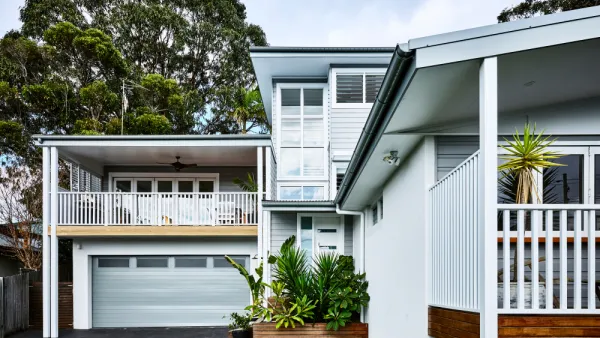
Accessory Dwelling Units Gain Legislative Momentum in Denver
Accessory dwelling units, also known as granny flats or mother-in-law units, gained a critical foothold in Denver earlier this month, and the Denver City Council is already maneuvering for more.
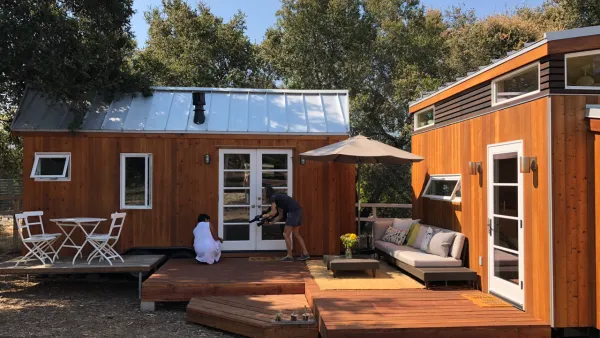
An Online Portal for Designing Accessory Dwelling Units
The ADUniverse website offers pre-approved designs for homeowners who want to add Accessory Dwelling Units on properties in Seattle.
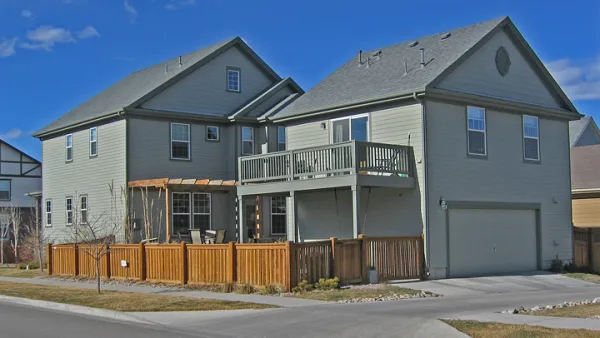
ADU Ordinance Ready for City Council Scrutiny in Chicago
Chicago residents will have the option of building coach houses or convection units if a new law passes as written through the Chicago City Council.

Desperate measures: Advocates weigh draining Lake Powell to fill Colorado River
Draining the reservoir could reduce evaporation losses by a couple hundred thousand acre-feet.

Eastern Nebraska is running out of electricity
Data centers and electrification are straining eastern Nebraska’s grid, throttling economic development.

Move over, LA: St. Louis gears up for Olympics, invests millions in downtown redevelopment
The Missouri city will host the 2028 Olympic soccer group stage and knockout matches.

Maryland’s $15 billion bridge project gains key approval
The Maryland Transit Authority said the project will create over 60,000 jobs and add $23 billion to the local economy.

‘No clear next steps’ for Chicago's permanent festival grounds
Eleventh Ward Ald. Nicole Lee has suggested Soldier Field as a possible location for the permanent event space.

California, Hawaii, Rhode Island approve housing propositions
Hawaii and Rhode Island each approved their sole proposition, while California approved two of its three.

FREE Course: Walkable City 1: Why Walkability?
After describing his path towards focusing on walkability as the essence of good planning, Jeff Speck marches through his five principal reasons for making more walkable places.
Reinventing Malls: Planning Alchemy—Turning Gray Fields Into Gold
The course focuses on the opportunities and imperatives that shape reinvention of mall sites.

City of Rosemead
Rutgers University, Edward J. Bloustein School of Planning and Public Policy
One Hundred Miles
University of Michigan School for Environment and Sustainability (SEAS)
Hunter College, City University of New York (CUNY)
The Architects Foundation
City of Cambridge
Montrose County
The Pocatello Development Authority