Deciding to create an affordable housing trust fund is one thing, deciding how to fund it is another.



After approving an affordable housing trust fund last year, the Pittsburgh City Council is still looking for ways to fund the $10 million annual fund it set as a goal.
Adam Smeltz reports that the City Council hoped the Affordable Housing trust Fund would "go toward down-payment assistance, foreclosure prevention and other efforts to bolster housing for the city’s low- and moderate-income families."
Before the fund can become a reality, the City Council needs to decide on a proposed increase in the transfer tax to generate revenues for the fund. Also a possibility: using revenue from soon-to-expire tax credits. "Controller Michael Lamb’s office is assessing how much new revenue could emerge as tax relief designed to encourage development in 2007 comes to an end," reports Smeltz.
The City Council must approve a budget for the city, including the funding for the Affordable Housing Trust Fund, by the end of the year.
Read the full story: How to pay for an affordable housing fund? Pittsburgh council still weighing options
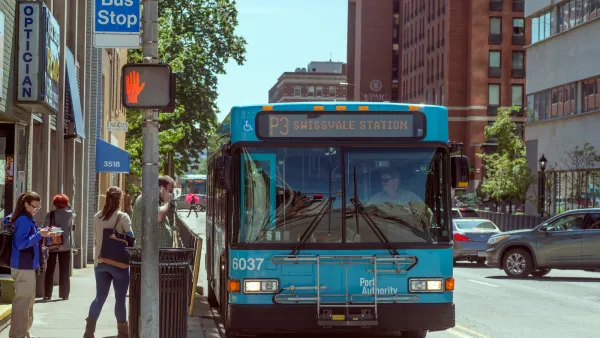
750 Pittsburgh city workers to get free transit passes
City employees working downtown will have access to free transit from Pittsburgh Regional Transit.
Pittsburgh downtown tax diversion plan draws criticism for lack of transparency
A proposed new development tax faces opposition from transit advocates.

Connecticut developer fee brought in $8M for affordable housing — but fewer affordable homes are being built
A new report from the city of Stamford highlights how letting developers pay into an affordable housing fund has led to a sharp drop in permits for new affordable units.

Planetizen Federal Action Tracker
A weekly monitor of how Trump’s orders and actions are impacting planners and planning in America.

California plans to bury El Niño’s downpour
If the state plays its cards right, it may be able to store a billion acre-feet of El Niño’s water in aquifers.

Desperate measures: Advocates weigh draining Lake Powell to fill Colorado River
Draining the reservoir could reduce evaporation losses by a couple hundred thousand acre-feet.

Housing is the top priority of Seattle’s sole new councilmember
Jenks campaigned on building 1,000 new units of affordable housing.

New tax cuts may slash $1.5 billion in funding for Miami transit, public parks
Amendment 3 will save Miami-Dade homeowners $2,700 in 2028.

Arizona, Wisconsin, Pennsylvania hope to finally advance climate goals post-midterms
The three states have spent years under Republican or divided control.

FREE Course: Walkable City 1: Why Walkability?
After describing his path towards focusing on walkability as the essence of good planning, Jeff Speck marches through his five principal reasons for making more walkable places.
Reinventing Malls: Planning Alchemy—Turning Gray Fields Into Gold
The course focuses on the opportunities and imperatives that shape reinvention of mall sites.

City of Rosemead
Rutgers University, Edward J. Bloustein School of Planning and Public Policy
One Hundred Miles
University of Michigan School for Environment and Sustainability (SEAS)
Hunter College, City University of New York (CUNY)
The Architects Foundation
City of Cambridge
Montrose County
The Pocatello Development Authority