Offering prizes and status, Google wants to motivate Maps users to add information about wheelchair accessibility.



Google is looking to expand information about accessibility for the disabled in its maps by recruiting "local guides." As Linda Poon reports for CityLab, "Google Maps already indicates if a location is wheelchair accessible—a result of a personal project by one of its employees—but its latest campaign will crowdsource data from its 30 million Local Guides worldwide."
These guides can upload tips and information relevant to accessibility, such as: "Does the building have wheelchair-accessible bathrooms?" or "Are there wheelchair-accessible elevators?" In exchange, guides will receive prizes like additional storage space.
Access for the disabled it still far from ubiquitous, and specifying it on Google Maps may spur further changes. See recent debate around wheelchair access to transit and ride-hailing services in New York.
Read the full story: Google Gets Serious About Mapping Wheelchair Accessibility


Google Doodle Commemorates Those Bumps on the Edge of the Transit Platform
Today's Google Doodle celebrates an important component of accessibility and mobility for the visually impaired.
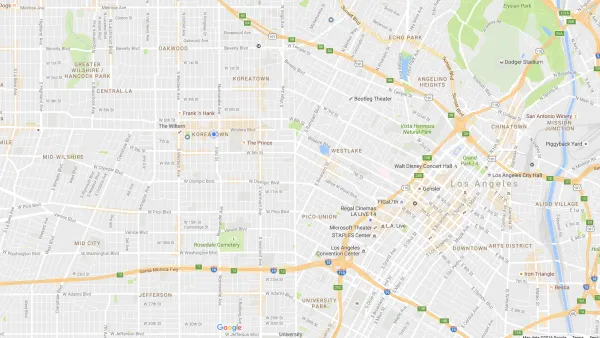
Google Maps' 'Interesting' New Feature
Google's new maps redesign calls out areas of interest, but is "interesting" just a euphemism for rich?
The Race to Map Brazil's Favelas
In an effort to tap into new users, companies like Google and Microsoft are racing to map the winding, informal streets of Brazil's slums in Rio de Janeiro.

Planetizen Federal Action Tracker
A weekly monitor of how Trump’s orders and actions are impacting planners and planning in America.

Amtrak, CN end decades-long dispute with eight-year agreement
The new operating agreement establishes an updated framework for the companies to work together, including processes to resolve disputes.

Judges permit Denver to divert 77,000 acre feet from the Colorado River for reservoir expansion
Overuse and climate change have caused the Colorado River’s water levels to plummet.

Atlanta City Council unanimously backs $3.5 billion Beltline light rail project
The resolution was drafted after Atlanta Mayor Andre Dickens pulled support for the Atlanta Streetcar extension last year.

SEPTA to bring nearby frequent transit to over 1 million new riders as part of decade-long plan
The agency's Accelerate plan will also bring frequent transit to twice the amount of jobs that are currently located near it.

NYC plants over 18,000 trees, the most new foliage in a decade
Many of the trees were planted in communities vulnerable to extreme heat.

FREE Course: Walkable City 1: Why Walkability?
After describing his path towards focusing on walkability as the essence of good planning, Jeff Speck marches through his five principal reasons for making more walkable places.
Reinventing Malls: Planning Alchemy—Turning Gray Fields Into Gold
The course focuses on the opportunities and imperatives that shape reinvention of mall sites.

City of Thousand Oaks
City of Wisconsin Rapids
Harvard University Graduate School of Design
The Architects Foundation
University of Cincinnati Online
The Pocatello Development Authority
The Urban Renewal Agency of the City of Pocatello