Rural counties and cities around the United States are figuring out that it pays to do business with renewable energy companies.


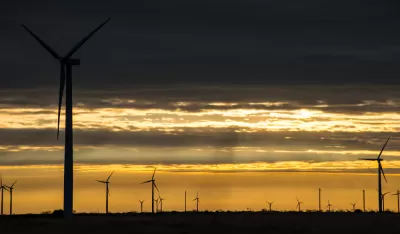
Erin Ailworth reports that wind energy is winning converts in rural, and conservative, parts of the United States.
The article sets its stage in Fowler, Indiana, where wind turbines are "rising for miles amid the golden-tipped cornfields and leafy soybean plants blanketing much of Benton County, pop. 8,650."
The benefits of wind power developments in this part of the country have been multiple and persistent, and not just for the jobs created during construction. "Wind developers have made $17 million in payments to the county and have spent $33 million on roads, a boon for an economically struggling community that about a decade earlier considered hosting a waste dump to generate jobs and government revenue," according to Ailworth.
Fowler's example is part of a larger narrative, explains Ailworth. "As wind becomes a bigger part of the U.S. electricity mix, it is becoming an economic force in rural communities such as Fowler, a development that is changing the political conversation around renewable energy in many parts of the U.S."
[The Wall Street Journal article might be behind a paywall for some readers.]
Read the full story: Wind Power Wins Converts in Rural U.S.


California presses forward on offshore wind
The state is taking steps to prepare its grid and port infrastructure for offshore wind projects despite the federal government's pushback on the technology.
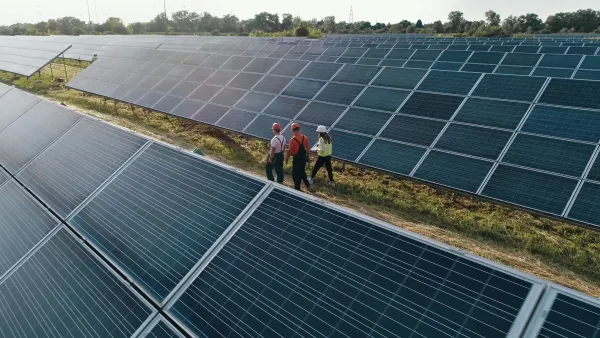
Study: States approved 90% of renewable energy projects between 2018 and 2024
Ohio had the highest rejection rate for wind and solar proposals.
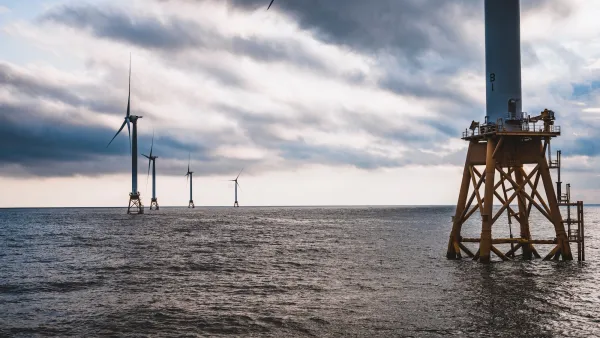
Trump Administration to Pay Energy Firm $1 Billion to Kill Wind Farms in Favor of Fossil Fuel Projects
TotalEnergies will forfeit its lease on two proposed wind energy projects off the coasts of New York and North Carolina.

Planetizen Federal Action Tracker
A weekly monitor of how Trump’s orders and actions are impacting planners and planning in America.

Amtrak, CN end decades-long dispute with eight-year agreement
The new operating agreement establishes an updated framework for the companies to work together, including processes to resolve disputes.

Judges permit Denver to divert 77,000 acre feet from the Colorado River for reservoir expansion
Overuse and climate change have caused the Colorado River’s water levels to plummet.

NYC DOT wants faster, more permanent street upgrades
The city is examining ways to build more concrete infrastructure without getting entangled in 'decades-long' projects.

'Something we’ve never seen before:' rising utility rates could strain city finances nationwide
Data centers, climate change and other factors have caused utility rates in the United States to increase by 38% since 2020.

Trump to overrule local leaders, lease millions of acres of America’s Pacific Island territories’ seafloors to mining companies
International law says that the Indigenous people of America’s territories have a right to prior and informed consent regarding projects that impact their countries.

FREE Course: Walkable City 1: Why Walkability?
After describing his path towards focusing on walkability as the essence of good planning, Jeff Speck marches through his five principal reasons for making more walkable places.
Reinventing Malls: Planning Alchemy—Turning Gray Fields Into Gold
The course focuses on the opportunities and imperatives that shape reinvention of mall sites.

Harvard University Graduate School of Design
KFH Group Inc.
Greater Baltimore Committee
The Architects Foundation
University of Cincinnati Online
The Pocatello Development Authority
The Urban Renewal Agency of the City of Pocatello