Bikeshare has been a breeze, for the most part, in Washington, D.C. But the District Department of Transportation is making room for innovation anyways.


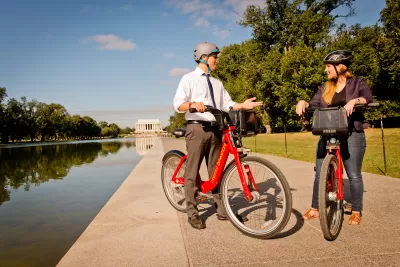
"A new program using dock-free technology could help expand the reach of bikeshares to these underserved areas [in Washington, D.C.," reports Martin Di Caro.
"As part of a pilot program, which will start Sept. 20 and run through April 2018, several companies will test dock-free bikeshare technology in the District," adds Di Caro. "At least two companies will deploy 200 bikes each across D.C.’s neighborhoods: Spin, which launched in Seattle, and Mobike, which began in Shanghai in 2016."
D.C.'s decision to experiment with bikeshare comes despite the fact that Capital Bikeshare s one of the most successful bikeshare programs in the country.
The article includes a lot more detail about how dockless bikeshare works, how much dockless bikeshare costs, and how dockless bikesahre is expected to fill the remaining gaps in the Capital Bikeshare system.
Read the full story: Dockless Bikeshares Offer New Way To Get Around D.C. On Two Wheels

On the Pitfalls of Dockless Bikeshare
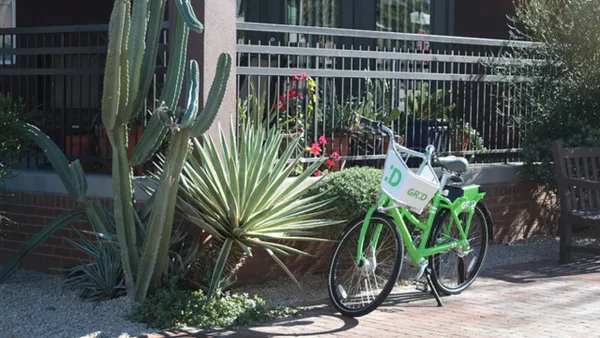
App-driven bikeshare, without the station, has been spreading rapidly, especially in China. But the system comes with its share of problems, including its own version of the tragedy of the commons.
Capital Bikeshare Station MIA from the White House
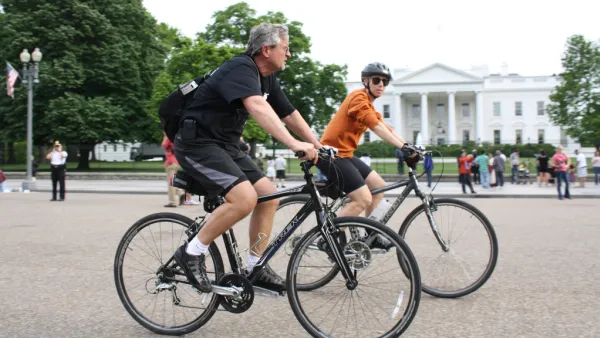
An observant D.C. resident first noticed that a "secret" Capital Bikeshare station is no longer present on the White House grounds.
How E-Scooters Can Complement Public Transit
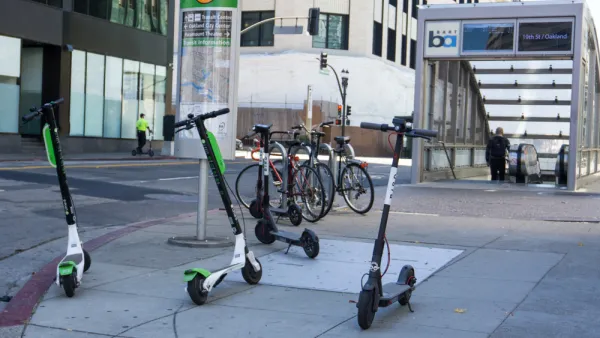
With some strategic planning on the part of transit agencies and operators, shared e-scooters can be an important ally in the fight against car dependence.

Planetizen Federal Action Tracker
A weekly monitor of how Trump’s orders and actions are impacting planners and planning in America.

California plans to bury El Niño’s downpour
If the state plays its cards right, it may be able to store a billion acre-feet of El Niño’s water in aquifers.

Chicago breaks ground on $3 billion megadevelopment
The new neighborhood, titled Foundry Park, will one day host 3,700 residences.

California High-Speed Rail Authority CEO resigns after $600,000 scandal
Under Ian Choudri, the authority used taxpayer dollars to fund first class flights and trips to nightclubs.

Want to study the Missouri River? Soon, you may need unanimous approval from 10 states
Legislation would require 10 governors’ permission to study or build projects moving water outside the basin.

Desperate measures: Advocates weigh draining Lake Powell to fill Colorado River
Draining the reservoir could reduce evaporation losses by a couple hundred thousand acre-feet.

FREE Course: Walkable City 1: Why Walkability?
After describing his path towards focusing on walkability as the essence of good planning, Jeff Speck marches through his five principal reasons for making more walkable places.
Reinventing Malls: Planning Alchemy—Turning Gray Fields Into Gold
The course focuses on the opportunities and imperatives that shape reinvention of mall sites.

City of Rosemead
Rutgers University, Edward J. Bloustein School of Planning and Public Policy
One Hundred Miles
Hunter College, City University of New York (CUNY)
The Architects Foundation
University of Cincinnati Online
City of Cambridge
Montrose County
The Pocatello Development Authority