Suburbia isn't an accident.



Devon Marisa Zuegel has written a three-story series about the government policies that support suburban growth in the United States.
The third article, titled "Exempting Suburbia," examines the preferential tax trearment offered to suburban sprawl. "As a result, it is cheaper to spend a dollar on housing than on something else, so it encourages people to spend more money on housing," writes Zuegel. "The tax code also favors new construction over renovation and infill development."
The article examines the roots of the suburban preference along three themes, as evidenced by both state and federal tax codes:
- Homeowners can deduct their property and mortgage interest.
- Profits on home sales are not taxed.
- New construction is a tax shelter.
Zuegel includes more detail on each of those claims.
Previous installments of the series include examinations of the history of government support for suburbia and the government policies that support the mortgages that finance suburbia.
Hat tip to Strong Towns for sharing the article.
Read the full story: Exempting Suburbia How suburban sprawl gets special treatment in our tax code

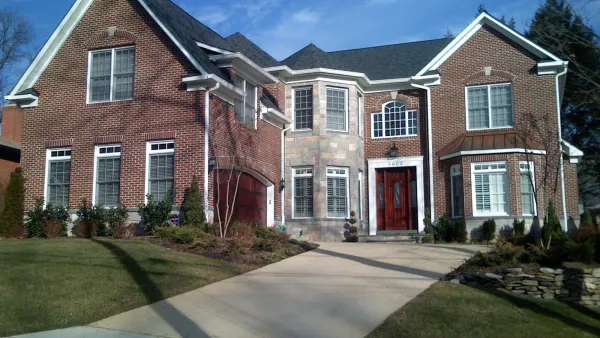
More McMansions: Upscaling Suburbia
According to this article, the market forces behind large home construction are alive and well. In a process of suburban gentrification, developers purchase older, smaller homes and build "McMansions" in their place.
Rethinking Suburban Development: New Trends in Creating Livable Communities
Discover new trends in suburban development focused on creating more livable, sustainable communities for future growth.
Institutional Investors Gaining a Larger Footprint in the Housing Market, Report Says
The locations with the fastest growing populations are seeing the most dramatic increase in investor-owned single-family housing rentals.

Planetizen Federal Action Tracker
A weekly monitor of how Trump’s orders and actions are impacting planners and planning in America.

California plans to bury El Niño’s downpour
If the state plays its cards right, it may be able to store a billion acre-feet of El Niño’s water in aquifers.

Chicago breaks ground on $3 billion megadevelopment
The new neighborhood, titled Foundry Park, will one day host 3,700 residences.

Satanic place names
From streams and lakes to valleys and canyons, I mapped more than 1,000 places named after the Devil.

California High-Speed Rail Authority CEO resigns after $600,000 scandal
Under Ian Choudri, the authority used taxpayer dollars to fund first class flights and trips to nightclubs.

Want to study the Missouri River? Soon, you may need unanimous approval from 10 states
Legislation would require 10 governors’ permission to study or build projects moving water outside the basin.

FREE Course: Walkable City 1: Why Walkability?
After describing his path towards focusing on walkability as the essence of good planning, Jeff Speck marches through his five principal reasons for making more walkable places.
Reinventing Malls: Planning Alchemy—Turning Gray Fields Into Gold
The course focuses on the opportunities and imperatives that shape reinvention of mall sites.

City of Rosemead
Rutgers University, Edward J. Bloustein School of Planning and Public Policy
One Hundred Miles
Hunter College, City University of New York (CUNY)
The Architects Foundation
University of Cincinnati Online
City of Cambridge
Montrose County
The Pocatello Development Authority