While productivity improves in almost every sector of the U.S. economy, it's dropping quickly in the construction industry.


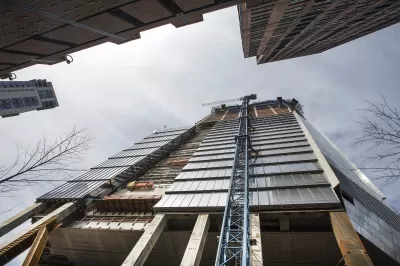
"Superficially, the construction industry would seem healthy enough," according to an article in The Economist. "Yet more than 90% of the world’s infrastructure projects are either late or over-budget, says Bent Flyvbjerg of Saïd Business School at Oxford University."
"Construction holds the dubious honour of having the lowest productivity gains of any industry," adds the article, citing data from McKinsey. The United States provides a particularly bad example of the problem. Here, productivity "has plunged by half since the late 1960s."
The article digs into the list of potential causes for the woes of the industry, discarding one of the usual suspects as the culprit (i.e., "Prices for building materials are not to blame). Instead, the article suggests two structural trends are to blame: the work is less capital intensive and the industry has yet to consolidate.
Read the full story: Efficiency eludes the construction industry
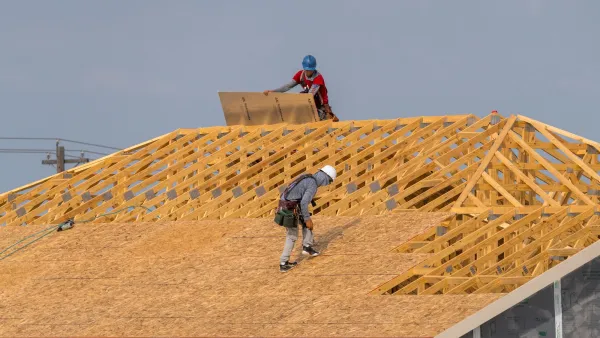
South Texas Home Builders Say “There’s no Labor” After ICE Raids
Construction is slowing as immigration detentions have a chilling effect on the labor market.
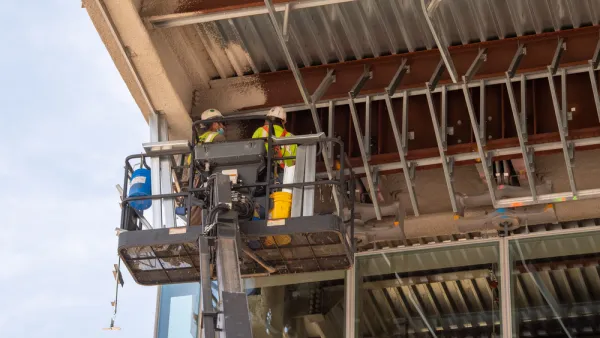
Construction Costs Holding Steady During Pandemic
It might have been wishful thinking to assume the pandemic would cause big declines in costs for materials and labor in the construction industry.
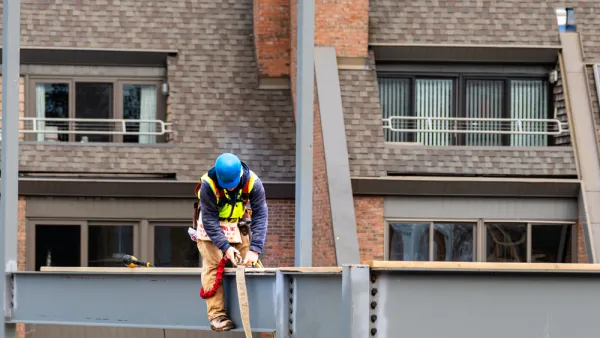
New York State, Pennsylvania Halt Construction
The economic fallout of the coronavirus pandemic deepened with the news that construction would be halted on all "non-essential" construction in the state of New York and in Pennsylvania.

Planetizen Federal Action Tracker
A weekly monitor of how Trump’s orders and actions are impacting planners and planning in America.

California plans to bury El Niño’s downpour
If the state plays its cards right, it may be able to store a billion acre-feet of El Niño’s water in aquifers.

Desperate measures: Advocates weigh draining Lake Powell to fill Colorado River
Draining the reservoir could reduce evaporation losses by a couple hundred thousand acre-feet.

Chicago voters approve permanent festival grounds, penalty for vacant property owners
Currently, major summer and fall festivals take over public parks for weeks at a time, drawing criticism from nearby residents

NYC votes to cut outdoor dining red tape, speed up permitting
New York City also voted to allow the Department of Transportation to begin work on urgent projects before notifying elected officials.

California appears to reject Prop. 45
The proposition would have expanded the projects that qualify for a streamlined environmental review, effectively paring down the California Environmental Quality Act.

FREE Course: Walkable City 1: Why Walkability?
After describing his path towards focusing on walkability as the essence of good planning, Jeff Speck marches through his five principal reasons for making more walkable places.
Reinventing Malls: Planning Alchemy—Turning Gray Fields Into Gold
The course focuses on the opportunities and imperatives that shape reinvention of mall sites.


City of Rosemead
Rutgers University, Edward J. Bloustein School of Planning and Public Policy
One Hundred Miles
Hunter College, City University of New York (CUNY)
The Architects Foundation
University of Cincinnati Online
City of Cambridge
Montrose County
The Pocatello Development Authority