It might have been wishful thinking to assume the pandemic would cause big declines in costs for materials and labor in the construction industry.


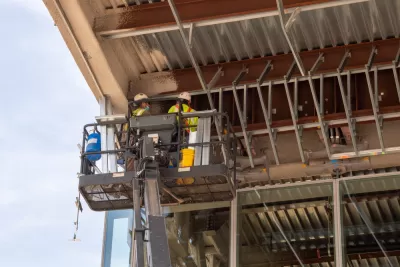
"One predicted benefit of the pandemic has been a decline in construction costs — or at least a halt to big price increases of recent years," according to an article by Steve Brown.
Not so fast, according to recently released data as well as insight from Texas-based developers and builders surveyed by Brown surveyed for the article. "Phil Crone, executive officer of the Dallas Builders Association, said local homebuilders are seeing volatility in a number of supply chains that has actually increased prices," for instance.
Still, "Nationwide engineering and construction costs dropped in June, according to a report by IHS Markit." And construction activity has been picking up. In Dallas-Forth Worth, "construction activity had rebounded by 15% in May from where it was in March when the pandemic caused a lockdown," according to Brown.
FULL STORY: Predictions of big construction cost declines are overblown

How 2020 Changed the Rental Market
A new report by RentCafé reveals the extent of the pandemic's influence on the rental market—so far.
Real Estate Defaults Are Coming. Don’t Waste Them.
Here’s what the federal government should do to grab the opportunity to create affordable housing.
A Tale of Two Real Estate Markets
Hotels, retail, and office properties, along with renters, have been ravaged by the economic downturn of the pandemic. Meanwhile home sales are booming as people with money in the bank take advantage of low interest rates to upgrade.

The state-sanctioned urbicide of Austin
People don’t kill cities. Freeways do.

US to reduce Colorado River water deliveries to Mexico
A new Colorado Treaty amendment reduces Mexico’s Colorado River water allocation by 250,000 acre feet.

New Jersey’s second-largest city bans standalone data centers
Jersey City will continue to allow co-location facilities, such as those meant for research institutions that store their own data.

Amtrak not solely to blame for New Jersey commuter rail's unreliability, report finds
A new study from the Garden State Initiative found that NJ Transit’s budget grew 20% across a 4 year period, but reliability declined significantly over the same period.

EPA erases limits on planet-warming pollution from power plants
Under Monday’s plan, power plants would still have some limits on how much mercury, arsenic and other contaminants they can emit.

Phoenix announces new on-demand transit service, more frequent RAPID buses
Both new services will launch in October, and are part of Phoenix's Project Effective Access Solutions for Easing Congestion.

FREE Course: Walkable City 1: Why Walkability?
After describing his path towards focusing on walkability as the essence of good planning, Jeff Speck marches through his five principal reasons for making more walkable places.
Reinventing Malls: Planning Alchemy—Turning Gray Fields Into Gold
The course focuses on the opportunities and imperatives that shape reinvention of mall sites.

Eagle County Government
Harvard University Graduate School of Design
Nashville Planning Department
The Architects Foundation
University of Cincinnati Online
The Pocatello Development Authority
The Urban Renewal Agency of the City of Pocatello
Journal of the American Planning Association