The suburban, master planned community of Columbia, Maryland is many of the things urbanists hope their cities will become.


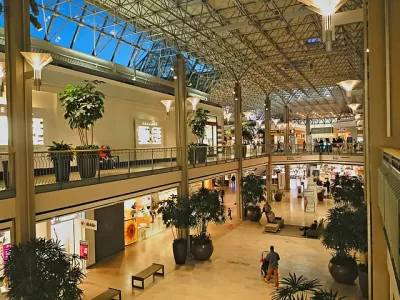
Amanda Kolson Hurley reports on a "suburban experiment" that offers lessons for cities. "In an era when city living is virtually synonymous with cool, Columbia, Md., emanates suburban uncool," writes Kolson Hurley. The community flies in the face of almost everything Jane Jacobs cherished about cities, but "as Columbia marks the 50th anniversary since the first residents moved in, it has become clear that [Columbia developer James] Rouse got some important things right."
Kolson Hurley describes Rouse's approach to the project as a response to the "soulless sprawl" that defined most suburban construction of the 1970s. Rouse was "ahead of his time," according to the article, "in his pursuit of an ecologically sensitive, mixed-income and colorblind community in an era when redlining was common. And Columbia’s success on those fronts stands out next to most of the planned communities that came after it."
Among the other successes now apparent in Columbia, 50 years after its creation: prosperity and racial and economic integration that shouldmake New York City, San Francisco, and Washington, D.C. blush.
Read the full story: Here’s a suburban experiment cities can learn from

First Model Homes Revealed in Disney-Built Community
Disney’s Cotino, in the Southern California desert, is the first of the company’s ‘Storybook Living’ developments.

Utah’s Daybreak Shows a Way Forward for American Suburbs
Suburban dwellers are increasingly calling for more mixed-use development, walkability, and access to transit.

How Trump's Version of the Suburbs Gets it Wrong
Analysis of Trump's favorability ratings with suburban voters and the demographic trends of recent years could doom his recent messages regarding the Democratic agenda for the suburbs.

Planetizen Federal Action Tracker
A weekly monitor of how Trump’s orders and actions are impacting planners and planning in America.

Eastern Nebraska is running out of electricity
Data centers and electrification are straining eastern Nebraska’s grid, throttling economic development.

Study reveals best places in the U.S. for cycling, walking
New research from Streetlight Data examines bicycle and pedestrian miles per capita in the 100 largest U.S. cities by population.

Next-generation nuclear reactors are coming to Texas
The reactors will not require towering containment structures thanks to new safety features.

California distributes $1.3 billion to prevent transit service cuts, bolster projects
Twenty-eight projects across California received a portion of the funding.

Pennsylvania Democrats have 15 affordability, clean energy bills for flipped state Senate
Bills in consideration include a bill supporting geothermal energy and a bill supporting solar on warehouses.

FREE Course: Walkable City 1: Why Walkability?
After describing his path towards focusing on walkability as the essence of good planning, Jeff Speck marches through his five principal reasons for making more walkable places.
Reinventing Malls: Planning Alchemy—Turning Gray Fields Into Gold
The course focuses on the opportunities and imperatives that shape reinvention of mall sites.

City of Charlotte
City of Rosemead
Rutgers University, Edward J. Bloustein School of Planning and Public Policy
University of Michigan School for Environment and Sustainability (SEAS)
Hunter College, City University of New York (CUNY)
The Architects Foundation
City of Cambridge
The Pocatello Development Authority
The Urban Renewal Agency of the City of Pocatello